Puri hails Cabinet nod to Rabi MSP for 2027-28 season
Synopsis
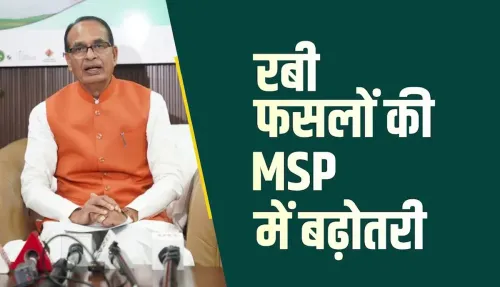
The Modi Cabinet has approved the Minimum Support Price for Rabi crops for the 2027-28 season. Union Minister Hardeep Singh Puri framed the decision as a key step for farmer income stability and a pillar of the Atmanirbhar Bharat self-reliance mission.
Key Takeaways
The Modi Cabinet approved the Minimum Support Price (MSP) for Rabi crops for the 2027-28 marketing season on 30 September 2026 .
Union Petroleum Minister Hardeep Singh Puri announced the decision on X, linking farmer income security to the Atmanirbhar Bharat framework.
Rabi crops covered under MSP include staples such as wheat, barley, gram, lentil, and mustard .
The approval follows a long-standing pattern of annual Cabinet sign-offs on Rabi MSPs aimed at protecting farmers from market price volatility.
Formal gazette notification of crop-specific rates and procurement targets by the Ministry of Agriculture will follow the Cabinet decision.
A guaranteed floor price for millions of farmers growing wheat, mustard, and barley — that is the promise at the heart of a fresh Cabinet decision that Union Petroleum Minister Hardeep Singh Puri amplified on Wednesday, 30 September 2026. The Modi government has approved the Minimum Support Price (MSP) for Rabi crops for the 2027-28 marketing season, a move framed as a direct pillar of rural income security.
Posting in Hindi, Puri captured the policy logic in a single chain: 'Kisan majboot to krishi majboot, aur krishi majboot to Atmanirbhar Bharat majboot' — 'A strong farmer means a strong agriculture, and a strong agriculture means a stronger self-reliant India.' The framing deliberately links individual farm-gate price protection to the national Atmanirbhar Bharat framework, the self-reliance drive launched in 2020.What the MSP guarantee means for Rabi farmers
The Minimum Support Price is the government's bedrock price-protection tool — a floor below which the state commits not to let market prices fall for notified crops. Rabi crops, sown through the winter months and harvested in spring, include staples such as wheat, barley, gram, lentil, and mustard. For smallholder farmers across states like Punjab, Haryana, Madhya Pradesh, and Rajasthan, the MSP is often the single most consequential number in their annual income calendar.
The Cabinet approval triggers a formal notification process through the Ministry of Agriculture, after which procurement agencies align their buying targets ahead of the harvest cycle. The decision follows a decades-long pattern of annual Cabinet sign-offs on Rabi MSPs, each iteration meant to keep farmer income stable against input-cost inflation and commodity-market volatility.
The Atmanirbhar Bharat thread running through farm policy
The Modi government has consistently woven agricultural support into the broader Atmanirbhar Bharat narrative — the argument being that food security and rural purchasing power are non-negotiable foundations of economic self-reliance. By invoking that linkage, Puri's post signals that the MSP approval is not being presented merely as a routine calendar decision, but as an active plank of a larger national-resilience agenda.
Next steps will include the formal gazette notification of crop-specific rates and any associated procurement volume targets that feed into the following budget cycle — numbers that farm organisations and state governments will watch closely as the Rabi sowing window approaches.
Point of View
But the explicit framing around Atmanirbhar Bharat signals a deliberate effort to position farm-price policy as part of a macro self-reliance narrative rather than a standalone welfare measure. For the BJP, connecting MSP hikes to a flagship national programme helps broaden the political dividend beyond the farm belt. The decision also arrives ahead of a new Rabi sowing window, giving it immediate operational relevance — and making the yet-to-be-notified crop-specific rates the real number to watch.
NationPress
30 Sept 2026
Frequently Asked Questions
What is MSP for Rabi crops and who benefits?
The Minimum Support Price (MSP) is a government-guaranteed floor price for select crops. Rabi crop MSP benefits farmers growing wheat, barley, gram, lentil, and mustard, ensuring they receive at least the notified price regardless of market conditions.
Which Rabi crops are covered under MSP in India?
Rabi crops typically covered under India's MSP mechanism include wheat, barley, gram (chickpea), masur (lentil), and rapeseed-mustard, among others notified by the Cabinet each season.
What did the Modi Cabinet decide on Rabi MSP for 2027-28?
The Modi Cabinet approved the Minimum Support Price for Rabi crops for the 2027-28 marketing season on 30 September 2026, aimed at providing better price security and income stability to farmers.
What is Atmanirbhar Bharat and how does it relate to farm policy?
Atmanirbhar Bharat, or Self-Reliant India, is a national initiative launched in 2020. The government links MSP-backed farmer income security to this framework, arguing that a resilient agricultural sector underpins broader economic self-reliance.
What happens after the Cabinet approves Rabi MSP?
After Cabinet approval, the Ministry of Agriculture issues a formal gazette notification of crop-specific MSP rates. Procurement agencies then set buying targets aligned with the rates ahead of the Rabi harvest season.