Raghav Chadha on UPI: When Tech Becomes Invisible

Synopsis
AAP Rajya Sabha MP Raghav Chadha celebrated UPI's integration into ordinary Indian life, arguing that true infrastructure success means technology trusted and absorbed into daily habit — not showcased as spectacle.
Key Takeaways
AAP Rajya Sabha MP Raghav Chadha posted on 26 August 2026 praising UPI as a model of infrastructure that has become invisible through everyday use.
UPI was launched by NPCI in April 2016 as an interoperable real-time payment rail regulated by the RBI .
Demonetisation in November 2016 sharply accelerated digital payments adoption across India.
Monthly UPI transaction volumes grew from a few million in 2016 to several billion, making it the dominant retail digital payment mode.
Chadha's framing benchmarks infrastructure success by behavioral integration — whether people have genuinely changed how they live — not by launch-day optics.
India is now expanding UPI linkages with foreign payment systems and integrating it into transit and government services.
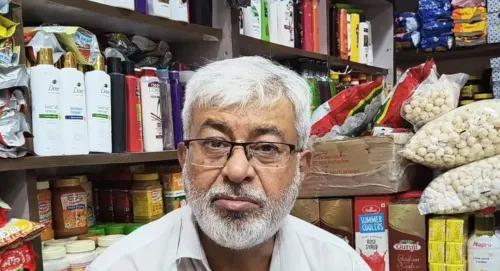
Two sentences — 'Scanner de dijiye' and 'UPI kar deta hoon' — now flow as naturally in Indian bazaars as asking for change once did. AAP Rajya Sabha MP Raghav Chadha marked that quiet revolution on Wednesday, 26 August 2026, arguing that the true measure of infrastructure is not the spectacle of its launch but the depth of its disappearance into daily habit.
Chadha wrote: 'Successful infrastructure is not technology displayed as spectacle; it is technology absorbed into everyday life and trusted.' The observation cuts to the heart of what distinguishes a pilot project from a platform — and UPI has crossed that threshold decisively.
From NPCI Boardroom to the Corner Kirana
Unified Payments Interface (UPI) was launched by the National Payments Corporation of India (NPCI) in April 2016 as an interoperable, real-time inter-bank payment rail regulated by the Reserve Bank of India (RBI). The design principle was radical in its simplicity: one mobile number or QR code, any bank, instant settlement. Demonetisation in November 2016 compressed what might have been a decade of adoption into months, pushing merchants and consumers alike onto digital rails out of necessity — and many stayed. The numbers that followed told a story of normalisation at scale. Monthly transaction volumes grew from a few million in UPI's earliest months to several billion, making it the dominant mode of retail digital payment in the country. Smartphone penetration and low-cost mobile data were the tailwinds; regulatory insistence on interoperability — so no single app could wall off its users — was the structural bet that paid off.The 'Invisible Infrastructure' Argument
Chadha's framing — that the best infrastructure is the kind you stop noticing — is a pointed political and philosophical claim. It implicitly grades public projects not by ribbon-cutting optics but by behavioral integration: did people actually change how they live? By that measure, UPI scores high. The QR-code scanner at a roadside tea stall, the split-second beep confirming a vegetable vendor's payment, the college student settling a shared dinner bill mid-conversation — these are the benchmarks Chadha is invoking. The post arrives as India pushes UPI linkages with foreign payment systems and explores integration into transit networks and government service delivery — the next frontier of embedding the rail even deeper into civic life. When a payment system becomes a verb — 'UPI kar deta hoon' — the infrastructure has won. That is the bar Chadha is pointing to, and it is a bar worth watching as India exports the model to the world.Point of View
Championing UPI's grassroots normalisation aligns with the party's urban, middle-class and small-merchant base. The 'invisible infrastructure' framing also implicitly challenges the tendency of ruling dispensations to treat every digital milestone as a branding moment. As India actively promotes UPI internationally, the domestic narrative of quiet, trusted ubiquity becomes a soft-power argument in its own right.
NationPress
26 Aug 2026
Frequently Asked Questions
What did Raghav Chadha say about UPI?
Raghav Chadha argued that UPI's greatest achievement is becoming so ordinary that Indians use phrases like 'UPI kar deta hoon' without a second thought — defining successful infrastructure as technology absorbed into daily life and trusted, not displayed as spectacle.
What is UPI and who runs it?
UPI, or Unified Payments Interface, is India's real-time inter-bank retail payment system operated by the National Payments Corporation of India (NPCI) and regulated by the Reserve Bank of India (RBI). It was launched in April 2016.
How did UPI become so popular in India?
UPI's interoperable design — one QR code or mobile number across any bank — combined with demonetisation in November 2016, low-cost mobile data, and smartphone penetration drove mass adoption, pushing monthly volumes from millions to billions of transactions.
Is Raghav Chadha from AAP?
Yes, Raghav Chadha is an Aam Aadmi Party (AAP) Rajya Sabha MP and a senior party spokesperson.
What is the next phase of UPI expansion in India?
India is working on linking UPI with foreign payment systems for cross-border use and integrating it into new areas such as public transit and government service delivery.