Rahul Gandhi Calls PM Modi's Israel Visit a 'Bewildering' Decision
Synopsis
Congress leader Rahul Gandhi on 27 June 2026 called PM Modi's Israel visit a 'bewildering strategic decision', warning India is slipping into Israel's strategic orbit as global opinion shifts. He invoked the spirit of Indian nationhood to demand the country speak up for Palestinian rights, sharpening the opposition's challenge to the government's West Asia policy.
Key Takeaways
Congress leader Rahul Gandhi on 27 June 2026 publicly condemned PM Modi 's visit to Israel as a 'bewildering strategic decision'.
Gandhi warned that India is 'slipping further into Israel's strategic orbit' at a time when global opinion is pivoting away from Israel.
He invoked 'the spirit of Indian nationhood' to argue India must speak up for Palestinian rights.
India established full diplomatic ties with Israel in 1992 ; PM Modi made the first-ever Indian PM visit to Israel in July 2017 .
India has historically supported a two-state solution at the UN while simultaneously expanding defence and technology cooperation with Israel.
The critique sets the stage for a potential parliamentary confrontation during the monsoon session over India's West Asia foreign policy.
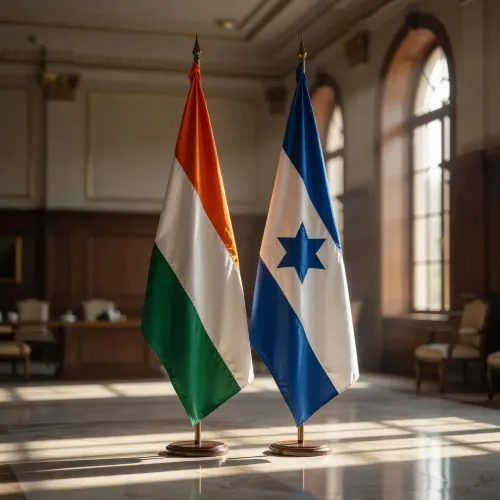
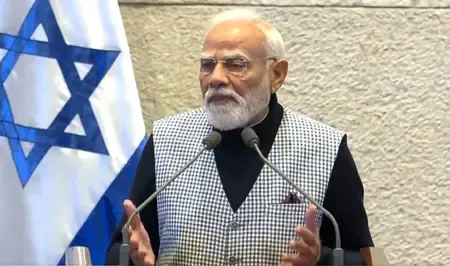
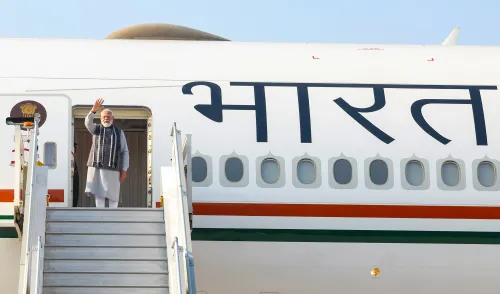
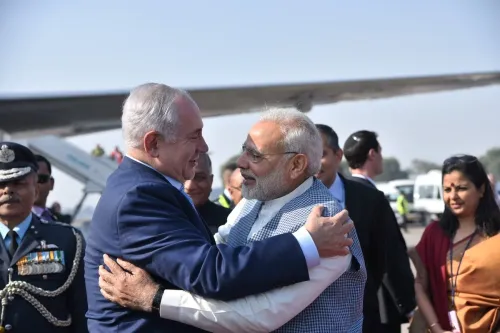
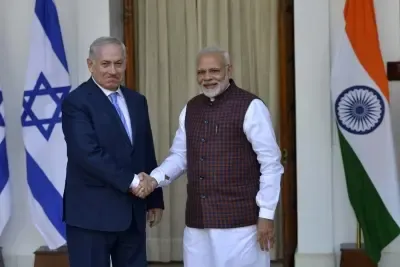
Congress leader and Leader of the Opposition Rahul Gandhi on Saturday, 27 June 2026 sharply criticised Prime Minister Narendra Modi's visit to Israel, calling it a 'bewildering strategic decision' and warning that India is slipping further into Israel's strategic orbit at a time when global opinion is shifting away from it.
Context
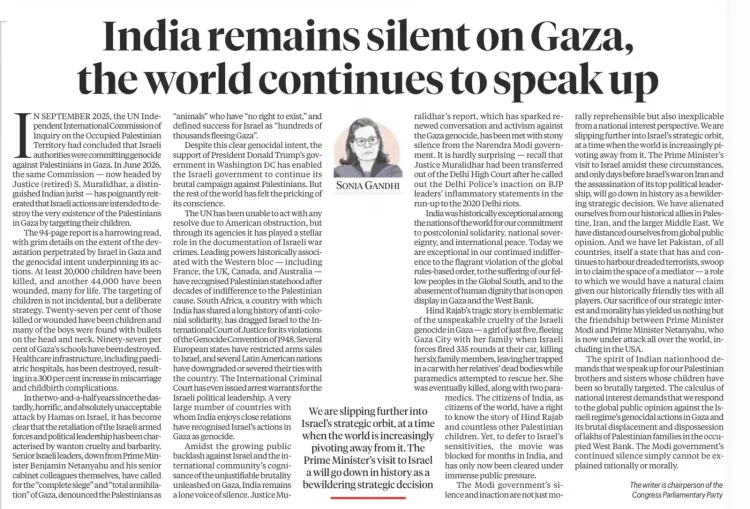
In his post on X, Gandhi wrote: 'We are slipping further into Israel's strategic orbit, at a time when the world is increasingly pivoting away from it. The Prime Minister's visit to Israel will go down in history as a bewildering strategic decision.' He added that 'the spirit of Indian nationhood demands that we speak up' — a reference widely understood as invoking India's historical solidarity with the Palestinian cause.
The post arrives as India faces renewed scrutiny over its West Asia posture, with international pressure mounting on governments to distance themselves from Israel amid the ongoing conflict in Gaza. Gandhi, speaking from his role as Leader of the Opposition in Lok Sabha, framed the visit not merely as a diplomatic misstep but as a departure from the foundational values of Indian foreign policy.
Policy Backdrop
India established full diplomatic relations with Israel in 1992, ending decades of non-recognition. Prime Minister Modi became the first sitting Indian PM to visit Israel in July 2017, elevating the relationship to a formal strategic partnership. Since then, cooperation in defence systems, agricultural technology, counter-terrorism intelligence and cyber capabilities has expanded substantially.
Historically, India maintained a Nehruvian posture of strong support for Palestinian self-determination while keeping Israel at arm's length. That balance shifted progressively after 1992 and more sharply after 2014, as successive governments — including the BJP-led administration — pursued pragmatic, multi-aligned engagement with both Israel and Arab states. India has nonetheless continued to vote in favour of Palestinian self-determination at the United Nations, even as bilateral defence and economic ties with Israel deepened.
The Abraham Accords of 2020, which normalised relations between Israel and several Arab states, reshaped the regional calculus and gave New Delhi additional diplomatic cover to deepen Israel ties without alienating Gulf partners. Gandhi's critique challenges whether that cover still holds as the Gaza conflict has sharpened global divisions.
Stakeholders and Impact
The political salience of the visit is high domestically. India's Muslim community — one of the world's largest — has historically been attentive to the Palestinian issue, and opposition parties have sought to highlight any perceived drift from India's traditional pro-Palestine stance. The Indian foreign policy establishment and defence sector, by contrast, have strong institutional interest in preserving Israel ties given the volume of defence imports and technology collaboration.
Gandhi's framing — invoking 'the spirit of Indian nationhood' — is a direct appeal to a broader constituency beyond partisan lines, positioning the critique as one of national values rather than party politics. It also puts the government on notice ahead of what could be a contentious monsoon session of Parliament, where foreign policy may come under sustained scrutiny.
What's Next
Attention will now turn to India's voting pattern at the next UN General Assembly session on Palestine-related resolutions, which will serve as a concrete test of whether New Delhi's stated commitment to a two-state solution remains intact. Any parliamentary debate during the monsoon session on the PM's Israel visit is likely to see Gandhi and the Indian National Congress press the government for a detailed account of outcomes and strategic rationale.
If the Opposition succeeds in framing the visit as a rupture with India's foundational foreign policy identity, it could complicate the government's messaging both at home and in multilateral forums where India's credibility as a voice of the Global South is at stake.
Point of View
He is reaching beyond the Muslim electorate to a wider constituency that associates India's global identity with non-alignment and solidarity with the Global South. The timing is significant: as international isolation of Israel deepens, the political cost of close association rises, and the Opposition is seeking to attach that cost to the Prime Minister personally. Whether this translates into sustained parliamentary pressure or remains a rhetorical salvo will depend on how the government chooses to publicly account for the visit's outcomes.
NationPress
27 Jun 2026
Frequently Asked Questions
Why did Rahul Gandhi criticise PM Modi's Israel visit?
Rahul Gandhi criticised the visit on 27 June 2026, arguing that India is drifting into Israel's strategic orbit at a time when global opinion is shifting away from Israel, calling it a 'bewildering strategic decision' that conflicts with the spirit of Indian nationhood.
What is India's historical position on Israel and Palestine?
India recognised Israel in 1950 but established full diplomatic relations only in 1992. It has traditionally supported Palestinian self-determination at the UN while gradually expanding defence, agricultural and technology cooperation with Israel, particularly after 2014.
Was PM Modi's Israel visit the first by an Indian Prime Minister?
No. PM Modi became the first sitting Indian Prime Minister to visit Israel in July 2017, which institutionalised the relationship as a strategic partnership. The visit referenced in Gandhi's June 2026 post is a subsequent visit.
What is India's stand on the two-state solution?
India officially supports a two-state solution for the Israel-Palestine conflict and has consistently voted in favour of Palestinian self-determination at United Nations General Assembly sessions, even as it has deepened bilateral ties with Israel.
What could happen next in Indian Parliament over the Israel visit?
The monsoon session of Parliament is expected to see the Indian National Congress and other opposition parties demand a detailed government account of the PM's Israel visit, its agenda and strategic outcomes, potentially making West Asia policy a major parliamentary flashpoint.