Rahul Gandhi Voices Auto Driver's Cry on Rising Costs
Synopsis
Congress leader Rahul Gandhi on 30 May 2026 shared an auto driver's lament — 'We are ruined and no one listens' — to spotlight rising CNG, LPG, food and education costs squeezing India's informal workforce, calling the government deaf to their distress.
Key Takeaways
Rahul Gandhi posted on 30 May 2026 quoting an auto driver: 'We are ruined — and there is no one to listen.' Gandhi described a three-part crisis: income stagnation, runaway inflation, and an unresponsive government.
The post specifically names CNG and LPG prices , children's education, healthcare, and food costs as pressure points.
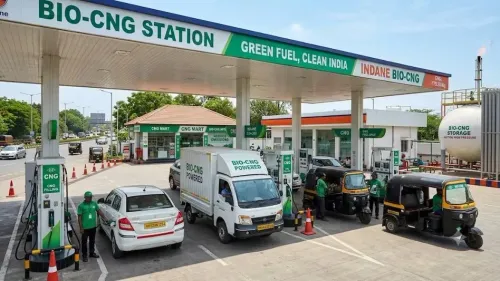
Auto-rickshaw drivers, who rely on CNG, are among the most exposed to simultaneous fuel and food price rises in the informal economy.
Fuel price deregulation, which began in 2014 , shifted pricing to market-linked mechanisms, reducing government control over retail fuel costs.
The post is expected to amplify Opposition demands in Parliament for relief on fuel and food prices.
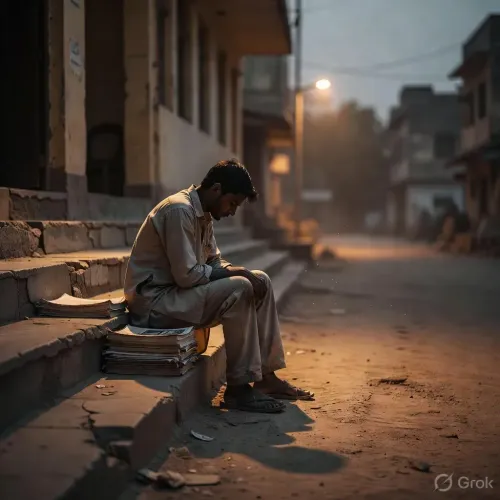
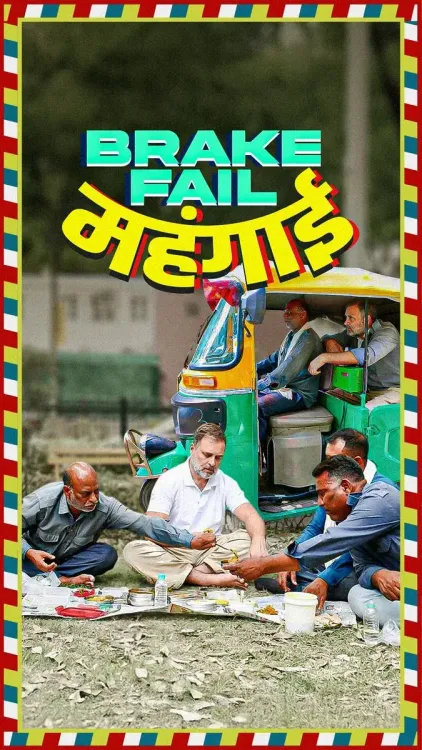
Congress leader and Leader of the Opposition Rahul Gandhi on Saturday, 30 May 2026, shared an account of a conversation with an auto-rickshaw driver to highlight what he described as the deepening economic distress of India's informal workforce. The post, made in Hindi on X, quotes the driver as saying, 'हम तो तबाह हो गए हैं - और सुनने वाला कोई नहीं' ('We are ruined — and there is no one to listen').
Context
Gandhi wrote that during a lunch conversation, an auto driver summed up the condition of 'lakhs of poor people' in a single sentence. He described the situation in sharp terms: 'आमदनी का मीटर बंद। महंगाई का ब्रेक फेल। और सुनने वाली सरकार बहरी।' — translated as 'The income meter has stopped. The brakes on inflation have failed. And the government that should listen is deaf.'
The post goes on to cite a range of pressure points — CNG and LPG prices, children's education, healthcare, and the cost of daily essentials including milk and food — as areas where ordinary households are feeling squeezed. The post also includes a video, the contents of which could not be independently verified at the time of publication.
Policy Backdrop
India's fuel pricing landscape shifted significantly after 2014, when deregulation of petrol and diesel moved prices toward market-linked mechanisms. CNG and LPG pricing has since been subject to periodic revisions tied to global commodity movements and domestic subsidy decisions. For auto-rickshaw drivers, who depend on CNG in most major cities, fuel costs directly determine daily take-home earnings.
Food inflation, education costs, and out-of-pocket health expenditure have been recurring concerns in household consumption surveys. The informal transport sector — which includes millions of auto and taxi drivers — operates without the income buffers available to salaried workers, making it acutely sensitive to simultaneous rises in fuel, food, and service costs.
Stakeholders and Impact
Auto-rickshaw drivers represent a significant slice of India's urban informal economy, with millions dependent on the trade across cities. A sustained rise in CNG prices, combined with stagnant fares in many municipalities, compresses their net income. Low-income households more broadly face the dual burden of higher fuel and food costs with limited access to formal credit or social insurance.
Indian opposition leaders have periodically used citizen anecdotes to draw a contrast between official GDP growth figures and the lived reality of essential costs. Gandhi's post follows a pattern of field-level outreach — meeting workers, farmers, and daily-wage earners — to build a narrative around economic inequality and government accountability.
What's Next
The post is likely to feed into Opposition pressure in Parliament, where questions on fuel pricing, food inflation, and household consumption data are expected to be raised in upcoming sessions. Any fresh data release on retail inflation or household expenditure surveys will be closely watched by both the government and the Opposition for political ammunition.
With the cost of living remaining a live issue across urban and semi-urban India, the debate over whether official economic indicators reflect ground-level conditions is set to intensify in the months ahead.
Point of View
LPG, education, healthcare, food — the post builds a cumulative case that inflation is structural, not episodic. The 'deaf government' framing is pointed: it shifts the debate from whether prices have risen to whether the administration is politically willing to act. With Parliament sessions ahead and household consumption data in the pipeline, this kind of street-level testimony is likely to become a recurring Opposition tool.
NationPress
15 Oct 2026
Frequently Asked Questions
What did Rahul Gandhi say about the auto driver?
Rahul Gandhi quoted an auto driver as saying 'We are ruined — and there is no one to listen,' using the anecdote to illustrate the economic hardship faced by lakhs of poor Indians amid rising fuel, food and education costs.
Why are CNG prices a concern for auto drivers in India?
Auto-rickshaw drivers in most Indian cities run on CNG, so any rise in CNG prices directly reduces their daily take-home income, especially when municipal fare revisions lag behind fuel cost increases.
What is Rahul Gandhi's current political position?
Rahul Gandhi is the Leader of the Opposition in the Lok Sabha and an Indian National Congress MP from Rae Bareli.
How has India's fuel pricing policy changed since 2014?
Since 2014, petrol and diesel prices were deregulated and linked to market rates, reducing direct government control. CNG and LPG prices have also seen periodic market-linked revisions, affecting millions of households and transport workers.
What issues does Rahul Gandhi say are hurting poor Indians?
Gandhi's post specifically highlights rising CNG and LPG prices, children's education costs, healthcare expenses, and the cost of daily essentials like milk and food as the main burdens on low-income households.