Rajasthan Cabinet Clears UCC Bill, Tree Protection Law
Synopsis
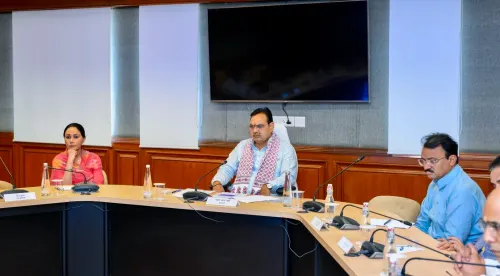
The Rajasthan cabinet chaired by CM Bhajanlal Sharma approved the Uniform Civil Code Bill-2026, the Trees Protection Bill-2026, a rural water supply operation and maintenance policy, and multiple soldier and personnel welfare decisions on 13 August 2026.
Key Takeaways
The cabinet approved the draft Rajasthan Uniform Civil Code Bill-2026 , covering marriage, divorce, inheritance, maintenance, and live-in relationships.
The draft Rajasthan Trees (Protection) Bill-2026 was cleared to combat illegal tree felling and strengthen environmental enforcement.
A new Operation and Maintenance Policy for rural water supply infrastructure was approved to sustain existing networks in villages.
Several decisions on sainik kalyan and karmik kalyan — soldier and personnel welfare — were taken in the same sitting.
Uttarakhand enacted India's first state-level UCC in February 2024; Rajasthan's bill, if passed, would make it a significant second.
Both bills must still be introduced and passed in the Rajasthan Legislative Assembly before becoming law.
Three sweeping decisions in a single sitting — that is what Chief Minister Bhajanlal Sharma's cabinet delivered on Thursday, 13 August 2026, clearing draft legislation that touches personal law, environmental protection, rural water infrastructure, and the welfare of soldiers in one of India's most politically consequential state governments.
Rajasthan's UCC: Following Uttarakhand's Footsteps
The cabinet approved the draft of the Rajasthan Uniform Civil Code Bill-2026, a legislation designed to bring uniformity to laws governing marriage, divorce, inheritance, maintenance, and live-in relationships across communities in the state. The move places Rajasthan on a path that Uttarakhand first charted in February 2024, when it became the first Indian state to enact a UCC — a reform the BJP has championed at the national level for decades. If passed by the state assembly, Rajasthan would become a significant second domino in this constitutional shift.
The political weight here is hard to overstate. Personal law in India has long been governed by separate codes for different religious communities. A state-level UCC directly contests that framework, and its passage through the assembly will be watched closely by courts, civil society, and opposition parties alike.
The Rajasthan Trees (Protection) Bill-2026
Alongside the UCC, the cabinet greenlighted the draft Rajasthan Trees (Protection) Bill-2026, aimed squarely at curbing illegal felling and strengthening environmental safeguards across the state. Rajasthan, with its vast arid and semi-arid geography, faces persistent pressure on its tree cover from agricultural expansion, urban sprawl, and infrastructure projects. A dedicated legislative framework signals an intent to move enforcement from administrative circulars to statutory teeth.
Rural Water Supply and Sainik Kalyan Decisions
The cabinet also cleared an Operation and Maintenance Policy for rural water supply infrastructure — a move aimed at sustaining the pipeline and pumping networks that have expanded significantly under central and state-level schemes in recent years. The policy targets the persistent gap between building rural water assets and keeping them functional over time.
Rounding out the session were several decisions on sainik kalyan (soldier welfare) and karmik kalyan (personnel welfare). Rajasthan has one of the highest per-capita contributions to the Indian armed forces of any state, making defence-family welfare a politically resonant and genuinely substantive priority for successive governments here.
What Reaches the Assembly Next
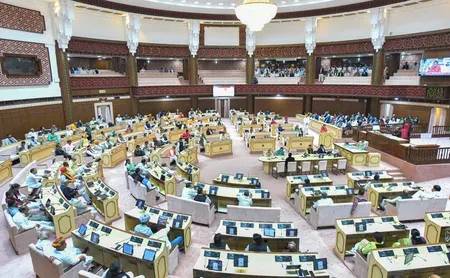
Cabinet approval of a bill's draft is the upstream step — the real test comes when these proposals are tabled in the Rajasthan Legislative Assembly. The UCC bill in particular is likely to draw sharp debate, both on the floor and in the courts. The operation and maintenance policy for rural water supply, by contrast, is an executive action that can begin rolling out without legislative clearance.
One cabinet meeting, four distinct policy fronts. The Sharma government is betting that the breadth signals momentum — and that voters in a state watching both its trees and its soldiers will notice.
Point of View
Creating a template other BJP-governed states may reference. The rural water and sainik kalyan decisions, while less headline-grabbing, address two voter blocs — rural households and defence families — that are foundational to BJP's Rajasthan coalition. The real test of governance ambition comes when these drafts face the assembly floor and, almost certainly, the courts.
NationPress
14 Aug 2026
Frequently Asked Questions
What is the Rajasthan Uniform Civil Code Bill 2026?
The Rajasthan Uniform Civil Code Bill-2026 is a draft legislation approved by the state cabinet that seeks to create a single, uniform legal framework governing marriage, divorce, inheritance, maintenance, and live-in relationships for all communities in Rajasthan, replacing the current system of separate personal laws.
Which state first enacted a Uniform Civil Code in India?
Uttarakhand became the first Indian state to enact a Uniform Civil Code, doing so in February 2024. Rajasthan's bill, if passed by the state assembly, would make it the second state to do so.
What does the Rajasthan Trees Protection Bill 2026 do?
The Rajasthan Trees (Protection) Bill-2026 aims to prevent illegal felling of trees and strengthen environmental conservation in the state by providing a statutory legal framework for enforcement, moving beyond administrative orders.
What is the rural water supply policy approved by the Rajasthan cabinet?
The cabinet cleared an Operation and Maintenance Policy for rural water supply infrastructure, designed to ensure that existing water supply networks in villages are properly maintained and kept functional over the long term.
What sainik kalyan decisions did the Rajasthan cabinet take?
The cabinet took several decisions related to sainik kalyan (soldier welfare) and karmik kalyan (personnel welfare), though specific details of individual measures are yet to be officially detailed. Rajasthan has one of the highest per-capita contributions to the Indian armed forces, making such decisions a recurring priority.