Rajasthan CM Bhajanlal pledges daytime power for all farmers by 2027
Synopsis
Rajasthan CM Bhajan Lal Sharma has pledged daytime electricity to farmers across all districts by 2027. The announcement builds on feeder-separation reforms under the DDUGJY and aligns with the state's growing solar capacity, setting a firm deadline for a long-pending rural power upgrade.
Key Takeaways
The Chief Minister's Office of Rajasthan announced on 2 August 2026 that farmers in all districts will receive daytime electricity by 2027 .
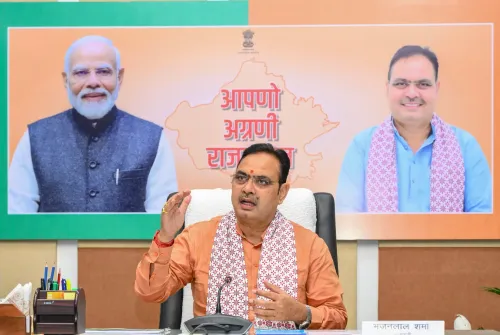
CM Bhajan Lal Sharma of the BJP made the pledge under the 'Aapno Agrani Rajasthan' campaign.
The shift from night-time to daytime agricultural power supply addresses chronic safety hazards for farmers irrigating in darkness.
The policy builds on the Deen Dayal Upadhyaya Gram Jyoti Yojana (2015) , which mandated separation of agricultural and domestic power feeders.
Rajasthan's solar energy potential makes daytime agricultural supply especially viable through renewable-integrated distribution.
State budget allocations and district-level feeder separation progress will determine whether the 2027 deadline is met.
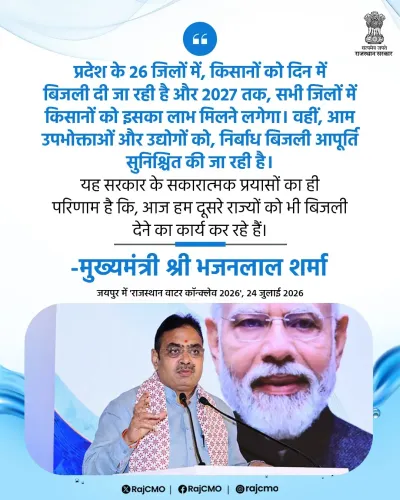
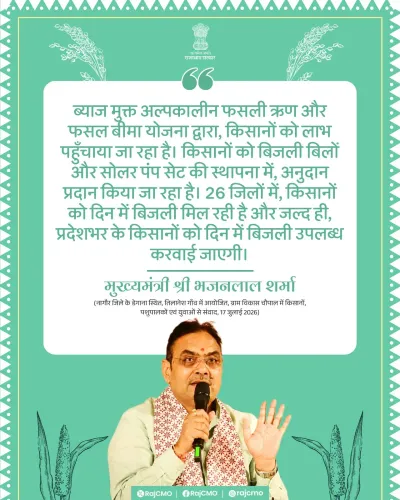
Rajasthan's 33 districts and their farming communities have a date with the sun — and this time, the government means it literally. The Chief Minister's Office of Rajasthan announced on Sunday, 2 August 2026 that Chief Minister Bhajan Lal Sharma has committed to supplying daytime electricity to farmers across every district in the state by 2027.
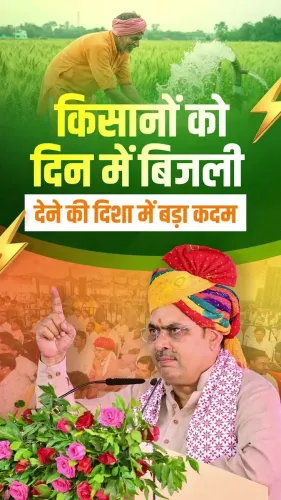
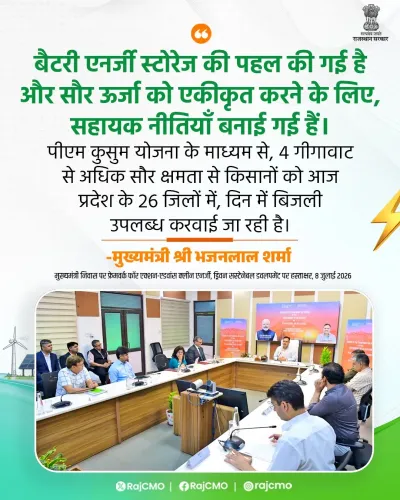
Posting under the hashtag #आपणो_अग्रणी_राजस्थान ('Our Leading Rajasthan'), the CMO's message was direct: 'वर्ष 2027 तक सभी जिलों में किसानों को दिन में बिजली दी जाएगी' — 'By the year 2027, farmers in all districts will be given electricity during the day.'
Why daytime power changes everything for Rajasthan's farmers
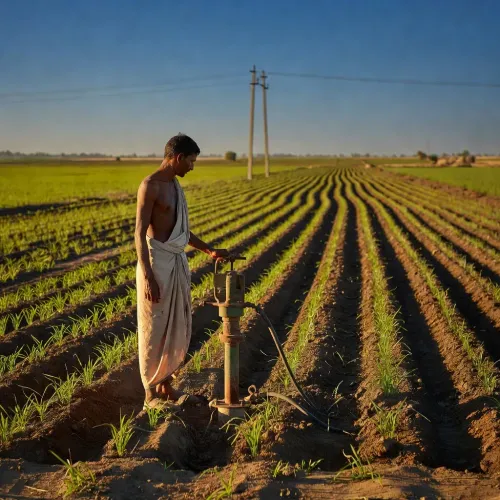
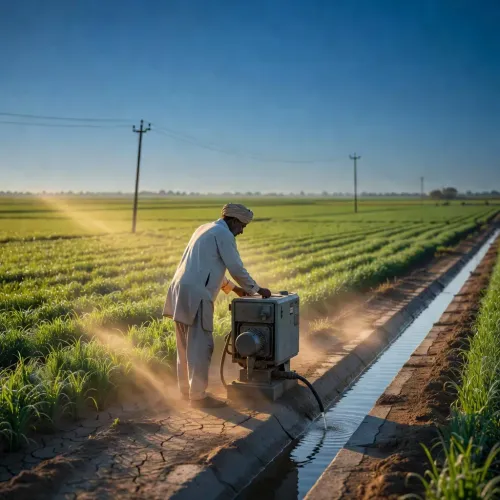
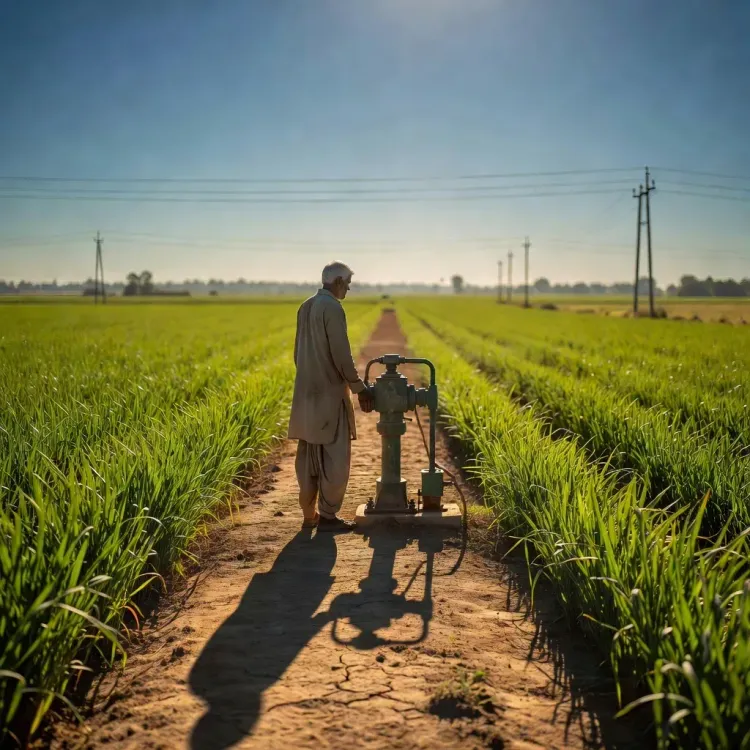
For decades, agricultural feeders across India — including in Rajasthan — have pushed electricity to farms during off-peak night hours, forcing farmers to irrigate in darkness, often at serious personal risk. Pump failures, snake bites, and accidents in unlit fields have been chronic hazards. Shifting supply to daylight hours is not a minor scheduling tweak; it is a fundamental safety and productivity upgrade. Daytime power also unlocks the logic of solar-integrated supply. As Rajasthan — one of India's sunniest states — expands its renewable capacity, routing that generation directly to agricultural feeders during peak solar hours creates a natural alignment: the sun powers the pumps when the farmer can actually use them.The infrastructure reform behind the promise
The policy lineage here runs through the Deen Dayal Upadhyaya Gram Jyoti Yojana (DDUGJY), launched in 2015, which mandated feeder separation — physically splitting agricultural and domestic power lines so each can be managed independently. Rajasthan, like several other states, has been implementing this separation progressively. The 2027 target announced by CM Sharma essentially sets a hard deadline for completing that transition statewide. What to watch now: state budget allocations for agricultural feeder separation projects, progress on solar-linked rural supply schemes, and district-level rollout timelines that will determine whether the 2027 deadline holds.Bhajan Lal Sharma's infrastructure push since December 2023
Bhajan Lal Sharma took charge as Chief Minister in December 2023 after the Bharatiya Janata Party won the Rajasthan assembly elections. Rural infrastructure and agricultural welfare have been consistent planks of his administration's public messaging. The daytime power pledge, framed under the 'Aapno Agrani Rajasthan' ('Our Leading Rajasthan') campaign, fits a broader pattern of state-level distribution reforms that national policy has been nudging for years — but that require state governments to actually execute. For Rajasthan's farmers, the proof will be in the grid — and the clock is now running.Point of View
Not announcements. The alignment with Rajasthan's solar buildout gives the target technical logic, but feeder separation projects have historically slipped on funding and contractor timelines. The real test is whether state budget allocations in the next two cycles back the promise with capital.
NationPress
2 Aug 2026
Frequently Asked Questions
What did Rajasthan CM Bhajan Lal Sharma announce about electricity for farmers?
CM Bhajan Lal Sharma announced that farmers in all districts of Rajasthan will receive electricity during daytime hours by the year 2027, as posted by the official Rajasthan CMO account on 2 August 2026.
Why is daytime electricity important for farmers in Rajasthan?
Agricultural power supply in India has historically been routed to farms at night, forcing farmers to irrigate in darkness — creating safety hazards and reducing productivity. Daytime supply allows safer, more efficient farm operations and aligns with solar power generation hours.
What is the Deen Dayal Upadhyaya Gram Jyoti Yojana and how does it relate to this?
The Deen Dayal Upadhyaya Gram Jyoti Yojana, launched in 2015, is a central government scheme that mandates separating agricultural and domestic electricity feeders so each can be managed independently. Rajasthan's 2027 target builds on this framework to complete the transition statewide.
When did Bhajan Lal Sharma become Chief Minister of Rajasthan?
Bhajan Lal Sharma became Chief Minister of Rajasthan in December 2023 after the Bharatiya Janata Party won the state assembly elections.
How will Rajasthan achieve daytime power supply for farmers by 2027?
The pathway involves completing feeder separation projects across all districts and integrating solar-based supply, leveraging Rajasthan's high solar potential to route renewable generation directly to agricultural feeders during daylight hours.