Rajasthan CMO shares ancient proverb on trees and water conservation
Synopsis
The Chief Minister's Office of Rajasthan shared a classical Sanskrit proverb on 2 August 2026 placing trees above sons and ponds above stepwells in ecological value, aligning with CM Bhajan Lal Sharma's push for water conservation and afforestation under the 'Aapno Agraṇi Rajasthan' banner.
Key Takeaways
The Rajasthan CMO posted an ancient Sanskrit proverb on 2 August 2026 ranking trees as the highest ecological asset — worth ten sons, who are each worth ten ponds.
The verse explicitly names the traditional hierarchy: wells → stepwells (baavdis) → ponds (taalaabs) → sons → trees .
Rajasthan , India's largest and largely arid state, has a centuries-old tradition of community water structures that the proverb directly references.
The post was tagged with #आपणो_अग्रणी_राजस्थान , the Bhajan Lal Sharma government's signature development hashtag.
The timing — during the monsoon season — aligns with when the state typically runs tree plantation and water-body restoration drives.
A single tree outweighs ten sons. Ten sons outweigh ten ponds. That is the ancient calculus of ecological value that the Chief Minister's Office of Rajasthan placed before its followers on Sunday, 2 August 2026 — invoking a Sanskrit proverb to frame the state's environmental priorities under Chief Minister Bhajan Lal Sharma.
The post shared a verse that translates as: 'Das kuon ke barabar ek baavdi, das baavdiyon ke barabar ek talaab, das taalabon ke barabar ek putra tatha das putron ke barabar ek vriksh hota hai' — 'One stepwell equals ten wells; one pond equals ten stepwells; one son equals ten ponds; and one tree equals ten sons.' The hashtag #आपणो_अग्रणी_राजस्थान ('Our Leading Rajasthan') anchored the message in the state government's broader development narrative.
A proverb rooted in Rajasthan's water survival culture
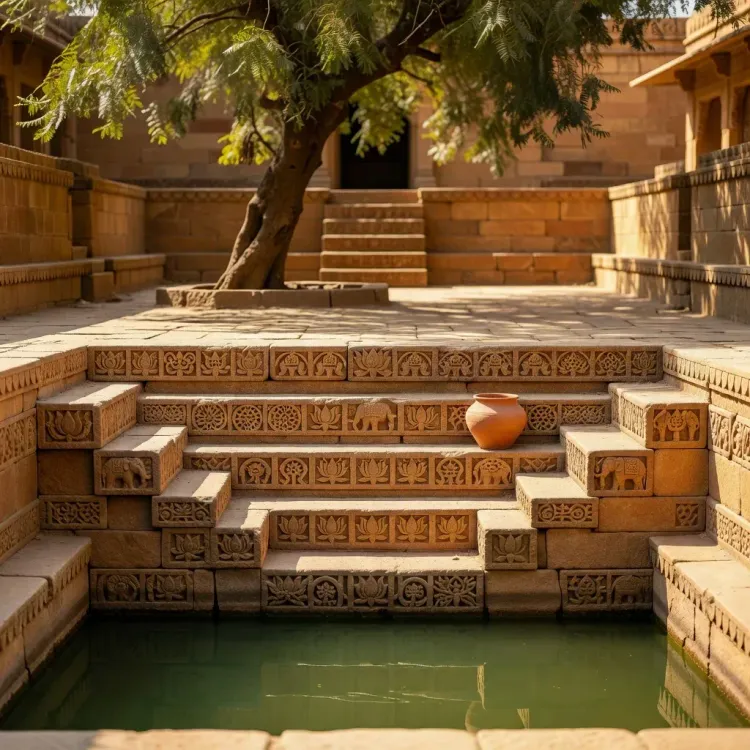
Rajasthan — India's largest state by area, covering a largely arid and semi-arid landscape — has for centuries relied on an intricate hierarchy of water structures: open wells, stepwells (baavdis), and community ponds (taalaabs). The proverb the CMO quoted is not decorative; it encodes a real engineering and ecological logic developed by desert communities over generations, placing trees at the apex of that hierarchy as the ultimate guardians of groundwater and soil.
The state regularly promotes afforestation and the revival of traditional water bodies to counter desertification and seasonal water stress. Monsoon months are a natural window for plantation drives and the desilting and restoration of old ponds — making the timing of this post pointed rather than incidental.
Sharma's BJP government and the 'Aapno Agraṇi Rajasthan' frame
Bhajan Lal Sharma, who took office in December 2023, has positioned his administration around the slogan of a 'leading Rajasthan' — one that draws on the state's cultural heritage while addressing contemporary challenges including water scarcity and climate resilience. Invoking classical wisdom on trees and water structures fits neatly into that messaging architecture, signalling that environmental stewardship is being framed not as a modern policy import but as a continuation of Rajasthan's own civilisational knowledge.
For communities in districts like Barmer, Jaisalmer, and Jodhpur, where groundwater is scarce and every monsoon rain counts, the proverb carries weight that goes well beyond symbolism. A tree planted today is a water table protected tomorrow.
Point of View
The Rajasthan CMO is doing something deliberate: framing environmental action as cultural continuity, not bureaucratic obligation. This is a well-worn BJP communications strategy — rooting modern governance goals in civilisational heritage to build broader popular resonance. For Bhajan Lal Sharma, whose government is still consolidating its identity after the December 2023 election win, the 'Aapno Agraṇi Rajasthan' hashtag is doing double duty: it signals development ambition while the proverb signals rootedness. The real test will be whether plantation drives and baavdi restorations announced in the monsoon window translate into measurable ground-level outcomes by the next dry season.
NationPress
16 Sept 2026
Frequently Asked Questions
What does the proverb shared by Rajasthan CMO mean?
The proverb states that one stepwell equals ten wells, one pond equals ten stepwells, one son equals ten ponds, and one tree equals ten sons — placing trees at the top of an ecological value hierarchy rooted in ancient Indian wisdom.
Who is Bhajan Lal Sharma and why is he tagged in this post?
Bhajan Lal Sharma is the Chief Minister of Rajasthan from the BJP, who assumed office in December 2023. He is tagged because the CMO's official account operates under his administration and reflects his government's messaging.
What is the meaning of #आपणो_अग्रणी_राजस्थान?
The hashtag translates from Rajasthani as 'Our Leading Rajasthan' and is the Bhajan Lal Sharma government's signature slogan for its development and governance agenda.
Why does Rajasthan focus so much on water conservation?
Rajasthan is India's largest state and largely arid, making water scarcity a chronic challenge. The state has a long tradition of stepwells and community ponds, and governments regularly promote their revival alongside afforestation to combat desertification.
What is a baavdi and why is it significant in Rajasthan?
A baavdi (stepwell) is a traditional water structure with descending steps leading to a water source, common across Rajasthan. They served as community water reserves for centuries and are now being revived as part of water conservation efforts in the state.