Rajasthan panchayat polls: BJP, Congress rework strategies after civic election gaps
Synopsis
Despite winning boards in two-thirds of Rajasthan's civic bodies, the BJP is treating its civic poll performance as a warning sign — not a victory lap. With Chief Minister Bhajanlal Sharma personally touring districts and a new state in-charge holding his first organisational review, the party is racing to close grassroots gaps before the Panchayat elections. The Congress, stung by cross-voting and factionalism, is considering a structural overhaul that could shift candidate control away from district leaders entirely.
Key Takeaways
The BJP secured boards in roughly two-thirds of Rajasthan's civic bodies but is reviewing vote-share shortfalls and organisational gaps ahead of Panchayat polls.
Chief Minister Bhajanlal Sharma visited Pratapgarh, Udaipur, Sri Ganganagar, Suratgarh, Alwar-Khairthal Tijara, Kota-Jhalawar , and Kishangarh on 26–27 September , combining government events with party meetings.
BJP National General Secretary Sanjay Bhatia held his first organisational review as Rajasthan in-charge , calling for government-organisation synergy at the grassroots level.
The Congress lost board formations in several civic bodies despite holding councillor majorities, due to cross-voting and factionalism.
Rajasthan Congress Media Chairperson Swarnim Chaturvedi confirmed the party is considering deploying observers at the Panchayat Samiti level , not just Assembly constituency level.
Both parties are focused on post-election floor management for Panchayat Samitis and Zila Parishads , where defections can erase numerical advantages.
Both the Bharatiya Janata Party (BJP) and the Indian National Congress are actively recalibrating their organisational strategies ahead of the upcoming Panchayat elections in Rajasthan, drawing direct lessons from the recent civic body polls. While the BJP secured boards in roughly two-thirds of the state's urban local bodies, its central leadership is treating the results as a mixed signal — one that exposed vote-share deficits and organisational gaps that cannot be ignored at the rural level.
BJP's Ground-Level Overhaul
Despite its overall performance in the civic polls, the BJP's internal review has flagged areas where electoral numbers fell short of the party's own expectations. The course correction is now focused on four key areas: booth management, local caste equations, candidate selection, and tighter coordination between the state government and the party organisation.
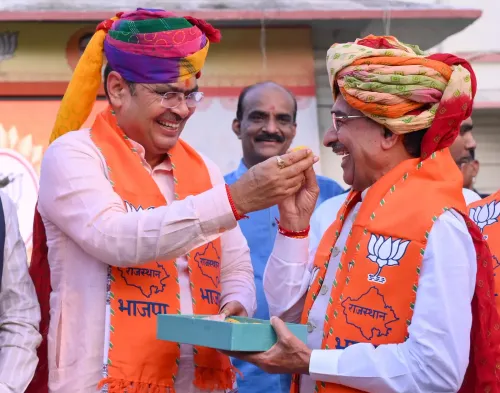
Chief Minister Bhajanlal Sharma has taken a hands-on role in this exercise. During recent district tours — including visits to Pratapgarh, Udaipur, Sri Ganganagar, Suratgarh, Alwar-Khairthal Tijara, Kota-Jhalawar, and Kishangarh on 26 and 27 September — Sharma combined government programme appearances with closed-door meetings involving party workers and local leaders. Upcoming visits to Barmer, Jodhpur, and Pali are expected to follow the same format.
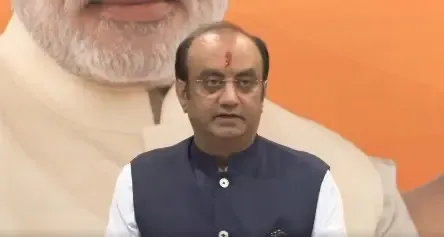
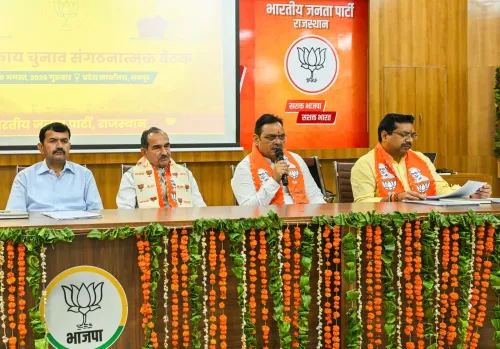
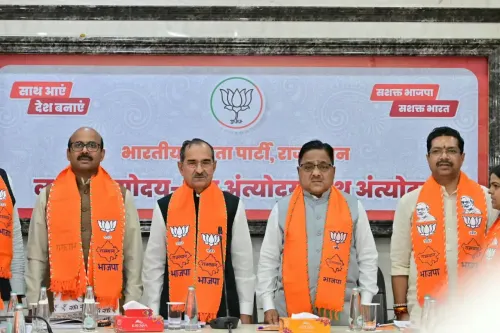
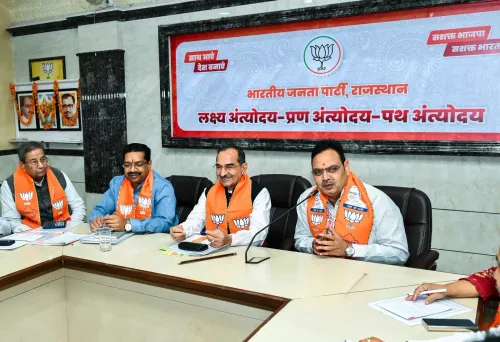
BJP National General Secretary and Rajasthan State In-charge Sanjay Bhatia held a formal organisational review at the party's state office — his first since taking charge — with state office-bearers, district presidents, and heads of various wings. Bhatia credited the civic poll results to the combined effort of party workers and the BJP-led government's performance, and called for replicating that government-organisation synergy at the grassroots level ahead of the Panchayat polls.
State BJP president Madan Rathore has also stepped up outreach, with a particular focus on engaging younger voters. The party's broader strategy involves converting government welfare and development initiatives into electoral support at the village level — where local issues, caste combinations, and candidate equations can decisively shift outcomes.
Congress Confronts Factionalism and Floor Management
For the Congress, the civic body elections exposed a structural vulnerability: the party had significant councillor strength in several urban local bodies but could not convert that numerical advantage into board control. Cross-voting and ticket-related disputes surfaced in multiple districts, and factionalism among local leaders undermined coordination at critical moments.
The party is now weighing a significant shift in how it approaches Panchayat elections — specifically, how much candidate selection and post-election management should be centralised at the state level versus left to district leadership. The internal debate reflects a tension between local autonomy and the need for tighter discipline.
As part of its revised approach, the Congress is considering deploying observers not only at the Assembly constituency level but also at the Panchayat Samiti level — a more granular layer of supervision than it has previously employed. Swarnim Chaturvedi, Media Chairperson of the Rajasthan Congress, confirmed that the party is actively examining this proposal to strengthen coordination between the state organisation and local units during both candidate selection and the post-election process of forming Panchayat bodies.
The Larger Stakes: Panchayat Samitis and Zila Parishads
Winning individual Panchayat seats is only part of the challenge for both parties. Control of Panchayat Samitis and Zila Parishads — the intermediate and district-level tiers of rural governance — requires cohesion among elected members after polling day, a phase where both parties have historically struggled with defections and internal splits.
This is the dimension that makes the Panchayat elections structurally more complex than the civic polls: the margin for post-election mismanagement is narrower, and the consequences for rural governance are more direct. Notably, the civic election experience has sharpened both parties' awareness of how quickly a numerical advantage can dissolve without disciplined floor management.
What to Watch
With both the BJP and Congress now in active preparation mode, the Panchayat elections will serve as a real-time audit of their respective grassroots networks. The BJP's test is whether its government-organisation coordination model can be replicated at the village level; the Congress's test is whether greater state-level intervention can contain the factionalism that cost it board formations in the civic round. The election date is yet to be officially announced, but organisational activity on both sides suggests the campaign is already underway.
Point of View
Which suggests its leadership sees the Panchayat elections as a different and harder contest. Rural Rajasthan's caste arithmetic and booth-level dynamics are far less amenable to top-down management than urban wards. The Congress's problem is almost the mirror image: it has the numbers but not the discipline, and its proposed fix — more state-level supervision — risks alienating the district leaders it needs to mobilise voters in the first place. Neither party has yet resolved the fundamental tension between central control and local buy-in, and that tension will define the Panchayat campaign more than any scheme or slogan.
NationPress
30 Sept 2026
Frequently Asked Questions
Why are BJP and Congress recalibrating strategies for Rajasthan Panchayat elections?
Both parties are drawing lessons from the recent civic body elections, where the BJP identified vote-share gaps and organisational weaknesses despite winning boards in two-thirds of civic bodies, while the Congress lost board formations it should have secured due to cross-voting and factionalism. These experiences are directly shaping how each party plans to approach candidate selection, booth management, and post-election floor management in the Panchayat polls.
What is the BJP's strategy for the Rajasthan Panchayat elections?
The BJP is focusing on booth management, local caste equations, candidate selection, and tighter coordination between the state government and the party organisation. Chief Minister Bhajanlal Sharma is personally conducting district tours to gather grassroots feedback, while BJP National General Secretary Sanjay Bhatia has held his first organisational review as Rajasthan in-charge.
What problems did the Congress face in Rajasthan's civic body elections?
The Congress had substantial councillor strength in several civic bodies but failed to translate that into board control due to cross-voting and ticket-related disputes. Factionalism among local leaders and poor floor management were the primary reasons the party could not form boards in several urban local bodies where it held a numerical advantage.
What is the Congress planning to do differently in the Panchayat elections?
The Congress is considering greater state-level involvement in candidate selection and post-election management, including deploying observers at the Panchayat Samiti level — a more granular tier than its previous Assembly constituency-level deployment. Media Chairperson Swarnim Chaturvedi confirmed the party is actively examining this proposal.
Why do Panchayat Samitis and Zila Parishads matter in Rajasthan's rural elections?
Panchayat Samitis and Zila Parishads are the intermediate and district-level tiers of rural governance, and control over them requires maintaining cohesion among elected members after polling day — not just winning individual seats. Both BJP and Congress have historically struggled with post-election defections at this level, making floor management as important as the election campaign itself.