Rajnath Singh: India must lead in advanced tech, not just adopt it
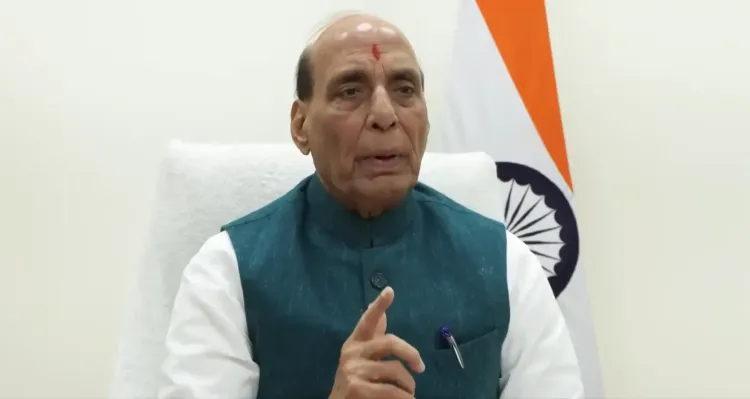
Synopsis
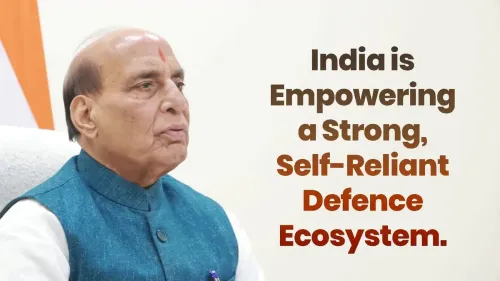
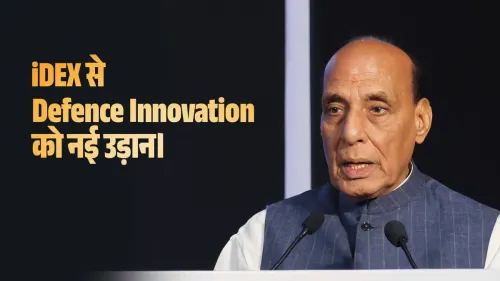
Defence Minister Rajnath Singh used a major NDT conference in Hyderabad to deliver a pointed message: India must stop being a consumer of advanced technologies and start building, owning, and exporting them. With AI, Digital Twins, and Robotics reshaping inspection science, Singh's call to embed quality at every manufacturing stage — and develop indigenous NDT solutions — signals a sharper accountability push inside the Aatmanirbhar Bharat framework.
Key Takeaways
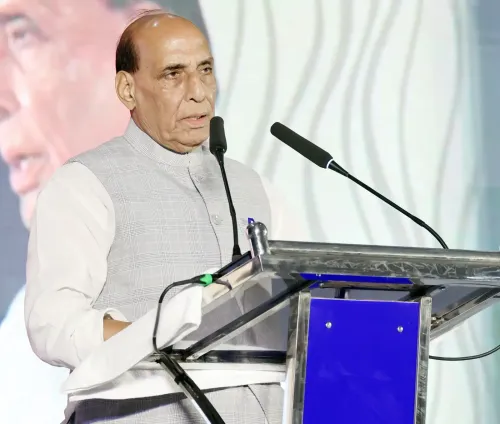
Defence Minister Rajnath Singh addressed the 36th NDT Conference in Hyderabad on 15 November 2026 .
He called for India to become a developer and innovator in advanced technologies, not merely a user.
Singh stressed zero-compromise on integrity of testing results in strategic defence applications.
He highlighted AI, Machine Learning, Robotics, Digital Twins and Predictive Analytics as transformative tools for NDT.
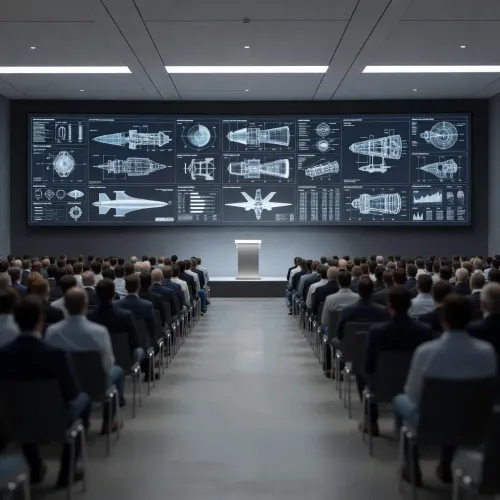
Over 2,000 professionals attended the three-day conference organised by the Indian Society for Non-Destructive Testing .
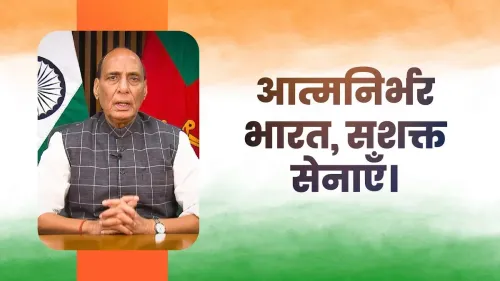
Singh cited INS Vikrant as a key milestone in India's Aatmanirbhar Bharat defence journey.
Defence Minister Rajnath Singh on Sunday, 15 November 2026, called on India to become not merely a user of advanced technologies but a developer, innovator, and global leader — particularly in critical defence domains. Addressing the 36th Annual Conference on Non-Destructive Evaluation and Enabling Technologies and the 15th International Symposium on Non-Destructive Testing in Aerospace in Hyderabad, Singh underscored the urgent need to strengthen India's Non-Destructive Testing (NDT) ecosystem as a cornerstone of defence preparedness and self-reliance.
What Is NDT and Why It Matters for Defence
Singh explained that NDT technologies allow examination of the integrity of materials, components, and structures without causing any damage to them. Drawing an accessible analogy, he noted that just as ultrasound and X-rays help examine the human body without surgical intervention, NDT techniques detect internal defects in critical components without dismantling or damaging them.
In defence applications — spanning missiles, aircraft, naval platforms, and spacecraft — Singh asserted that quality is not merely a manufacturing requirement but an essential element of operational reliability and national security. 'Hidden defects can affect operational availability, increase maintenance requirements, reduce the service life of equipment and, in critical situations, jeopardise mission success,' he said.
Key Demands: Beyond Defect Detection to Prevention
Singh called for a cultural shift in India's manufacturing and defence sectors. 'We need to move beyond a culture of merely identifying defects towards actively preventing them by embedding quality at every stage of the manufacturing process,' he said. He stressed that testing results must be accurate, reliable, and traceable, based on robust procedures and appropriate standards, assessed by qualified professionals.
He also called on Public Sector Undertakings (PSUs), private manufacturers, start-ups, and MSMEs to play an active role in building a consistent quality assurance culture across the entire defence industrial ecosystem.
AI, Robotics, and Digital Twins: The Next Frontier in NDT
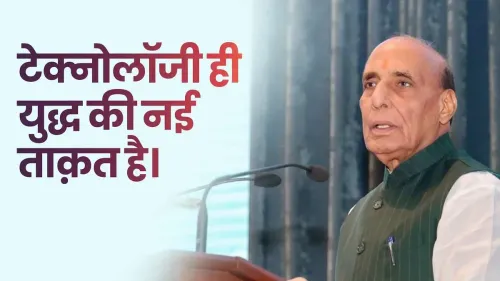
The Defence Minister noted that the field of Non-Destructive Evaluation is undergoing a major technological transformation. Technologies such as Artificial Intelligence (AI), Machine Learning, Robotics, Advanced Sensors, Digital Twins, and Predictive Analytics are significantly expanding the possibilities of inspection and structural health monitoring. These tools can improve inspection speed and consistency, assist in analysing complex data, and identify patterns not easily detectable through conventional methods, he said.
Singh called for the intelligent integration of proven inspection techniques with advanced digital technologies, arguing that such convergence would make inspection processes more accurate, efficient, and responsive to emerging industrial requirements.
India's Indigenous Defence Push and INS Vikrant
Highlighting India's growing indigenous defence ecosystem, Singh cited achievements in missile development, naval platforms, aerospace engineering, radar systems, and space applications as reflections of the nation's expanding scientific and industrial capabilities. He described the commissioning of India's first indigenous aircraft carrier, INS Vikrant, as an important milestone in the Aatmanirbhar Bharat journey.
The three-day conference, organised by the Indian Society for Non-Destructive Testing in Hyderabad, has brought together over 2,000 professionals, researchers, industry experts, and students to deliberate on the latest advancements, emerging technologies, and applications in NDT. As India accelerates its defence indigenisation agenda, the push to develop domestic NDT capabilities will be a critical — if less visible — test of whether Aatmanirbhar Bharat delivers at the systems level.
Point of View
But the substance is sharper than the optics suggest. India's dependence on foreign inspection technologies for its own defence systems is a quiet vulnerability — one that rarely features in the Aatmanirbhar Bharat conversation dominated by missiles and aircraft carriers. The call to indigenise NDT software, specialised sensors, and evaluation equipment is a tacit admission that the self-reliance agenda has gaps further down the supply chain. Whether PSUs and MSMEs will actually invest in this less glamorous but operationally critical layer remains the real question — and one the minister did not answer.
NationPress
15 Nov 2026
Frequently Asked Questions
What is Non-Destructive Testing (NDT) and why is it important for India's defence sector?
Non-Destructive Testing (NDT) refers to techniques that examine the integrity of materials, components, and structures without damaging them — similar to how ultrasound and X-rays work on the human body. In defence applications such as missiles, aircraft, and naval platforms, NDT is critical because hidden defects can jeopardise mission success and reduce equipment service life.
What did Rajnath Singh say at the Hyderabad NDT conference?
Defence Minister Rajnath Singh called on India to become a developer, innovator, and global leader in advanced technologies, not merely a user. He stressed the need to strengthen indigenous NDT capabilities, enforce zero-compromise on testing integrity in strategic applications, and embed quality at every stage of the defence manufacturing process.
Which technologies did Rajnath Singh highlight as transforming NDT?
Singh identified Artificial Intelligence, Machine Learning, Robotics, Advanced Sensors, Digital Twins, and Predictive Analytics as technologies significantly expanding inspection and structural health monitoring possibilities. He called for their intelligent integration with proven NDT techniques.
What is the significance of INS Vikrant in this context?
Singh cited the commissioning of INS Vikrant, India's first indigenous aircraft carrier, as a milestone in the Aatmanirbhar Bharat journey. It represents the kind of end-to-end indigenous capability — including quality assurance and NDT — that he is urging India to replicate across defence domains.
Who attended the NDT conference in Hyderabad?
The three-day conference, organised by the Indian Society for Non-Destructive Testing, brought together over 2,000 professionals, researchers, industry experts, and students. It was held as part of the 36th Annual Conference on Non-Destructive Evaluation and the 15th International Symposium on Non-Destructive Testing in Aerospace.