Rajnath Singh addresses first Tri-Services All Women Sailing Expedition
Synopsis
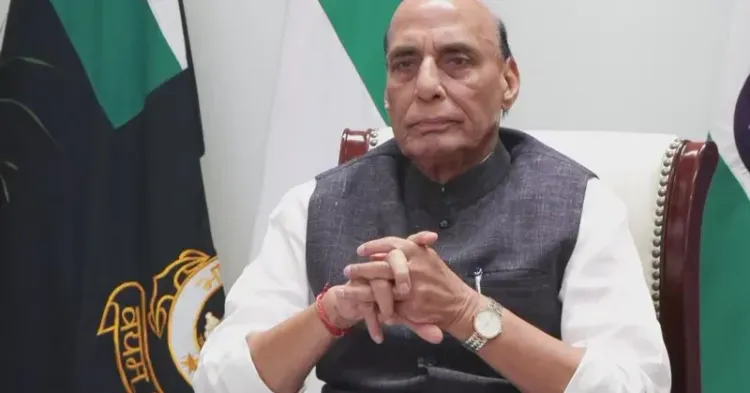
Union Defence Minister Rajnath Singh on 22 July 2026 addressed the Flag-in Ceremony of India's first-ever Tri-Services All Women Circumnavigation Sailing Expedition via video conferencing, cementing the government's commitment to gender integration and joint operational culture across the Army, Navy, and Air Force.
Key Takeaways
Rajnath Singh addressed the Flag-in Ceremony of the first Tri-Services All Women Circumnavigation Sailing Expedition on 22 July 2026 via video conferencing.
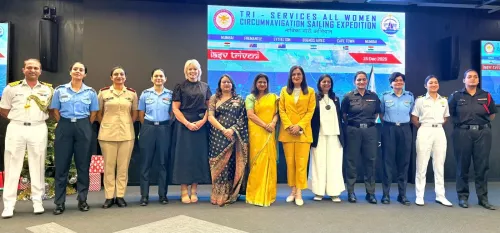
The expedition is the first to bring together women personnel from the Army, Navy, and Air Force in a single joint circumnavigation voyage.
It follows the 2017–18 Navika Sagar Parikrama , in which six Indian Navy women officers completed India's first all-women global circumnavigation aboard INSV Tarini .
The event reflects India's decade-long policy of expanding permanent commissions and combat roles for women, accelerated since 2015 .
The tri-service format underscores the 'jointness' agenda institutionalised through the Department of Military Affairs , created in 2019 .
The successful expedition is expected to inform further policy decisions on women's induction into additional combat and command positions.
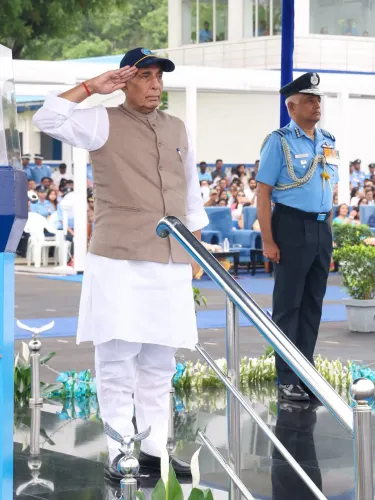
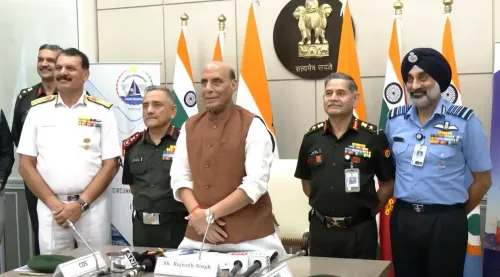
Union Defence Minister Rajnath Singh on Wednesday, 22 July 2026 addressed the Flag-in Ceremony of the first-ever Tri-Services All Women Circumnavigation Sailing Expedition via video conferencing, marking a landmark moment in India's push for gender integration across its armed forces.
Context
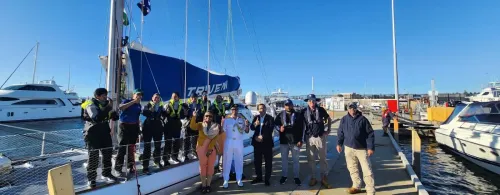
The Flag-in Ceremony marks the conclusion of what is described as the first circumnavigation sailing expedition to bring together women personnel from all three services — the Army, Navy, and Air Force — under a single, joint operational endeavour. Rajnath Singh joined the ceremony remotely, underscoring the political and institutional importance the government attaches to the milestone.
The expedition builds on the legacy of Navika Sagar Parikrama, the 2017–18 Indian Navy voyage in which six women officers completed India's first all-women circumnavigation of the globe aboard INSV Tarini. That earlier expedition demonstrated that Indian women in uniform could execute complex, long-duration blue-water missions — and laid the groundwork for expanding such ambitions to a tri-service format.
Policy Backdrop
The expedition fits within a decade-long policy arc that has steadily widened the role of women in the Indian armed forces. Since 2015, successive decisions have opened permanent commissions and, progressively, combat and command positions to women officers across the services. The creation of the Department of Military Affairs in 2019 — under the newly established Chief of Defence Staff — gave institutional momentum to tri-service jointness, of which this expedition is a visible expression.
A tri-service format, rather than a single-service one, signals a deeper level of coordination and shared culture among the Army, Navy, and Air Force. It reflects the broader 'jointness' agenda that Indian defence planners have pursued as the country modernises its military structures. Circumnavigation expeditions also serve a dual purpose: they build operational seamanship and project India's maritime confidence on a global stage.
Stakeholders and Impact
The most immediate stakeholders are the women defence personnel who undertook the voyage — drawn from all three services — and the thousands of serving women officers and cadets who look to such milestones as markers of institutional inclusion. The expedition sends a signal that the tri-service establishment views women not merely as recipients of expanded policy but as frontline representatives of national capability.
More broadly, the event carries diplomatic and soft-power significance. Circumnavigation voyages are tracked internationally and position India alongside a small group of nations that have mounted all-women global sailing missions. For the defence establishment, the successful return of the expedition reinforces the case for further investment in maritime adventure training and joint operations culture.
What's Next
Attention will now turn to any formal policy announcements that follow the ceremony — whether the government uses the occasion to announce new induction targets for women in combat or command roles, or to sanction follow-on joint expeditions. Rajnath Singh's participation at the Flag-in Ceremony suggests the ministry is prepared to translate the symbolism of the voyage into concrete policy momentum. Further statements from the Chief of Defence Staff and individual service chiefs on women's integration timelines will be closely watched in the weeks ahead.
Point of View
Not a peripheral one. The shift from a single-service to a tri-service format is the more consequential detail: it suggests the joint-operations culture championed under the Chief of Defence Staff framework is beginning to translate into visible, public-facing milestones. Coming at a time when the ministry is navigating decisions on women in frontline combat roles, the expedition gives the political leadership a high-visibility, uncontroversial win to anchor further reform. Observers will watch whether the ceremony is followed by concrete policy announcements or remains primarily ceremonial.
NationPress
22 Jul 2026
Frequently Asked Questions
What is the Tri-Services All Women Circumnavigation Sailing Expedition?
It is India's first circumnavigation sailing expedition involving women personnel from all three armed services — the Army, Navy, and Air Force — undertaking a joint global voyage, marking a new milestone in tri-service cooperation and gender integration.
What did Rajnath Singh say at the Flag-in Ceremony?
Rajnath Singh addressed the Flag-in Ceremony of the expedition via video conferencing on 22 July 2026. The detailed content of his address has not been fully released, but his participation underscored the government's support for the milestone.
What was the Navika Sagar Parikrama?
Navika Sagar Parikrama was a 2017–18 Indian Navy expedition in which six women officers completed India's first all-women circumnavigation of the globe aboard INSV Tarini, setting the precedent for subsequent all-women sailing missions.
How has India expanded roles for women in the armed forces?
Since 2015, India has progressively opened permanent commissions and combat and command roles to women officers across the Army, Navy, and Air Force, with the Department of Military Affairs created in 2019 further driving tri-service integration.
What is the significance of a tri-service format for this expedition?
A tri-service format means women from the Army, Navy, and Air Force participated jointly, reflecting the broader 'jointness' agenda in Indian defence policy and signalling deeper institutional coordination beyond any single service.