Rajnath Singh: Cabinet clears ₹14,500 cr energy storage push
Synopsis
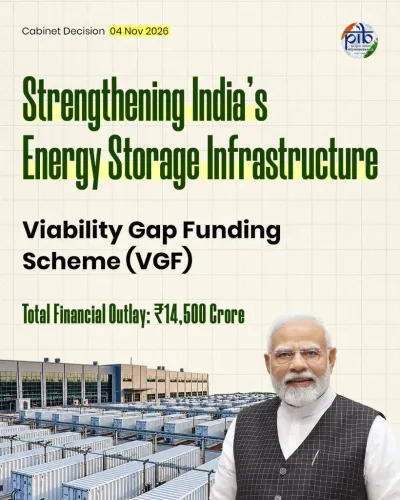
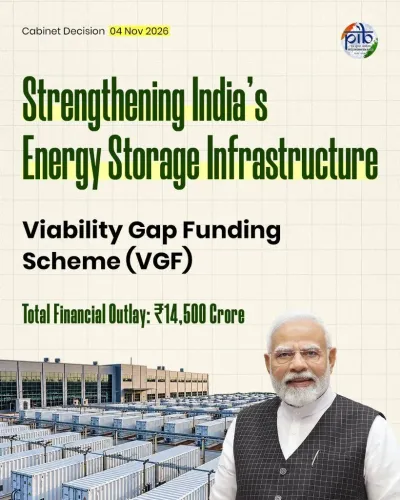
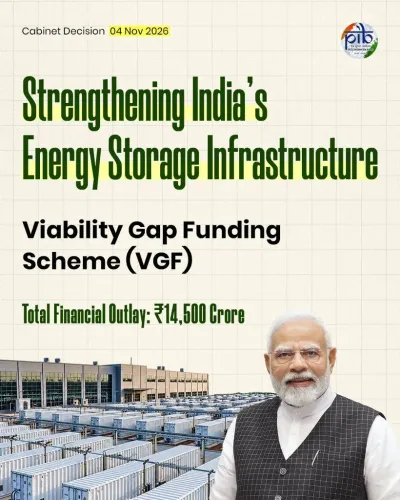
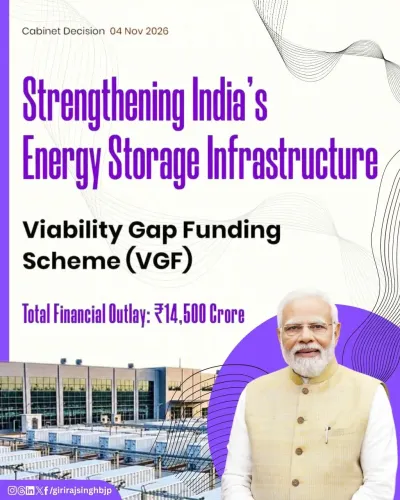
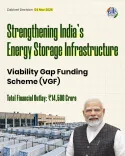
The Union Cabinet has approved a ₹14,500 crore Viability Gap Funding Scheme to develop 92 GWh of grid-scale energy storage across India, covering BESS, pumped hydro, and emerging technologies, with a mandatory domestic content rule to spur indigenous battery manufacturing and cut import dependence.
Key Takeaways
The Union Cabinet, chaired by PM Narendra Modi , approved a ₹14,500 crore VGF Scheme for grid-scale energy storage on November 4, 2026 .
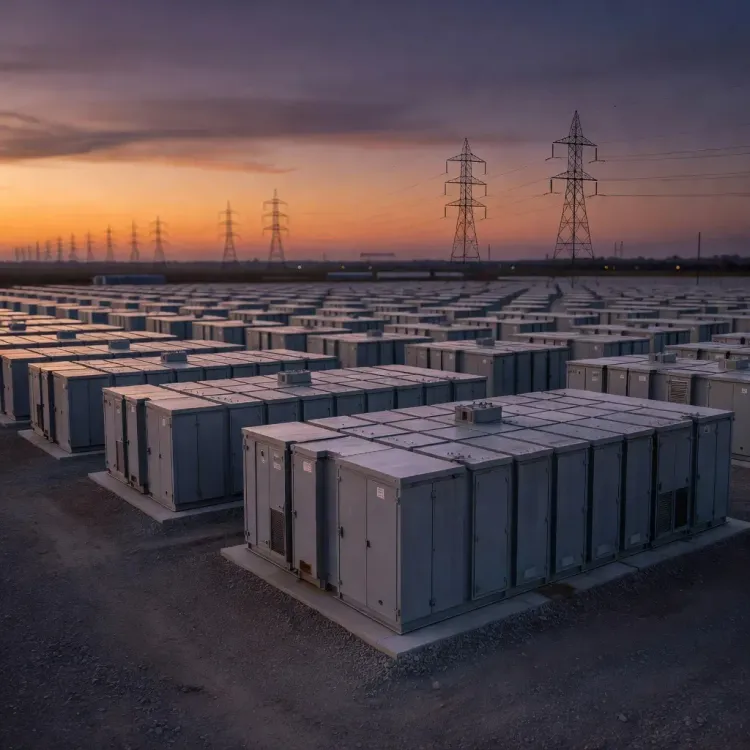
The scheme targets 92 GWh of new storage capacity through Battery Energy Storage Systems, Pumped Storage Projects, and emerging technologies.
A mandatory domestic content requirement for BESS projects will push battery manufacturing indigenisation and reduce reliance on imports.
The initiative directly supports India's 500 GW non-fossil fuel target by 2030 and its Paris Agreement commitments.
Viability Gap Funding treats energy storage as critical infrastructure, bridging the gap between economic necessity and commercial viability.
Scheme guidelines, state selection, and project bidding timelines will determine whether the headline commitment translates into commissioned capacity.
India's grid is about to get a serious backbone. The Union Cabinet, chaired by Prime Minister Narendra Modi, has approved a ₹14,500 crore Viability Gap Funding (VGF) Scheme to build 92 GWh of grid-scale energy storage capacity across the country — a decision that Union Defence Minister Rajnath Singh described on Wednesday, November 4, 2026 as 'a major boost to India's clean energy transition and long-term energy security.'
What ₹14,500 crore buys India's grid
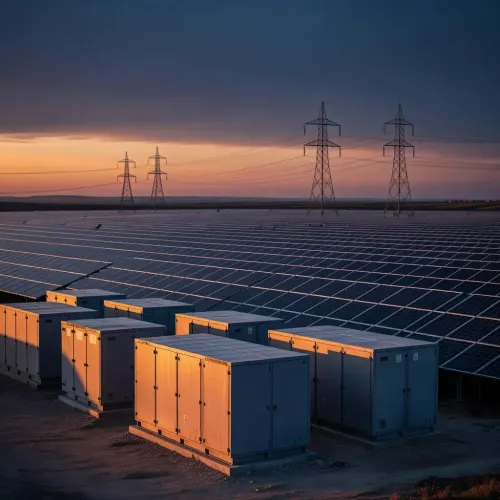
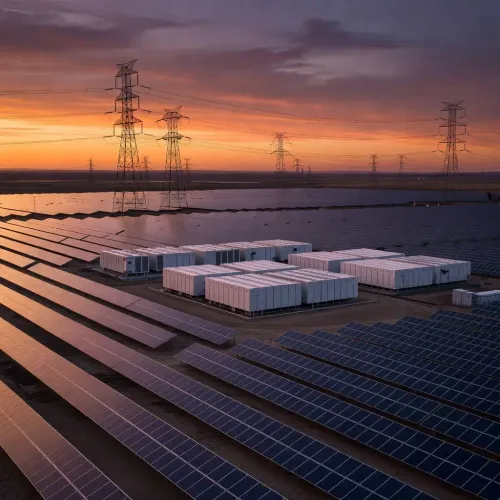
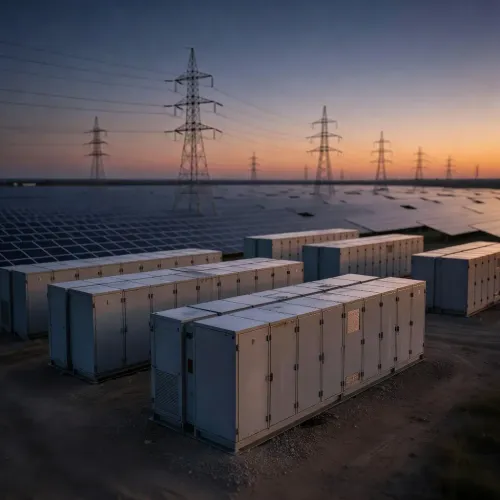
The scheme backs three storage technologies: Battery Energy Storage Systems (BESS), Pumped Storage Projects (PSPs), and emerging storage technologies — a deliberately broad basket designed to avoid locking India into a single technological bet. VGF has long been the government's instrument of choice for projects that are economically necessary but commercially marginal; applying it to energy storage signals that the Cabinet views large-scale storage as infrastructure, not just a power-sector add-on.
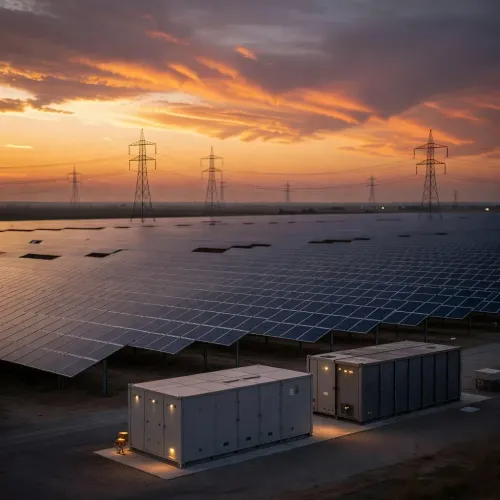
The core logic is straightforward. India has raced to add solar and wind capacity, but the sun sets and the wind stills. Without storage, every gigawatt of renewable generation that cannot be dispatched on demand is a wasted asset — or worse, a grid-stability risk. 92 GWh of new storage capacity would give grid operators the buffer to absorb variable generation and deliver 'round-the-clock' supply, the phrase Singh used explicitly in his post.
The 'Make in India' battery clause
Buried inside the scheme is a provision with potentially far-reaching industrial consequences: a mandatory domestic content requirement for battery storage projects. India currently imports the overwhelming majority of its battery cells, overwhelmingly from China. The local content rule forces project developers to source materials or components domestically, creating demand pull for Indian manufacturers at a moment when several large-format battery gigafactories are at various stages of planning or construction.
This mirrors the playbook used earlier for solar panels — a sector where domestic content requirements, combined with import tariffs, helped catalyse a nascent Indian manufacturing base. The Atmanirbhar Bharat framework, launched in 2020, provides the broader political and policy umbrella: self-reliance not as protectionism, but as strategic insulation from global supply-chain shocks.
India's storage push inside the 500 GW climate architecture
The Cabinet decision sits inside a larger arc. At COP26 in 2021, India committed to 500 GW of non-fossil fuel capacity by 2030 under its updated Nationally Determined Contribution — an ambition that is simply undeliverable without matching storage. The National Mission on Transformative Mobility and Battery Storage, approved in 2019, had already signalled that the government understood the link between climate targets and domestic battery manufacturing. Wednesday's VGF approval is, in effect, the demand-side answer to that earlier supply-side mission.
Renewable energy developers, power distribution companies, and domestic battery manufacturers all stand to benefit directly. For DISCOMs — the perennially stressed state electricity distributors — grid-scale storage is an operational lifeline: it reduces the cost and frequency of costly peak-hour power purchases and smooths out the demand-supply mismatches that drive distribution losses.
Scheme guidelines and bidding timelines: the next tests
Cabinet approval is the starting gun, not the finish line. The real measure of ambition will come when scheme guidelines are issued, project bids are invited, and states are selected for the initial 92 GWh tranche. India's infrastructure sector has a well-documented gap between headline announcements and project commissioning — timelines for BESS procurement, land acquisition for pumped hydro, and domestic manufacturing ramp-up will all require sustained execution pressure.
Singh closed his post with a pointed political note: 'I thank PM Modi for his continued commitment to advancing India's clean energy ambitions, strengthening Atmanirbhar Bharat and securing the nation's energy future.' The statement frames storage not merely as an engineering problem solved, but as a civilisational wager — that a country of 1.4 billion people can power itself cleanly, cheaply, and without depending on anyone else's supply chain.
The grid is the great invisible infrastructure. India just bet ₹14,500 crore that it will not be a bottleneck.
Point of View
Not an optional grid upgrade. The mandatory domestic content rule is the scheme's sharpest edge, using public procurement to build an industrial supply chain rather than simply importing storage at scale. Set against India's 500 GW renewable target, this approval closes a critical policy gap that had left grid operators exposed to the intermittency problem. The harder test is execution: India's track record on converting storage policy into commissioned megawatt-hours will determine whether this VGF round becomes a genuine inflection point or another headline.
NationPress
4 Nov 2026
Frequently Asked Questions
What is the ₹14,500 crore energy storage VGF scheme approved by the Cabinet?
It is a Viability Gap Funding scheme worth ₹14,500 crore approved by the Union Cabinet to develop 92 GWh of grid-scale energy storage in India, supporting Battery Energy Storage Systems, Pumped Storage Projects, and emerging storage technologies to enable round-the-clock renewable power supply.
What is 92 GWh of energy storage and why does India need it?
92 GWh refers to the total energy storage capacity targeted under the scheme. India needs large-scale storage because solar and wind power are intermittent; without storage, surplus renewable generation is wasted and grid stability is threatened, making 24/7 clean power impossible.
What is the domestic content requirement in the battery storage scheme?
The scheme mandates that battery storage projects must use domestically manufactured components or materials, creating demand for Indian battery manufacturers, reducing dependence on imported cells — primarily from China — and aligning with the Atmanirbhar Bharat self-reliance initiative.
How does this scheme connect to India's 500 GW renewable energy target?
India committed at COP26 in 2021 to achieving 500 GW of non-fossil fuel capacity by 2030. Without grid-scale storage to manage variability in solar and wind output, that target cannot translate into reliable power supply; the VGF scheme directly addresses this integration gap.
What is Viability Gap Funding and how does it work for energy storage?
Viability Gap Funding is a central government mechanism that provides financial support to projects that are economically important but commercially unviable on their own. By extending it to energy storage, the government effectively classifies large-scale storage as essential national infrastructure.