Rajnath Singh: Indian Ocean, SE Asia form one maritime space
Synopsis
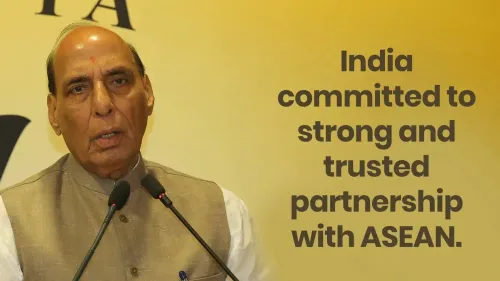
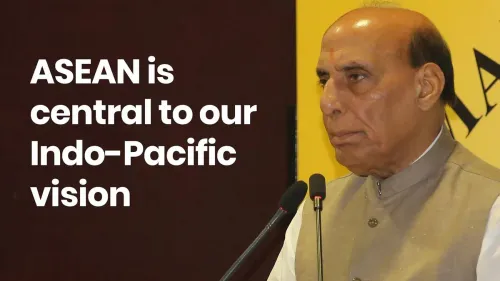
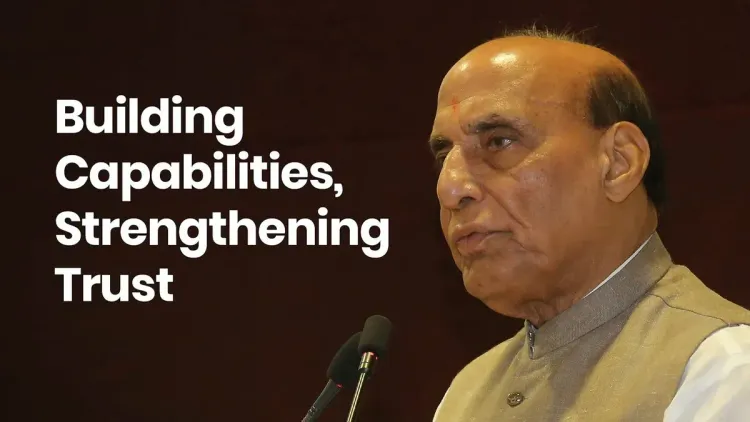
Defence Minister Rajnath Singh on 14 October 2026 declared the Indian Ocean and Southeast Asian waters a single connected maritime space, calling maritime domain awareness, interoperability, and underwater collaboration the pillars of a stable, rules-based order.
Key Takeaways
Rajnath Singh on 14 October 2026 called the Indian Ocean and Southeast Asian waters 'one connected maritime space.' He named maritime domain awareness , interoperability , and underwater awareness collaboration as the three pillars of a stable, rules-based maritime order.
The statement aligns with India's SAGAR doctrine (2015), which frames maritime security as a shared regional responsibility.
The Indian Ocean Naval Symposium (IONS) , founded in 2008 , remains India's primary institutional vehicle for building naval interoperability across the region.
Singh's explicit focus on underwater awareness signals India's intent to deepen anti-submarine cooperation with ASEAN navies amid growing subsurface activity in the Indo-Pacific.
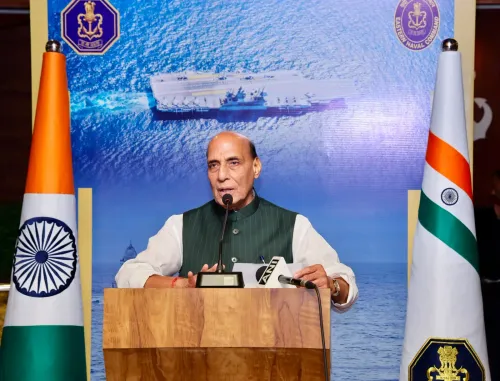
The sea lanes that carry India's trade, energy supplies, and people are not boundaries — they are bridges. Union Defence Minister Rajnath Singh made that argument forcefully on Wednesday, 14 October 2026, calling the Indian Ocean and the waters of Southeast Asia a single connected maritime space whose security must be a shared regional responsibility.
Posting on X, Singh wrote: 'The seas do not separate us; they connect us. The Indian Ocean and the waters of Southeast Asia form one connected maritime space. Through these waters move our trade, energy, people and essential goods. Keeping them safe is therefore a shared responsibility.' He identified three specific pillars for action — maritime domain awareness, interoperability, and collaboration in underwater awareness — as the keys to a 'stable, rules-based maritime order.'
One ocean, one framework: the SAGAR doctrine in action
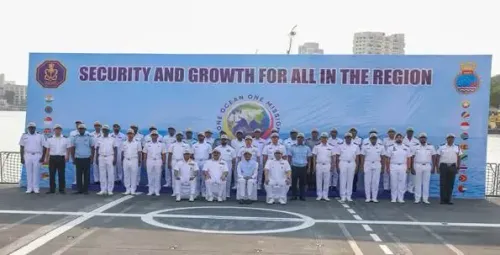
The statement tracks closely with India's SAGAR doctrine — 'Security and Growth for All in the Region' — announced in 2015 to promote maritime security and economic cooperation across the Indian Ocean. What Singh articulated on Wednesday is essentially SAGAR's operating logic: that no single navy can police a shared highway, and that collective capacity is the only durable answer.
India has been building that collective capacity methodically. The Indian Ocean Naval Symposium (IONS), established in 2008, remains the flagship forum for dialogue and interoperability among regional navies. Alongside IONS, the ADMM-Plus framework pulls in ASEAN defence ministers and their dialogue partners — including India — for coordinated planning on maritime security, humanitarian assistance, and counter-terrorism at sea.
Why 'underwater awareness' is the phrase that matters
Singh's explicit call for 'collaboration in underwater awareness' is the sharpest signal in the statement. The Indo-Pacific's subsurface domain has grown crowded and contested, with submarine activity from multiple extra-regional powers now a routine feature of Indian Ocean operations. Domain awareness — knowing what is below the surface, where, and whose it is — is the first line of any credible maritime security architecture.
For India's Southeast Asian partners, many of whom have limited anti-submarine warfare capability, the pitch is straightforward: share sensors, share data, share training. Interoperability — the second pillar Singh named — is what allows two navies that have never drilled together to operate as one when a crisis demands it. These are not abstract ambitions; they are the building blocks of every bilateral and multilateral exercise India conducts with ASEAN navies each year.
The rules-based order: a phrase doing heavy diplomatic lifting
'Rules-based maritime order' is careful, deliberate language. It invokes the UN Convention on the Law of the Sea (UNCLOS) and freedom of navigation without naming any specific challenger — but the audience in regional capitals knows exactly what pattern of behaviour the phrase addresses. Singh's framing positions India as a stabilising partner rather than a rival power, a distinction that matters deeply to ASEAN states that have historically been wary of picking sides.
The timing — with regional multilateral forums on the defence calendar and India deepening naval partnerships from Vietnam to Indonesia to the Philippines — means the statement lands as more than a tweet. It is a public restatement of strategic posture, directed at allies, partners, and observers alike.
The Indian Ocean connects half the world's trade. Singh's message is simple and consequential: India intends to keep it that way — together.
Point of View
Precise enough to avoid naming a challenger. Taken together, the statement consolidates the SAGAR doctrine's decade-long arc from aspiration to operational architecture.
NationPress
14 Oct 2026
Frequently Asked Questions
What did Rajnath Singh say about the Indian Ocean?
Defence Minister Rajnath Singh said the Indian Ocean and Southeast Asian waters form 'one connected maritime space' through which trade, energy, and people move, making their security a shared regional responsibility.
What is India's SAGAR doctrine?
SAGAR stands for 'Security and Growth for All in the Region,' announced by India in 2015. It frames maritime security and economic cooperation across the Indian Ocean as a collective responsibility rather than a competition among individual powers.
What is the Indian Ocean Naval Symposium (IONS)?
IONS is a multilateral naval forum established in 2008 to enhance dialogue and interoperability among navies of the Indian Ocean rim countries. India is a founding and leading member.
Why is 'underwater awareness' important in the Indo-Pacific?
The subsurface domain of the Indian Ocean and Southeast Asian waters has become increasingly contested, with submarine activity from multiple powers now routine. Underwater awareness — detecting and tracking submarine movements — is a critical component of maritime domain security.
What does 'rules-based maritime order' mean in the Indian Ocean context?
It refers to adherence to international maritime law, primarily UNCLOS, including freedom of navigation and overflight. India uses the phrase to signal support for an open, lawful Indo-Pacific without explicitly naming any state that may challenge those norms.