Rijiju Cites 79-Place EoDB Jump as Proof of Reform Decade
Synopsis
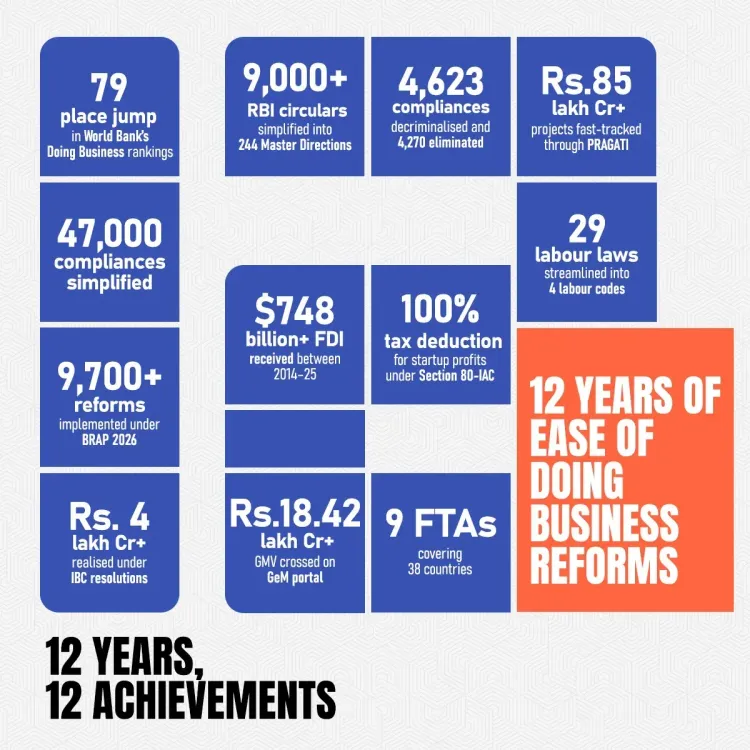
Union Minister Kiren Rijiju has cited India's 79-place climb in the World Bank's Ease of Doing Business index as proof of twelve years of structural reforms, linking gains to the IBC, GST, and Make in India. The World Bank discontinued the index in 2021.
Key Takeaways
Union Minister Kiren Rijiju posted on June 9, 2026 , citing India's 79-place rise in the World Bank Ease of Doing Business rankings as a governance milestone.
India moved from 142nd position in 2014 to 63rd in 2019 , one of the largest improvements recorded by any major economy in that period.
Key reforms credited include the Insolvency and Bankruptcy Code (2016) , nationwide GST rollout (2017) , and the Make in India campaign launched in 2014 .
The World Bank discontinued the Ease of Doing Business index in 2021 ; no updated comparable global ranking has been published since.
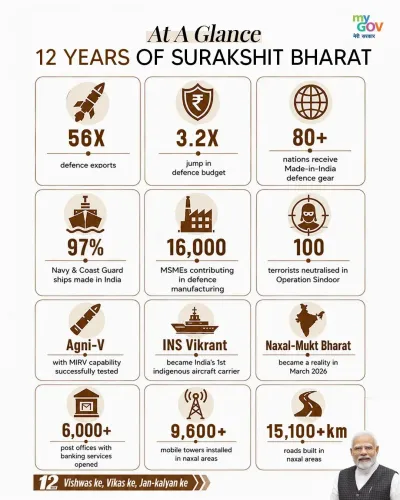
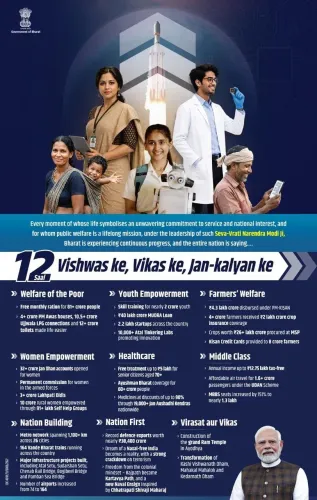
The post is part of the ruling party's #12YearsOfSeva communications campaign marking over a decade of BJP -led central governance.
Pending full notification of the four consolidated Labour Codes remains the next major regulatory reform milestone to watch.
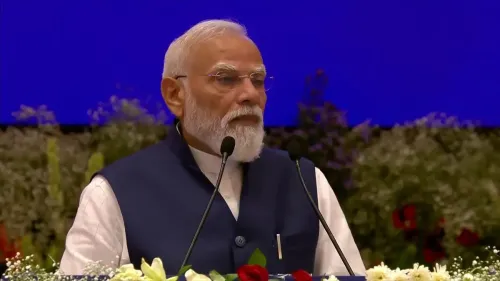
Union Parliamentary Affairs Minister Kiren Rijiju on Tuesday, June 9, 2026, invoked India's climb of 79 places in the World Bank's Ease of Doing Business rankings as evidence of what he called twelve years of decisive governance, attributing the gain to sustained structural reforms under the current administration.
Context
Posting under the hashtag #12YearsOfSeva (twelve years of service), Rijiju framed the ranking improvement as 'a testament to the power of reforms' and 'a reflection of 12 years of decisive governance, reform and commitment to empowering enterprise.' The post is part of a broader ruling-party communication drive marking over a decade of BJP-led governance at the Centre.
India's ascent in the World Bank Ease of Doing Business index — from 142nd position in 2014 to 63rd in 2019 — was among the most cited governance metrics of that period, representing a jump of 79 places across five consecutive annual reports. The World Bank discontinued the index in 2021 following a data-integrity review, meaning no comparable official ranking has been published since.
Policy Backdrop
The ranking gains were underpinned by a series of landmark legislative and administrative overhauls. The Insolvency and Bankruptcy Code (IBC), enacted in 2016, overhauled the resolution of corporate distress and strengthened creditor rights, directly improving India's scores on sub-indicators such as 'resolving insolvency.' The nationwide rollout of the Goods and Services Tax (GST) in July 2017 replaced a fragmented multi-levy structure with a unified indirect tax regime, simplifying compliance for businesses across state borders.
The Make in India campaign, launched in September 2014, anchored the broader deregulation push by targeting foreign direct investment and streamlining industrial approvals. Together, these three pillars — insolvency reform, tax unification, and investment promotion — were the primary drivers that the World Bank itself acknowledged in successive annual assessments of India's improving regulatory environment.
Stakeholders and Impact
The beneficiaries of an improved business environment span entrepreneurs, micro, small and medium enterprises (MSMEs), and foreign investors. Rising EoDB scores were closely correlated with an uptick in FDI inflows during the same period, as global capital increasingly treated India's regulatory trajectory as a signal of reduced transaction costs and stronger contract enforcement.
For MSMEs — which account for a substantial share of employment and output in the Indian economy — reforms such as faster business registration, online compliance portals, and single-window clearances translated into tangible reductions in time and cost of doing business at the ground level.
What's Next
With the World Bank index discontinued since 2021, the government and multilateral bodies have been exploring successor frameworks to benchmark the regulatory climate. Any revival or replacement index from a credible multilateral body would test whether the reform momentum of the 2014–2019 window has been sustained or accelerated in subsequent years.
Pending implementation of the four consolidated Labour Codes — passed by Parliament but not yet fully notified — remains a key legislative frontier. Their operationalisation would represent the next significant chapter in India's ease-of-doing-business story and could form the basis of future ranking assessments under any new global index.
Point of View
Anchoring a measurable global benchmark to the ruling party's twelve-year anniversary narrative. By invoking the World Bank ranking — even though the index was discontinued in 2021 — the BJP signals that it intends to fight the economic-credibility debate on its own chosen terrain: pre-pandemic reform scorecards. The framing also pre-empts opposition arguments about post-2020 slowdowns by attributing the entire 79-place gain to structural reforms rather than any single year's performance. The broader pattern suggests the party will continue using multilateral validation, however dated, as a counterweight to criticism on unemployment and growth quality.
NationPress
24 Oct 2026
Frequently Asked Questions
How many places did India climb in the World Bank Ease of Doing Business rankings?
India climbed 79 places , moving from 142nd position in 2014 to 63rd in 2019 , according to successive World Bank annual reports.
Is the World Bank Ease of Doing Business index still active?
No. The World Bank discontinued the Ease of Doing Business index in 2021 following an internal data-integrity review, and no direct successor index has been officially launched since.
What reforms drove India's improvement in the EoDB rankings?
The primary drivers were the Insolvency and Bankruptcy Code (2016) , the nationwide GST rollout (2017) , and the Make in India campaign (2014), which together improved sub-indicators on resolving insolvency, paying taxes, and starting a business.
What is #12YearsOfSeva?
#12YearsOfSeva is a BJP -led social media campaign marking over twelve years of the party's governance at the Centre, used to highlight policy milestones across sectors including economy, infrastructure, and social welfare.
What is the next major ease-of-doing-business reform pending in India?
The full notification and implementation of India's four consolidated Labour Codes — passed by Parliament but not yet operationalised — is widely regarded as the next significant regulatory reform step for the business environment.