Rijiju: NDA freed India from Congress's 'Hindu Growth Rate' stigma
Synopsis
Union Minister Kiren Rijiju has credited 12 years of NDA rule with freeing India from what he calls Congress's deliberate use of the term 'Hindu rate of growth' — a phrase he argues falsely blamed the Hindu majority for Congress's own governance failures, in a post praising PM Modi.
Key Takeaways
Kiren Rijiju , Union Minister of Parliamentary Affairs, posted on June 10, 2026 crediting 12 years of NDA governance with ending Congress's 'vicious cycle.' He argued that Congress coined the label 'Hindu rate of growth' to deflect blame for slow economic expansion onto India's Hindu population.
The term was originally coined by economist Raj Krishna in the 1970s to describe India's roughly 3.5 per cent annual GDP growth under the Licence Raj.
Rijiju directed the post at Prime Minister Narendra Modi , using the hashtag #LongestServingElectedPMModi .
The BJP has used pre-1991 growth comparisons as a recurring campaign theme since 2014 , contrasting Licence Raj-era stagnation with NDA-era reforms.
The Indian National Congress had not publicly responded to Rijiju's specific framing at the time of publication.
Union Parliamentary Affairs Minister Kiren Rijiju on Wednesday, June 10, 2026, credited 12 years of NDA governance with liberating India from what he called the Congress party's deliberate use of the term 'Hindu rate of growth' — a phrase he argued was coined to deflect blame for slow economic performance onto the country's Hindu majority rather than on Congress policy failures.
Context
Posting in Hindi on X, Rijiju wrote: 'NDA ke 12 varshon ki ek badi safalta ye bhi hai ki desh Congress ke kuchakra se azad hua hai' ('One of the great achievements of NDA's 12 years is that the country has been freed from Congress's vicious cycle'). He directed the message at Prime Minister Narendra Modi, tagging him and using the hashtag #LongestServingElectedPMModi.
The minister argued that Congress had given a name — 'Hindu rate of growth' — to India's sluggish economic expansion, but that the stigma was pinned on the country's large Hindu population rather than on the party's own governance failures. 'The working style, the responsibility, and the failure were Congress's,' Rijiju wrote, 'but the blot was put in the name of the country's large Hindu population.'
Policy Backdrop
The phrase 'Hindu rate of growth' was coined by economist Raj Krishna in the 1970s to describe India's approximate 3.5 per cent annual GDP growth under the Licence Raj system — a period characterised by heavy state regulation, import substitution, and centralised planning that persisted largely until the 1991 liberalisation.
Rijiju's framing reinterprets the term not as an empirical economic observation but as a political instrument used to associate economic stagnation with Hindu identity rather than with Congress-era policy design. The BJP has repeatedly invoked pre-1991 growth records in campaign messaging since 2014, contrasting the Licence Raj era with the infrastructure push and reform agenda it attributes to the National Democratic Alliance.
Stakeholders and Impact
The post carries symbolic weight for BJP's Hindu voter base, framing a decades-old academic term as a historical injustice that the Modi government has now corrected. For the Indian National Congress, which governed India for most of the period between 1947 and 2014, the charge adds to a sustained BJP narrative of institutional and economic mismanagement.
Economists and opposition voices have historically maintained that the 'Hindu rate of growth' was a neutral descriptive label — not a communal attribution — reflecting structural constraints of the era. The Congress party has not yet publicly responded to Rijiju's specific framing in this post.
What's Next
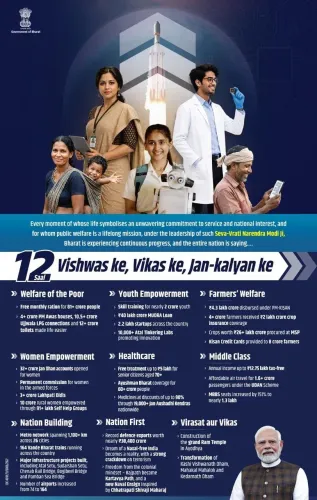
The post is part of a broader BJP communications campaign marking milestones of Modi's tenure as what the party describes as the longest-serving elected Prime Minister of India. As the next Economic Survey and quarterly GDP data releases approach, historical growth comparisons are likely to remain a flashpoint in parliamentary debates and election-season rhetoric. Any formal government presentation of long-run growth data in the winter session of Parliament could give Rijiju's argument fresh legislative traction.
Point of View
Simultaneously defending Hindu pride and attacking the opposition's governance record. By anchoring the critique to PM Modi's milestone as the longest-serving elected Prime Minister, the BJP is using the occasion to reinforce a broader civilisational narrative: that pre-2014 India was not merely poorly governed but ideologically mistreated. The move is consistent with a long-running BJP strategy of reframing economic history through a cultural lens to consolidate its core voter base. Whether this framing gains traction beyond the party faithful will depend on how opposition parties and independent economists choose to engage with — or ignore — the historical revisionism embedded in the argument.
NationPress
24 Sept 2026
Frequently Asked Questions
What is the 'Hindu rate of growth' and who coined the term?
The 'Hindu rate of growth' was coined by economist Raj Krishna in the 1970s to describe India's slow annual GDP growth of roughly 3.5 per cent during the Licence Raj era. It was an academic observation about structural economic constraints, not a communal statement.
What did Kiren Rijiju say about the Hindu rate of growth?
Rijiju argued that Congress deliberately used the term 'Hindu rate of growth' to pin the blame for its own governance failures and slow economic performance on India's Hindu population, calling it a political stigma that NDA governance has now reversed.
What is the #LongestServingElectedPMModi hashtag about?
The hashtag celebrates Prime Minister Narendra Modi's tenure as what the BJP describes as the longest-serving elected Prime Minister of India, marking a milestone that the party has been highlighting in public communications.
How long has the NDA been in power according to Rijiju's post?
Rijiju's post refers to 12 years of NDA governance, counting the coalition's continuous tenure since May 2014 when Narendra Modi first became Prime Minister.
Has Congress responded to Rijiju's claim about the Hindu rate of growth?
The Indian National Congress had not publicly responded to Rijiju's specific framing at the time this article was published.