Rijiju honours Deendayal Upadhyay on Antyodaya Divas
Synopsis
Union Minister Kiren Rijiju marked Antyodaya Divas on 25 September 2026 with a tribute to Pandit Deendayal Upadhyay, championing his Integral Humanism philosophy as a timeless guide for uplifting India's most marginalised.
Key Takeaways
Kiren Rijiju paid tribute to Pandit Deendayal Upadhyay on his birth anniversary, Antyodaya Divas , on 25 September 2026 .
Rijiju highlighted Ekatma Manavvad (Integral Humanism) as a philosophy rooted in Indian thought, cultural values and human welfare.
Upadhyay co-founded the Bharatiya Jana Sangh in the 1950s and articulated Integral Humanism in lectures delivered in 1965 .
His Antyodaya concept — upliftment of the last person — later inspired the Antyodaya Anna Yojana launched in 2000 .
Annual tributes by BJP leaders on this date reinforce the party's ideological link to Upadhyay's emphasis on welfare for the weakest sections of society.
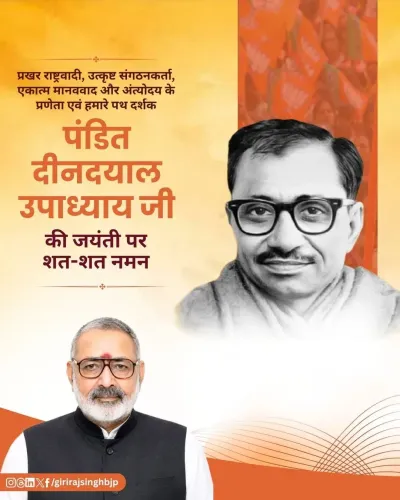
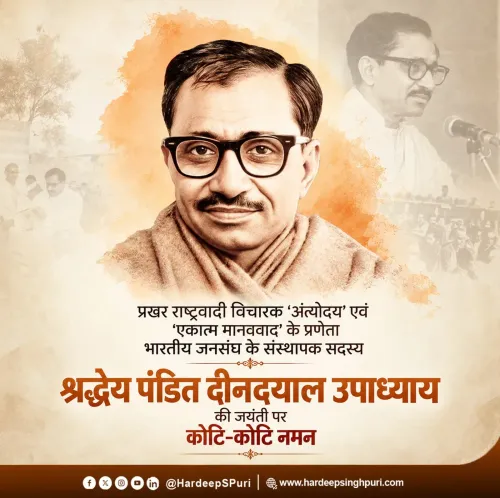
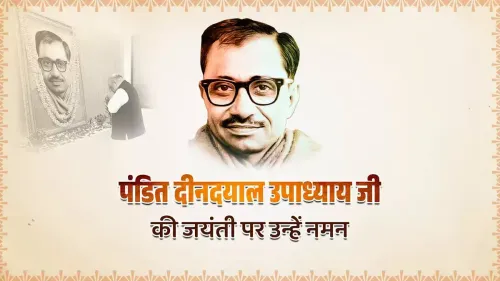
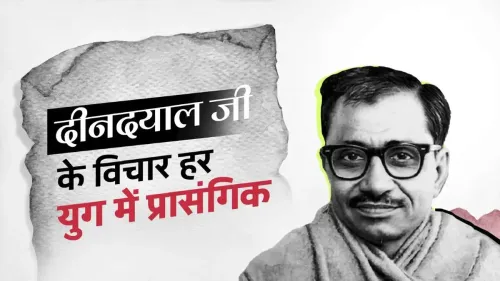
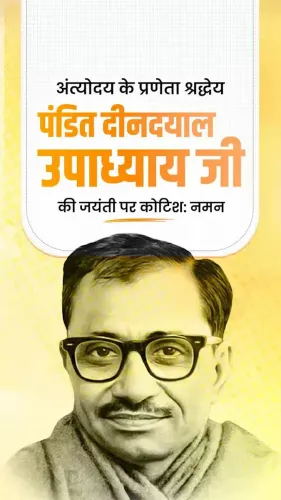
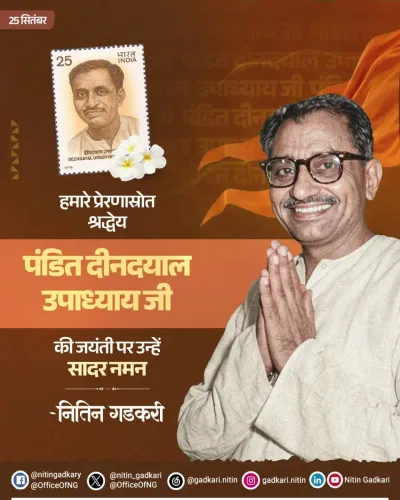
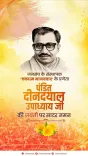
On the birth anniversary of Pandit Deendayal Upadhyay, observed across India as Antyodaya Divas on 25 September, Union Parliamentary Affairs and Minority Affairs Minister Kiren Rijiju paid tribute to the philosopher-politician whose ideas continue to shape the ideological core of the ruling party.
Rijiju wrote in Hindi: 'कोटि-कोटि नमन' — salutations to the countless — invoking Upadhyay's doctrine of Ekatma Manavvad, or Integral Humanism, as a philosophy 'rooted in Indian thought, cultural values and human welfare.' He underlined Upadhyay's vision of Indian culture as one that expresses 'unity in diversity and unity within varied forms' — a frame the thinker applied not to abstract nationalism but to the concrete project of raising the person standing on the last rung of society.
The man behind Antyodaya Divas
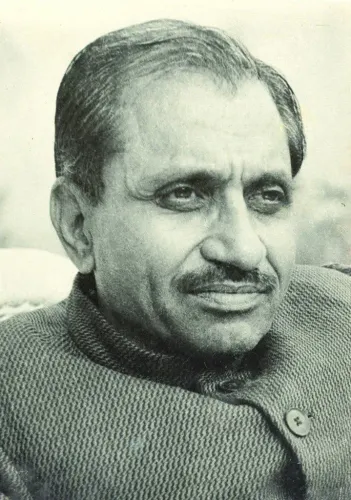
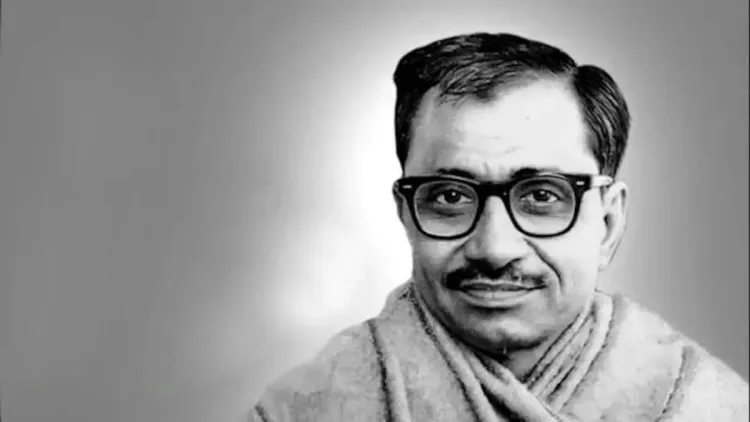
Pandit Deendayal Upadhyay was a co-founder of the Bharatiya Jana Sangh, the predecessor of today's BJP, and the architect of Integral Humanism — an alternative he offered to both Western capitalism and Soviet-style socialism in a series of lectures delivered in 1965. His central argument: any political philosophy that ignores the soul of a civilisation will ultimately fail its people. He died in 1968, and his ideas were later formalised as a guiding principle of the Jana Sangh and, subsequently, the BJP.
The term 'Antyodaya' itself — upliftment of the last person — gained policy life decades after his death. The Antyodaya Anna Yojana, launched in 2000, drew directly on his vocabulary, targeting the poorest households for subsidised food grain, a rare example of a philosophical concept translating into a named welfare scheme.
Rijiju's tribute in a broader BJP pattern
Rijiju's post is part of a well-established annual practice: BJP leaders across ranks mark 25 September with tributes that simultaneously honour the thinker and reaffirm the party's ideological lineage. For a minister who straddles Parliamentary Affairs and Minority Affairs — two portfolios where inclusivity and last-mile governance intersect — invoking Upadhyay's Antyodaya frame carries a pointed resonance. The message is that the party's welfare orientation is not a policy import but a civilisational commitment.
Rijiju closed by calling Upadhyay's life of service to the nation 'a perennial source of inspiration for all of us' — language that reads less as ceremony and more as a statement of continuing intent.
Point of View
Not merely electoral. For a minister overseeing Parliamentary Affairs and Minority Affairs, invoking the Antyodaya frame is doubly strategic: it positions inclusivity as culturally indigenous rather than borrowed from liberal or left discourse. The ritual also functions as internal party consolidation, reminding cadres of the ideological distance between the BJP and both the Congress's Nehruvian socialism and Western liberal models. Whether Upadhyay's philosophy translates into measurable last-mile outcomes remains the sharpest test of these annual reaffirmations.
NationPress
25 Sept 2026
Frequently Asked Questions
What is Antyodaya Divas and why is it celebrated on 25 September?
Antyodaya Divas is observed on 25 September every year to mark the birth anniversary of Pandit Deendayal Upadhyay . The day focuses on the upliftment of the poorest sections of society, reflecting Upadhyay's core philosophy of serving the last person in line.
What is Ekatma Manavvad or Integral Humanism?
Ekatma Manavvad , or Integral Humanism, is a political philosophy developed by Pandit Deendayal Upadhyay in a series of lectures in 1965 . It proposes a model rooted in Indian cultural values that rejects both Western capitalism and Soviet socialism, stressing harmony between the individual, society and the nation.
Who was Pandit Deendayal Upadhyay?
Pandit Deendayal Upadhyay was a philosopher, thinker and co-founder of the Bharatiya Jana Sangh — the predecessor of the BJP. He is best known for articulating Integral Humanism and the Antyodaya principle. He passed away in 1968 .
How did Deendayal Upadhyay's ideas influence Indian welfare policy?
Upadhyay's Antyodaya concept — meaning 'upliftment of the last person' — directly influenced the Antyodaya Anna Yojana , a food security scheme launched in 2000 that targeted the poorest households with subsidised grain.
Why did Kiren Rijiju post a tribute on 25 September 2026?
Kiren Rijiju , Union Minister of Parliamentary Affairs and Minority Affairs, posted the tribute on Antyodaya Divas to honour Upadhyay's birth anniversary. Such tributes are an established annual practice among BJP leaders to reaffirm the party's ideological commitment to Integral Humanism.