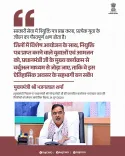
Rijiju Pays Tribute to Emergency Resisters on Samvidhan Hatya Diwas
Synopsis
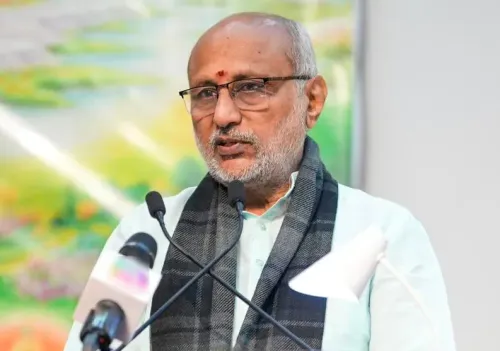
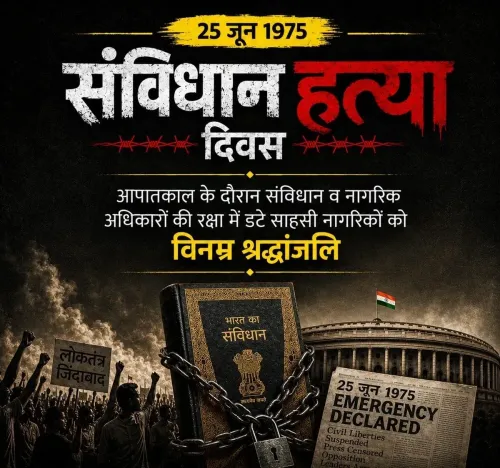
Union Parliamentary Affairs Minister Kiren Rijiju on 25 June 2026 marked Samvidhan Hatya Diwas by paying tribute to journalists, youth, and opposition leaders who resisted the 1975 Emergency, describing it as a dark chapter when the Constitution's spirit was suppressed out of lust for power.
Key Takeaways
Kiren Rijiju , Union Parliamentary Affairs Minister, posted a tribute on 25 June 2026 marking the 51st anniversary of the 1975 Emergency imposition.
He described the day as a 'dark chapter' when Emergency was imposed 'out of lust for power,' suppressing constitutional rights and press freedom.
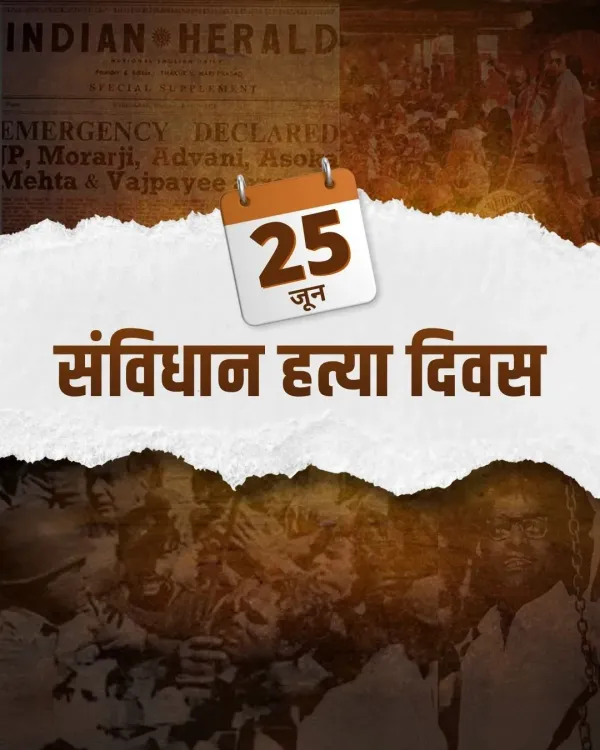
The Union government officially designates 25 June as Samvidhan Hatya Diwas , institutionalising annual remembrance of the Emergency.
The 1975–77 Emergency lasted 21 months and saw opposition leaders including Jayaprakash Narayan detained under the Maintenance of Internal Security Act.
The 44th Constitutional Amendment, 1978 , enacted after the Emergency, removed 'internal disturbance' as grounds for Article 352 proclamation and strengthened fundamental rights protections.
The observance is part of the BJP's consistent political messaging contrasting its constitutionalist record with the Congress-era Emergency.
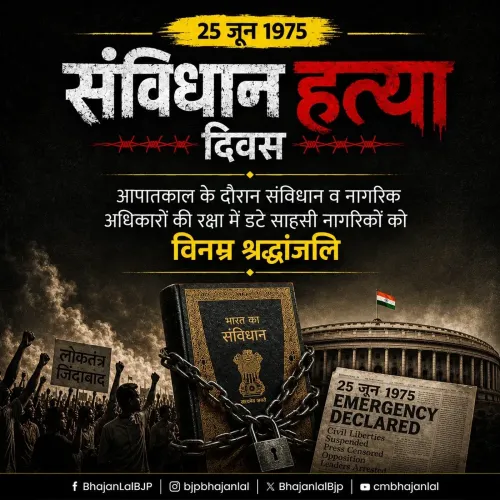
Union Parliamentary Affairs Minister Kiren Rijiju on Thursday, 25 June 2026, paid tribute to the youth, journalists, and opposition leaders who resisted the 1975 Emergency, marking the anniversary the Union government designates as Samvidhan Hatya Diwas — the day the Constitution was, in his words, murdered.
Context
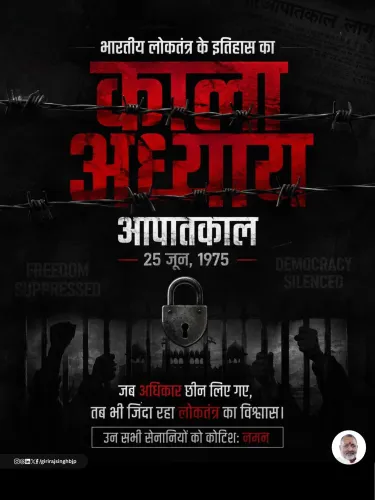
Posting in Hindi on X, Rijiju described 25 June 1975 as 'bhartiya loktantra ka woh kala adhyay' (that dark chapter of Indian democracy), when, he wrote, Emergency was imposed out of lust for power, suppressing the spirit of the Constitution, democratic rights, and freedom of expression. He offered what he called a 'humble tribute' (vinm shraddhaanjali) to those he termed 'great democracy fighters' (mahan loktantra senaniyon) who kept their voices raised fearlessly to protect democracy and the Constitution even in those difficult times.
Policy Backdrop
On 25 June 1975, then Prime Minister Indira Gandhi advised the President of India to proclaim a national Emergency under Article 352 of the Constitution, citing internal disturbance. The 21-month Emergency (1975–77) saw civil liberties suspended, the press censored, and opposition leaders — including socialist stalwart Jayaprakash Narayan — detained under the Maintenance of Internal Security Act.
The constitutional fallout led to the 44th Constitutional Amendment Act, 1978, which removed 'internal disturbance' as a valid ground for Emergency, tightened the conditions for its proclamation, and reinforced judicial review of fundamental rights — a direct legislative response to the excesses of the period.
Stakeholders and Impact
The designation of 25 June as Samvidhan Hatya Diwas by the Union government has formalised annual BJP messaging that contrasts the party's constitutionalist self-image with the Congress party's record during the Emergency. Survivors of the period — journalists imprisoned under press censorship, youth activists who went underground, and opposition legislators detained without trial — are the figures Rijiju's tribute explicitly honours.
The observance resonates particularly with RSS-affiliated organisations and BJP's broader base, for whom the Emergency represents a foundational political memory of resistance against authoritarian one-party rule. Civil society groups and press-freedom advocates also mark the date, though from varied political perspectives.
What's Next
With Parliament's monsoon session approaching, the anniversary is expected to generate floor references and possible resolutions, as it has in prior years. Other Union ministers are also likely to issue statements marking the day, reinforcing the government's institutional framing of Samvidhan Hatya Diwas as a national day of democratic remembrance. The broader political contest over the Emergency's legacy — and its implications for contemporary debates on constitutional propriety — shows no sign of abating.
Point of View
The minister implicitly targets the Congress without naming it, keeping the critique deniably historical while landing it as a contemporary contrast. The formalisation of 25 June as Samvidhan Hatya Diwas elevates what was once a party commemoration into an official state observance, amplifying its reach and giving it institutional weight. As the monsoon session nears, such messaging is also calibrated to set a constitutional-values frame around parliamentary proceedings.
NationPress
25 Jun 2026
Frequently Asked Questions
What is Samvidhan Hatya Diwas?
Samvidhan Hatya Diwas is the designation given by the Union government to 25 June, marking the anniversary of the imposition of the 1975 national Emergency, which suspended civil liberties and press freedom for 21 months.
Why is 25 June 1975 significant in Indian history?
On 25 June 1975, Prime Minister Indira Gandhi advised the President to proclaim a national Emergency under Article 352, leading to the suspension of fundamental rights, press censorship, and mass detention of opposition leaders for nearly two years.
What did Kiren Rijiju say about the 1975 Emergency?
Rijiju called it 'that dark chapter of Indian democracy' in which Emergency was imposed out of lust for power, suppressing the Constitution's spirit, democratic rights, and freedom of expression, and paid tribute to those who resisted it.
Who was Jayaprakash Narayan and what was his role during the Emergency?
Jayaprakash Narayan was a prominent socialist leader who headed the popular opposition movement against Indira Gandhi's government before the Emergency and was detained under the Maintenance of Internal Security Act after it was imposed.
What constitutional change came after the 1975 Emergency?
The 44th Constitutional Amendment Act of 1978 removed 'internal disturbance' as a ground for Emergency, tightened proclamation conditions, and strengthened judicial review of fundamental rights to prevent a repeat of the 1975–77 period.