CM Dhami Warns Zero Tolerance for Disorder in Char Dham Yatra
Synopsis
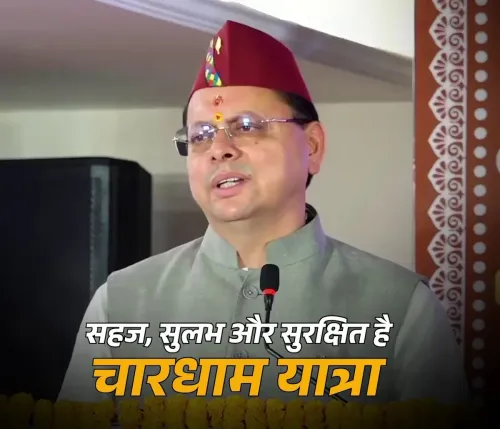
Chief Minister Pushkar Singh Dhami on 25 June 2026 declared zero tolerance for disorder during the Char Dham Yatra, reinforcing Uttarakhand's annual peak-season governance posture for the pilgrimage drawing millions of devotees to Yamunotri, Gangotri, Kedarnath and Badrinath.
Key Takeaways
CM Pushkar Singh Dhami issued a zero-tolerance warning against any form of disorder during the Char Dham Yatra on 25 June 2026 .
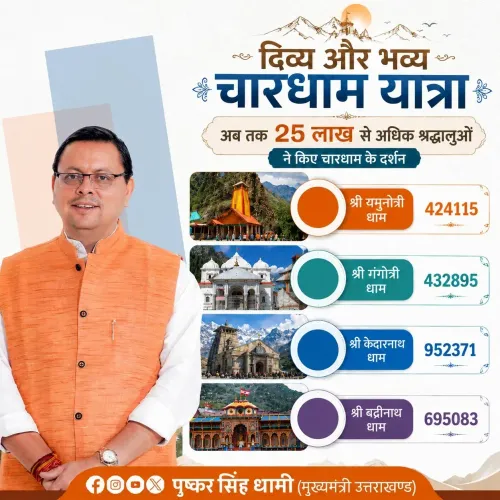
The Char Dham Yatra covers four shrines — Yamunotri, Gangotri, Kedarnath , and Badrinath — and attracts 2–4 million pilgrims annually.
The directive was issued by the Chief Minister's Office of Uttarakhand at the peak of the summer pilgrimage season.
Uttarakhand has maintained crowd-management and registration guidelines for the Yatra since at least 2014 .
The Char Dham All-Weather Road Project , sanctioned in 2016 , underpins infrastructure efforts to improve pilgrim safety.
Follow-up enforcement orders, additional security deployments, or revised registration caps are expected in coming days.
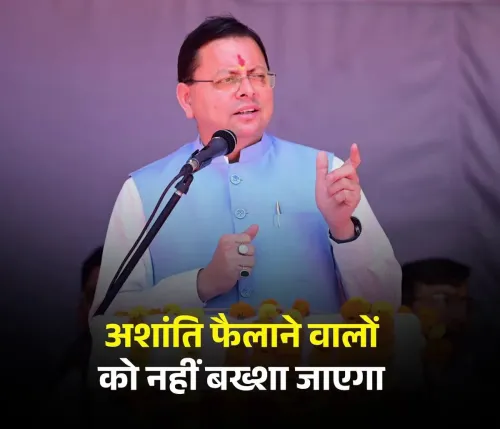
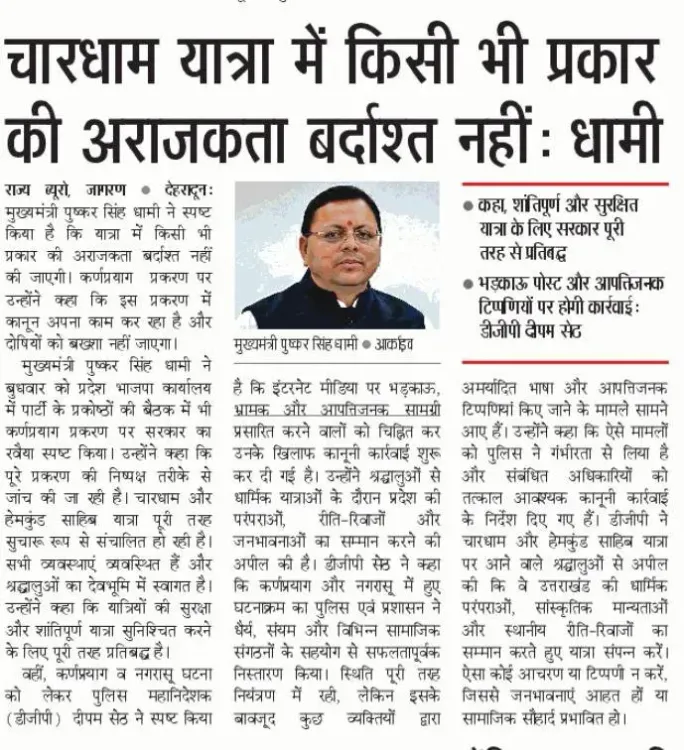
The Chief Minister's Office of Uttarakhand, on behalf of Chief Minister Pushkar Singh Dhami, issued a stern warning on Thursday, 25 June 2026, declaring that no form of lawlessness or disorder would be tolerated during the ongoing Char Dham Yatra. The statement, shared from the official CMO handle, signals a firm administrative posture as the pilgrimage season enters its peak summer months.
The post, originally in Hindi, states: 'Char Dham Yatra mein kisi bhi prakar ki arajkata bardaasht nahin' — meaning, 'No anarchy of any kind will be tolerated in the Char Dham Yatra.' The message is attributed directly to CM Pushkar Singh Dhami, underscoring that the directive carries the highest executive authority in the state.
Context
The Char Dham Yatra — the annual Hindu pilgrimage circuit encompassing Yamunotri, Gangotri, Kedarnath, and Badrinath — draws between two million and four million visitors every year, placing enormous pressure on mountain roads, accommodation, and local law-enforcement resources. Managing this scale of religious tourism in a fragile Himalayan geography has long been one of Uttarakhand's most complex administrative challenges. Peak season, which typically spans May through June, sees the sharpest surge in pilgrim footfall.
CM Dhami, who has served as Chief Minister since March 2021, has consistently prioritised pilgrimage infrastructure and law-and-order alongside his government's broader development agenda. His administration has issued crowd-management and registration guidelines ahead of each Yatra season, building on a framework that successive Uttarakhand governments have refined since at least 2014.
Policy Backdrop
The governance framework around the Char Dham Yatra rests on two pillars: infrastructure and administration. On the infrastructure side, the Char Dham All-Weather Road Project — sanctioned by the Union Cabinet in 2016 — aims to provide reliable, year-round connectivity to all four shrines, reducing weather-related disruptions and accidents that have historically claimed lives and stranded pilgrims.
On the administrative side, mandatory online registration, vehicle-movement caps, and coordinated deployment of police and disaster-response teams have become standard features of Yatra management. The zero-tolerance language deployed by CM Dhami on 25 June fits squarely within this tradition of high-visibility executive warnings designed to signal state readiness and deter potential violators — whether they are touts, unregistered operators, or those who flout traffic and crowd-control orders.
Stakeholders and Impact
The directive directly affects pilgrims travelling to the four shrines, local residents of the mountain districts whose daily life is disrupted during peak season, and security and administrative personnel tasked with managing the surge. For pilgrims, a tighter law-and-order environment can translate into safer movement and reduced exploitation by unscrupulous service providers. For local communities, firm enforcement can ease traffic gridlock and reduce environmental strain on sensitive Himalayan ecosystems.
Tourism-dependent businesses — hotels, transport operators, and local guides — also have a stake in an orderly Yatra, since incidents of chaos or accidents generate negative publicity that can suppress footfall in subsequent seasons. The statement therefore carries economic as well as administrative weight.
What's Next
Observers will watch for follow-up orders from the Uttarakhand government specifying concrete enforcement measures — such as revised pilgrim registration caps, additional security deployments, or penalties for violations. With the 2026 Yatra season at its most intense point, any fresh administrative directive in the coming days will be a direct operational translation of CM Dhami's public warning. The government's ability to match its rhetoric with on-ground enforcement will determine how the administration's pilgrimage-management record is assessed ahead of the next electoral cycle in Uttarakhand.
Point of View
Signalling administrative control over one of India's most logistically complex religious events. The statement also reflects a broader pattern in which BJP-led state governments have sought to position themselves as efficient custodians of Hindu pilgrimage circuits, linking law-and-order messaging with infrastructure investment. The real test, however, lies in operational follow-through: whether fresh enforcement orders, personnel deployments, or registration curbs materialise will determine whether this is policy or posture. With Uttarakhand's electoral calendar in view, the government has every incentive to ensure the 2026 Yatra season is incident-free.
NationPress
25 Jun 2026
Frequently Asked Questions
What did CM Dhami say about Char Dham Yatra 2026?
CM Pushkar Singh Dhami declared on 25 June 2026 that no disorder of any kind would be tolerated during the Char Dham Yatra, issuing the warning through the official Chief Minister's Office social media handle.
What is the Char Dham Yatra and which shrines does it cover?
The Char Dham Yatra is an annual Hindu pilgrimage in Uttarakhand covering four Himalayan shrines: Yamunotri, Gangotri, Kedarnath, and Badrinath. It draws between two million and four million pilgrims each year.
How does Uttarakhand manage crowd control during Char Dham Yatra?
The state government uses mandatory online registration, vehicle-movement caps, and coordinated deployment of police and disaster-response teams. These guidelines have been in place since at least 2014 and are updated each season.
What is the Char Dham All-Weather Road Project?
The Char Dham All-Weather Road Project is a Union Cabinet-sanctioned initiative from 2016 aimed at providing reliable, year-round road connectivity to all four Char Dham shrines to reduce weather-related disruptions and improve pilgrim safety.
Why is law and order important during Char Dham Yatra?
The pilgrimage draws millions of visitors into fragile Himalayan terrain, creating risks of traffic chaos, accidents, and exploitation by unregistered operators. Strict law-and-order enforcement protects pilgrims, eases pressure on local communities, and safeguards the environment.