Rijiju visits Prambanan, flags India role in UNESCO temple rebuild
Synopsis
Union Minister Kiren Rijiju visited the Prambanan UNESCO World Heritage temple complex in Yogyakarta on 8 July 2026, quoting PM Modi on the spiritual experience and signalling India's intent to participate in the site's reconstruction — a move that deepens India's cultural diplomacy under the Act East Policy.
Key Takeaways
Kiren Rijiju visited the Prambanan temple complex in Yogyakarta, Indonesia on 8 July 2026 .
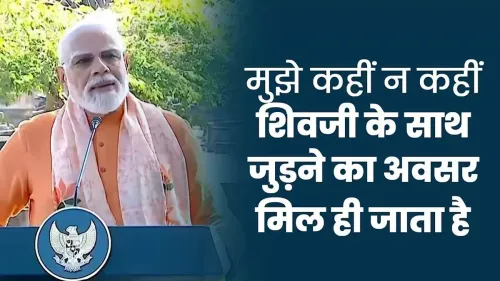
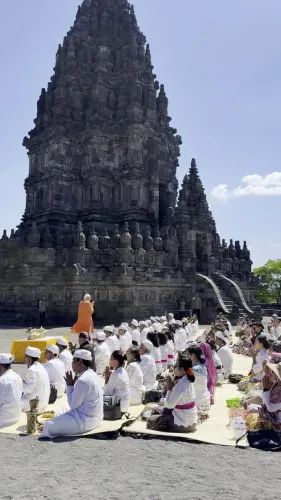
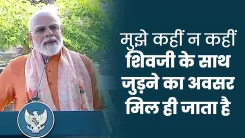
He quoted PM Narendra Modi describing the chanting of Mahamrityunjay and Om Namah Shivaya at the temple as 'touching the heart'.
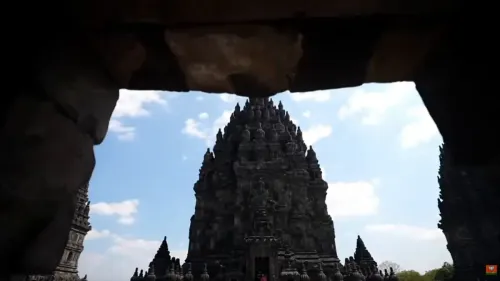
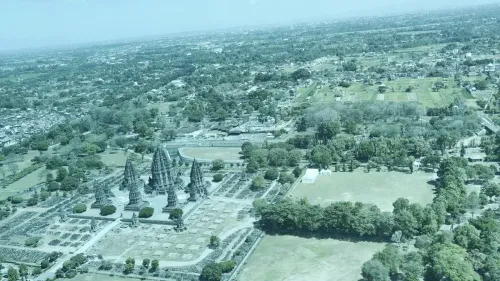
Prambanan is a 9th-century Hindu temple complex dedicated to Shiva, inscribed as a UNESCO World Heritage Site in 1991 .
The minister stated that reconstruction work at the complex is now being planned and expressed confidence in a surge of Indian tourist visits.
The visit aligns with India's Act East Policy , which promotes shared civilisational heritage with ASEAN nations.
A formal India-Indonesia agreement on heritage conservation or technical assistance remains a key development to watch.
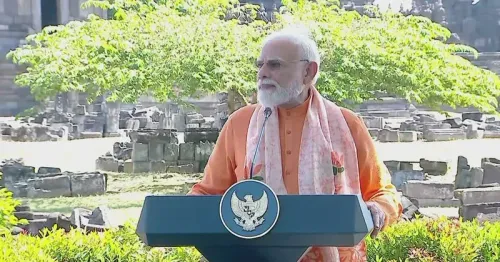
Union Parliamentary Affairs Minister Kiren Rijiju visited the Prambanan temple complex in Yogyakarta, Indonesia on Wednesday, 8 July 2026, describing the experience as deeply moving and signalling India's intent to participate in the UNESCO World Heritage Site's reconstruction work.
Context
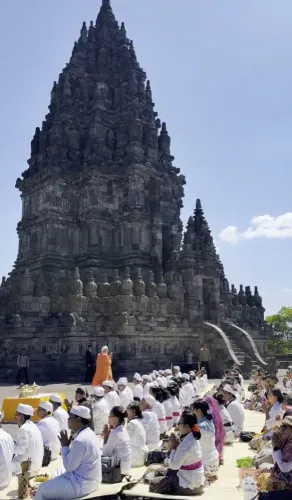
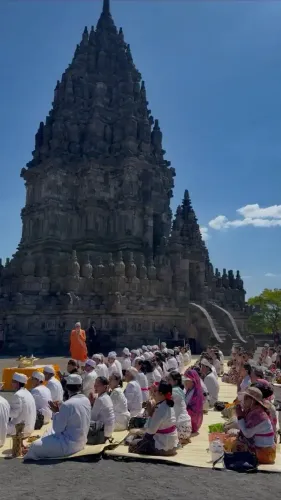
Sharing the moment on social media, Rijiju quoted Prime Minister Narendra Modi, recounting: 'When I came to this sacred temple in Indonesia today, I could see the chanting of Mahamrityunjay [a Shiva mantra] happening here, everyone was reciting Om Namah Shivaya — it was something that touched the heart.' The minister noted that reconstruction work at the grand temple complex in Yogyakarta is now being planned and expressed confidence that Indian travellers will visit in greater numbers.
Prambanan is a 9th-century Hindu temple compound dedicated primarily to Lord Shiva, built around 850 CE. It was inscribed as a UNESCO World Heritage Site in 1991 and stands as one of the largest Hindu temple complexes in Southeast Asia.
Policy Backdrop
The visit fits squarely within India's Act East Policy, re-energised since 2014, which explicitly promotes shared cultural and civilisational heritage with ASEAN nations. India has pursued cultural diplomacy across Southeast Asia by highlighting ancient Hindu-Buddhist linkages, supporting heritage restoration, and encouraging pilgrimage and tourism circuits.
Indonesia hosts a significant population that maintains living Hindu traditions, particularly in Bali, and the Prambanan complex holds deep religious significance for Indonesian Hindus. India has periodically offered technical assistance for heritage preservation in the region, and the minister's reference to reconstruction aligns with that broader pattern of people-to-people engagement under the bilateral strategic partnership.
Stakeholders and Impact
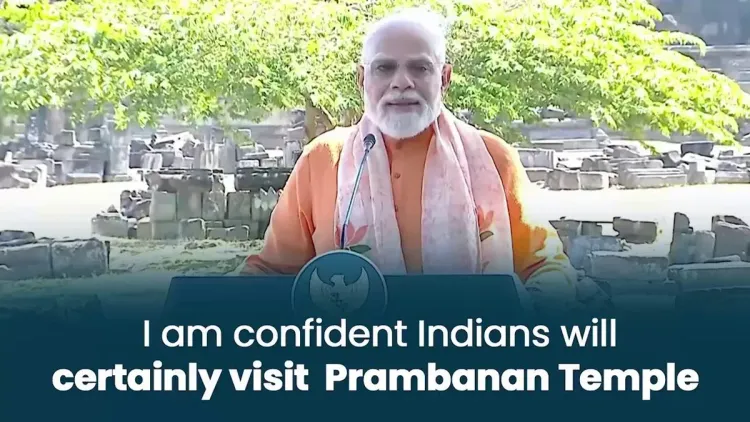
The primary stakeholders include Indian tourists and pilgrims, Indonesia's Hindu community, heritage conservation bodies, and the two governments. Rijiju's assertion — 'I am fully confident that after today, Indian travellers will certainly come here' — signals a potential push to include Prambanan in Indian outbound tourism promotion campaigns.
For Indonesia, increased Indian visitor footfall would carry economic benefits for Yogyakarta, a city whose identity is closely tied to its heritage sites. Any formal India-Indonesia agreement on restoration funding or technical support would deepen bilateral ties beyond trade and defence.
What's Next
Attention will now turn to whether the minister's visit translates into a concrete bilateral framework — such as a memorandum of understanding on heritage conservation or a dedicated tourism corridor linking Indian pilgrimage circuits to Prambanan. Progress on the reconstruction project itself, and India's formal role in it, will be the clearest indicator of how far this cultural diplomacy initiative advances.
The episode underscores India's broader strategy of leveraging civilisational soft power in Southeast Asia, a region where ancient Hindu and Buddhist heritage provides a ready foundation for contemporary diplomatic engagement.
Point of View
Projecting India as a natural stakeholder in Southeast Asia's Hindu heritage. By invoking reconstruction and future Indian tourism in the same breath, the minister is laying the rhetorical groundwork for a formal bilateral role that would give the Act East Policy a tangible, people-facing win. The move also carries a domestic dimension: positioning the BJP government as a global guardian of Hindu civilisation resonates with a core part of its electoral identity. Whether the visit produces an institutional outcome or remains symbolic will determine its lasting diplomatic weight.
NationPress
8 Jul 2026
Frequently Asked Questions
Which temple did Kiren Rijiju visit in Indonesia?
Rijiju visited the Prambanan temple complex in Yogyakarta, Indonesia — a UNESCO World Heritage Site comprising 9th-century Hindu temples dedicated primarily to Lord Shiva.
What did PM Modi say about Prambanan?
As quoted by Rijiju, PM Narendra Modi described witnessing the chanting of Mahamrityunjay and Om Namah Shivaya at the temple as something that 'touched the heart', and expressed confidence that Indian travellers will visit the site.
Is India involved in the reconstruction of Prambanan temple?
Minister Rijiju indicated that reconstruction work at the Prambanan complex is being planned and suggested India's involvement, though no formal bilateral agreement has been publicly announced yet.
Why is Prambanan important to India?
Prambanan is a 9th-century Hindu temple complex in Indonesia, reflecting ancient civilisational and religious links between the two countries. It is central to India's cultural diplomacy efforts under the Act East Policy .
What is India's Act East Policy and how does it relate to this visit?
India's Act East Policy , re-energised in 2014 , promotes strategic, economic, and cultural engagement with ASEAN nations. Rijiju's temple visit and references to reconstruction and tourism align directly with the policy's goal of deepening people-to-people ties through shared heritage.