RudraM-II missile test: DRDO, IAF score Mach 5.5 strike off Odisha coast
Synopsis
India just cleared a major standoff-strike milestone. The RudraM-II — Mach 5.5, 300 km reach, 200-kg warhead — was fired from a Su-30 MKI off Chandipur and hit its mark. It is built to retire the Russian-origin Kh-31 and give the IAF a homegrown radar-killer, a quiet but consequential step in India's Aatmanirbharta push.
Key Takeaways
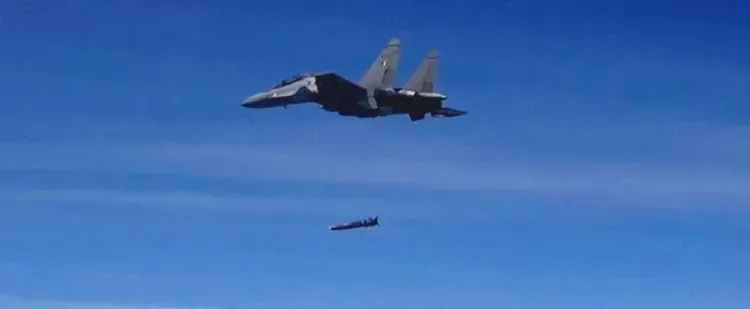
DRDO and the IAF successfully flight-tested the RudraM-II from a Su-30 MKI off Chandipur, Odisha on 2 June .
The missile clocks up to Mach 5.5 , with a range of around 300 km and a 200-kg warhead.
It is slated to replace the Russian-origin Kh-31 anti-radiation missiles in IAF service.
Developed by Research Centre Imarat, Hyderabad , with HAL and other DcPPs as industry partners.
Defence Minister Rajnath Singh hailed the trial as a boost to Aatmanirbharta in advanced weapon systems.
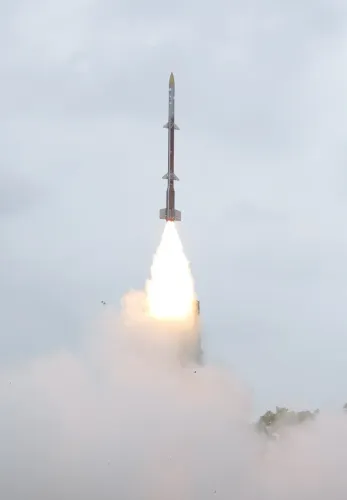
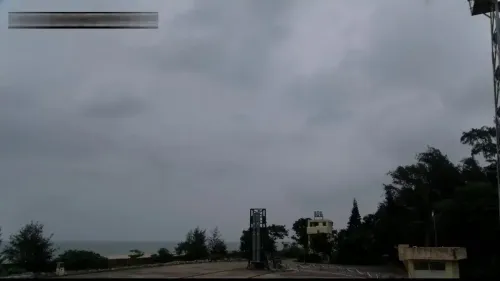
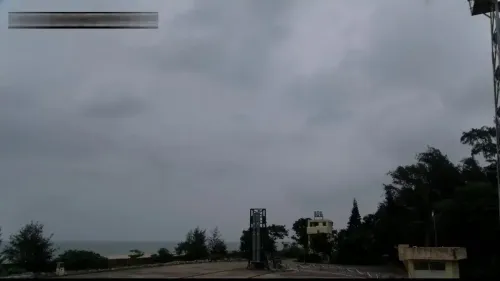
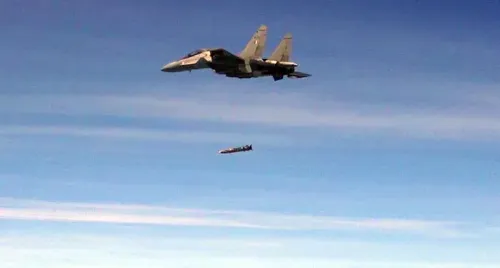
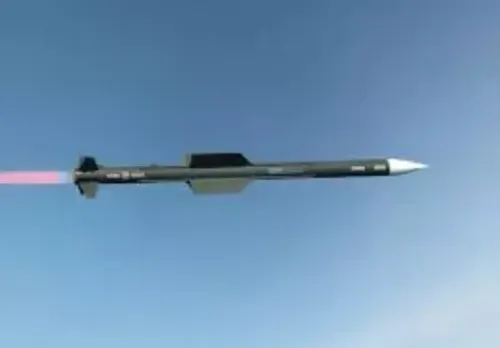
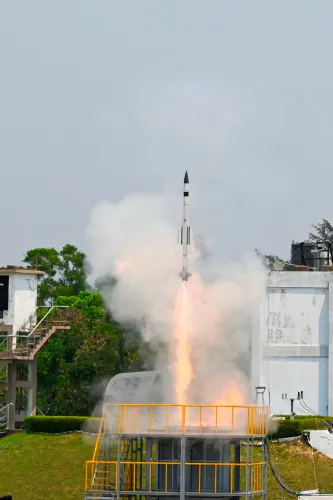
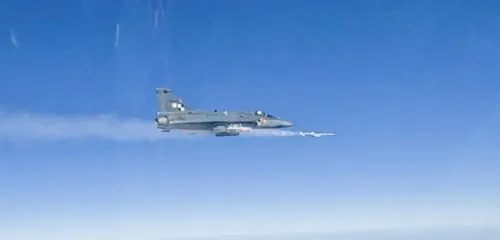
The Defence Research and Development Organisation (DRDO) and the Indian Air Force (IAF) on Tuesday, 2 June successfully flight-tested the indigenously developed RudraM-II air-to-surface missile from a Sukhoi Su-30 MKI fighter off the coast of Chandipur in Odisha. The trial, carried out at the Integrated Test Range (ITR), validated the weapon's performance under extreme release conditions and along a critical trajectory.
Key Developments
According to officials, the missiles were guided to a predefined target with pin-point accuracy after release from the Su-30 MKI platform. ‘All the test objectives were fully met as confirmed by the flight data captured by various range instruments deployed by Integrated Test Range (ITR) in Chandipur,' an official said.
The trial established the functional reliability of every subsystem, marking a significant milestone in the development cycle of the standoff weapon.
Behind the Build
RudraM-II has been designed and developed by the Research Centre Imarat in Hyderabad as the nodal DRDO laboratory, working alongside the Defence Research and Development Laboratory, the High Energy Materials Research Laboratory, the Armament Research and Development Establishment, and the ITR.
Industry partners under the Development-cum-Production Partners (DcPPs) framework — including Hindustan Aeronautics Limited (HAL), the Regional Centre for Military Airworthiness and the Missile System Quality Assurance Agency — also contributed to the programme.
What the Government Said
Defence Minister Rajnath Singh congratulated the DRDO, the IAF, the Defence Public Sector Undertakings (DPSUs), the DcPPs and the wider industry on the outcome. The tests, he said, have demonstrated the ‘growing maturity of indigenous defence technologies', contributing significantly to Aatmanirbharta (self-reliance) in advanced weapon systems.
Department of Defence R&D Secretary and DRDO Chairman Rajesh Kumar Singh also congratulated the teams associated with the trial.
Why RudraM-II Matters
The RudraM-II is designed to hit speeds of up to Mach 5.5, engage targets at ranges of around 300 km and deliver a 200-kg warhead. It can be launched from fighters such as the Su-30 MKI operating at altitudes between 3 km and 15 km.
The missile is expected to act as a force multiplier for the IAF and is slated to gradually replace the ageing Russian-origin Kh-31 anti-radiation missiles currently in service. It uses a hybrid guidance architecture combining an Inertial Navigation System (INS), GPS-based navigation and a passive homing seeker capable of tracking radio-frequency emissions across a broad spectrum — a configuration tailored for strikes on enemy radars and air-defence assets.
What Happens Next
With the latest trial clearing extreme-release benchmarks, the programme moves closer to user induction. Subsequent trials are expected to firm up integration protocols with the IAF's Su-30 MKI fleet ahead of series production.
Point of View
300 km indigenous SEAD weapon plugs a real capability gap and reduces sanctions-era exposure. The harder question is industrial: how quickly can Research Centre Imarat and HAL scale from successful trials to squadron-level inventories. Past DRDO programmes have cleared the technology bar but stumbled on serial production timelines.
NationPress
18 Oct 2026
Frequently Asked Questions
What is the RudraM-II missile?
RudraM-II is an indigenously developed air-to-surface standoff missile designed by DRDO's Research Centre Imarat in Hyderabad. It can hit speeds of up to Mach 5.5, engage targets at around 300 km, and carry a 200-kg warhead, primarily for striking enemy radars and air-defence systems.
Where and when was the RudraM-II tested?
The missile was flight-tested on Tuesday, 2 June, from a Sukhoi Su-30 MKI at the Integrated Test Range off Chandipur in Odisha. Officials said all test objectives were met under extreme release conditions and a critical trajectory.
Which missile will RudraM-II replace in the IAF?
RudraM-II is slated to gradually replace the Russian-origin Kh-31 anti-radiation missiles currently in IAF service. The indigenous weapon offers longer range, higher speed and a hybrid INS-GPS-passive-homing guidance suite.
Who developed RudraM-II?
It was developed by the Research Centre Imarat, Hyderabad, as the nodal DRDO lab, in collaboration with the Defence Research and Development Laboratory, the High Energy Materials Research Laboratory, the Armament Research and Development Establishment and the ITR. HAL and other Development-cum-Production Partners contributed on the industry side.
Why is the RudraM-II test important for India?
The trial validates a homegrown standoff strike capability that reduces India's dependence on imported anti-radiation missiles. Defence Minister Rajnath Singh said the tests reflect the growing maturity of indigenous defence technologies and advance the Aatmanirbharta agenda in advanced weapon systems.