RudraM-II missile test: Rajnath Singh hails DRDO, IAF for successful air-to-surface trials
Synopsis
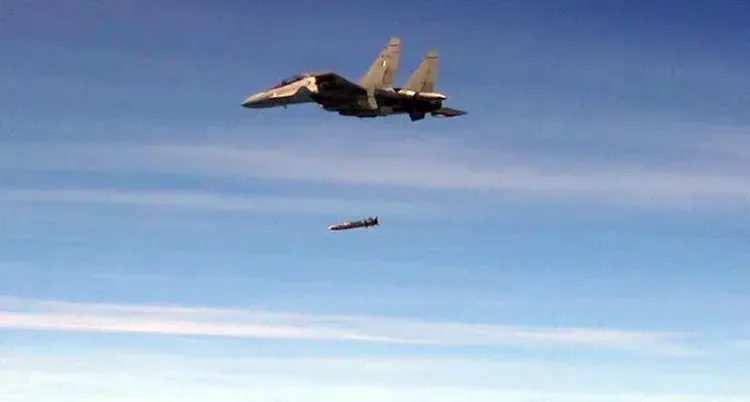
India's RudraM-II air-to-surface missile has cleared a critical airborne trial under extreme release conditions, hitting its target with pinpoint accuracy. Defence Minister Rajnath Singh's endorsement signals more than a test pass — it cements the RudraM line as the IAF's emerging stand-off weapon to take out enemy radar and air defences, with HAL and private industry now in the production loop.
Key Takeaways
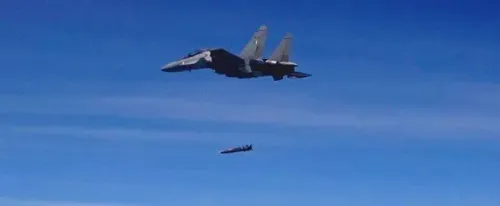
RudraM-II Air-to-Surface Missile was successfully flight-tested from an airborne platform, the Ministry of Defence confirmed.
Defence Minister Rajnath Singh credited DRDO , the IAF , DPSUs, and industry partners for the milestone.
The missile was developed by Research Centre Imarat, Hyderabad , with multiple DRDO labs and HAL contributing.
All test objectives were met, validated by data from the Integrated Test Range, Chandipur .
The trial follows last month's successful ULPGM-V3 development trials near Kurnool, Andhra Pradesh .
Defence Minister Rajnath Singh on Tuesday, 2 June, congratulated the Defence Research and Development Organisation (DRDO) and the Indian Air Force (IAF) for the successful flight tests of the indigenously developed RudraM-II Air-to-Surface Missile from an airborne platform. The minister said the trials demonstrated the growing maturity of homegrown defence technologies and marked a significant step toward Aatmanirbharta in advanced weapon systems.
Key Developments in the Trial
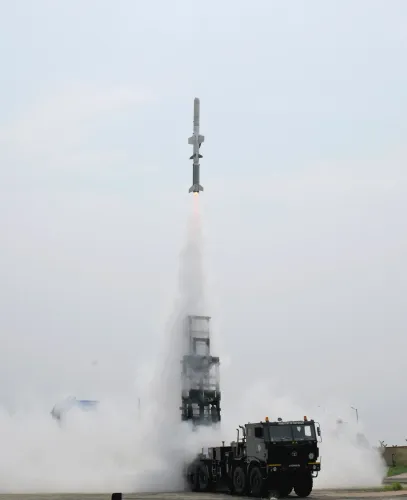
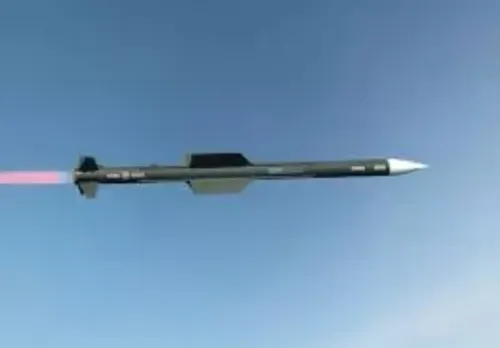
According to a statement issued by the Ministry of Defence, the tests were conducted under extreme release conditions with a critical trajectory, validating the capability of all subsystems. After release, the missiles were guided to a predefined target with pinpoint accuracy.
All test objectives were fully met, as confirmed by flight data captured by range instruments deployed by the Integrated Test Range (ITR), Chandipur.
Who Built RudraM-II
The RudraM-II has been indigenously developed by the Research Centre Imarat (RCI), Hyderabad, the nodal DRDO laboratory for the project. It was built in collaboration with sister labs including the Defence Research and Development Laboratory, High Energy Materials Research Laboratory, Armament Research and Development Establishment, and the ITR.
Development-cum-Production Partners (DcPPs), along with agencies such as Hindustan Aeronautics Limited (HAL), the Regional Centre for Military Airworthiness, the Missile System Quality Assurance Agency, and several private industries contributed to the programme, the statement added.
What the Defence Minister Said
Rajnath Singh lauded the combined effort of DRDO, the IAF, Defence Public Sector Undertakings (DPSUs), DcPPs, and Indian industry. He noted that the successful trials reflect the expanding footprint of indigenous defence technologies and reinforce India's self-reliance push in advanced weapon systems.
The Secretary, Department of Defence R&D, and Chairman, DRDO, also congratulated the teams associated with the test, calling the achievement commendable.
Wider Push for Indigenous Weapons
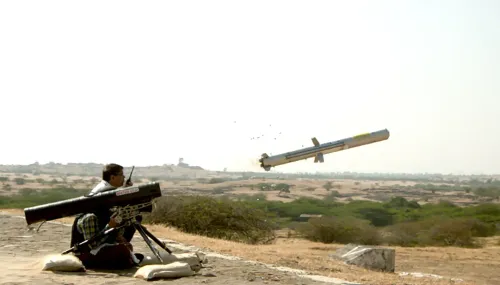
The RudraM-II test comes weeks after the DRDO, last month, completed the final deliverable configuration development trials of the Unmanned Aerial Vehicle Launched Precision Guided Missile (ULPGM)-V3 in Air-to-Ground and Air-to-Air modes at the DRDO test range near Kurnool, Andhra Pradesh. The ULPGM-V3 is configured for anti-tank roles as well as for engaging drones, helicopters, and other airborne targets.
Notably, the back-to-back successful trials underline a steady cadence of indigenous missile milestones in 2024-25, as the Centre pushes to reduce import dependence in strategic platforms. The RudraM family of anti-radiation missiles is designed to neutralise enemy radar and communication systems from stand-off ranges, a critical capability for the IAF's suppression of enemy air defences (SEAD) missions.
Officials indicated that the RudraM-II's induction roadmap will follow further user trials, with the IAF expected to integrate the missile across multiple frontline platforms in the coming phases.
Point of View
But unless HAL and the DcPP ecosystem deliver at the rate the IAF needs, indigenous design wins do not translate into squadron-level readiness. Aatmanirbharta in strategic weapons will be judged by induction timelines, not test ranges.
NationPress
20 Sept 2026
Frequently Asked Questions
What is the RudraM-II missile?
RudraM-II is an indigenously developed air-to-surface missile designed to be launched from an airborne platform and guided to a predefined target with high accuracy. It has been developed by the DRDO's Research Centre Imarat, Hyderabad, in collaboration with multiple sister laboratories.
Where was the RudraM-II flight test conducted?
The flight tests were conducted from an airborne platform, with flight data captured by range instruments deployed by the Integrated Test Range (ITR), Chandipur. The Ministry of Defence confirmed that the tests were carried out under extreme release conditions.
Why is the RudraM-II test significant for India?
The successful trial demonstrates the maturity of indigenous defence technologies and advances India's push for Aatmanirbharta in advanced weapon systems. It strengthens the IAF's stand-off strike capability against enemy radar and air defence assets.
Who contributed to developing the RudraM-II?
The missile was developed by Research Centre Imarat, Hyderabad, with support from the Defence Research and Development Laboratory, High Energy Materials Research Laboratory, Armament Research and Development Establishment, and the ITR. Hindustan Aeronautics Limited, the Regional Centre for Military Airworthiness, the Missile System Quality Assurance Agency, and several industry partners also contributed.
What other DRDO missile trials were conducted recently?
Last month, the DRDO completed the final deliverable configuration development trials of the ULPGM-V3 in Air-to-Ground and Air-to-Air modes at its test range near Kurnool, Andhra Pradesh. The system is configured for anti-tank roles and for engaging drones, helicopters, and other airborne targets.