Salem okra farmers face ruin as prices crash to ₹5/kg in Sangagiri

Synopsis
In Salem's Sangagiri belt, okra prices have collapsed to ₹5 per kg — so far below the cost of production that hundreds of farmers have stopped harvesting altogether, leaving crops to dry on the vine across 500 acres. With traders unable to find buyers and produce being ploughed back as manure, the crisis lays bare the structural vulnerability of vegetable farmers with no price floor and no immediate state relief in sight.
Key Takeaways
Okra prices in Sangagiri, Salem district have crashed to around ₹5 per kilogram , far below the cost of production.
Nearly 500 acres of okra cultivation across multiple villages in the Sangagiri belt is affected.
Many farmers have abandoned harvesting as earnings fail to cover even labour and transport costs.
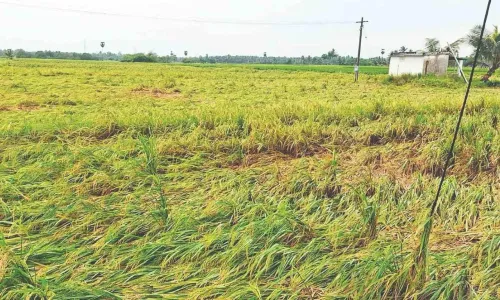
Harvested produce is reportedly being discarded in fields; standing crops are drying up and being ploughed back as manure.
Local traders are also struggling amid weak demand in wholesale markets across Tamil Nadu and Kerala.
Farmers have called on the Tamil Nadu government to intervene with price stabilisation measures; no relief has been announced yet.
Hundreds of okra farmers in and around Sangagiri in Tamil Nadu's Salem district are staring at severe financial losses after market prices for the vegetable collapsed to as low as ₹5 per kilogram — well below the cost of production — forcing many growers to abandon harvesting and leave mature crops standing in their fields.
Scale of the Crisis
Okra, locally known as ladies' finger, is cultivated across nearly 500 acres in the Sangagiri belt, spanning villages including Thevur, Arasiramani, Kullampatti, Chettipatti, Kunjampalayam, Odasakkarai, and Thanneedasanur. The crop is a primary income source for a large number of farming families in the region. Produce is typically procured by traders and transported to wholesale markets across Tamil Nadu and into neighbouring Kerala.
Why Prices Crashed
Farmers report that the market witnessed a sudden and steep price slump over the past week, with okra fetching only around ₹5 per kg at current rates. According to growers, input costs have risen sharply — covering seeds, fertilisers, irrigation, labour, and transportation — making the prevailing price wholly unviable. At ₹5 per kg, the earnings from a harvest often fail to cover even the labour charges for plucking the crop and moving it to collection points, let alone the broader cost of cultivation.
Crops Left to Rot, Traders Struggle
The financial unviability of harvesting has prompted several cultivators to stop operations altogether. Mature vegetables are being left on the plants, with large portions of standing crops now drying up in the fields. In some cases, harvested produce that could not be sold profitably has been discarded in agricultural fields. Local traders are reportedly struggling as well, unable to find buyers amid weak demand in wholesale markets. Much of the abandoned crop is being ploughed back into the soil as organic manure — a stark indicator of how severe the price collapse has become.
Farmers Demand Government Intervention
Growers in the Sangagiri belt have urged the Tamil Nadu government to closely monitor the situation and step in with measures to stabilise prices and ensure fair returns for vegetable cultivators. They have warned that sustained losses at this scale could discourage future cultivation in the region and deal a lasting blow to rural livelihoods. As of now, no immediate relief package or procurement intervention has been announced by state authorities.
Point of View
Where the absence of a minimum support price for perishables leaves farmers entirely exposed to trader-driven price discovery. At ₹5 per kg, the market is not just unprofitable; it is punitive. The fact that farmers are ploughing mature crops back into the soil rather than selling them is the clearest possible signal that the current price is below even the marginal cost of harvesting. Tamil Nadu has a procurement infrastructure for paddy and pulses; the question policymakers must answer is why that logic has never been extended to vegetables, which carry far greater income volatility and far less state protection.
NationPress
27 Sept 2026
Frequently Asked Questions
Why have okra prices crashed in Salem's Sangagiri region?
Okra prices in Sangagiri, Salem district have fallen to around ₹5 per kilogram following a sudden slump in wholesale market demand over the past week. Traders are reportedly unable to find buyers in markets across Tamil Nadu and Kerala, leading to a supply glut that has driven prices well below the cost of production.
How much are Salem okra farmers losing?
Farmers say that at ₹5 per kg, the revenue from selling okra does not cover even the cost of hiring labourers to pluck and transport the crop, let alone seeds, fertilisers, and irrigation expenses. Many are abandoning harvesting altogether to avoid deepening their losses.
What is happening to the unharvested okra crop?
Mature okra is being left on plants across nearly 500 acres in the Sangagiri belt. Large portions of the standing crop are drying up in the fields and are being incorporated back into the soil as organic manure, as selling the produce is no longer financially viable.
What have farmers demanded from the government?
Farmers have urged the Tamil Nadu government to monitor the crisis closely and introduce measures to stabilise vegetable prices and ensure fair returns for growers. They have warned that continued losses could discourage future cultivation and harm rural livelihoods in the region.
Which villages in Salem district are affected by the okra price crash?
The crisis spans several villages in the Sangagiri belt of Salem district, including Thevur, Arasiramani, Kullampatti, Chettipatti, Kunjampalayam, Odasakkarai, and Thanneedasanur, covering nearly 500 acres of okra cultivation.