CM Satheesan: No legislature can reject CAG reports, flags KIIFB move
Synopsis
Kerala Chief Minister V.D. Satheesan used a national PAC conference to deliver a pointed constitutional argument: no legislative majority can lawfully exclude CAG findings from parliamentary scrutiny — a direct rebuke of the previous Kerala government's 2021 move to shield KIIFB from audit examination. The same speech also questioned the CAG's own methodology in the ₹1.76 lakh crore 2G loss estimate, framing both as accountability failures of different kinds.
Key Takeaways
Satheesan declared at the All India Conference of PAC Chairpersons on 3 November 2026 that no legislature has constitutional authority to reject a CAG report.
He cited the Kerala Assembly's January 2021 resolution excluding KIIFB from PAC scrutiny as a disruption of normal parliamentary process.
Satheesan questioned the CAG's ₹1.76 lakh crore loss estimate in the 2G spectrum audit , calling it a hypothetical projection, not a realised loss.
He also argued that the Vizhinjam port project audit applied public-sector standards to a public-private partnership structure, requiring a different methodology.
The Chief Minister flagged PAC files pending for over 20 years and called for a national backlog-clearance drive.
Lok Sabha Speaker Om Birla urged PACs to embrace AI and data analytics and function above political considerations.
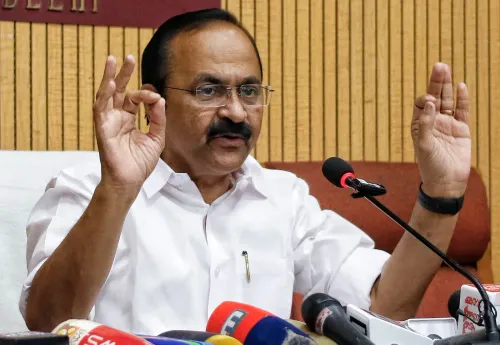
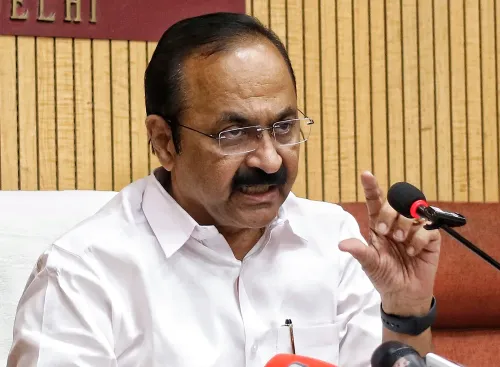
Kerala Chief Minister V.D. Satheesan on Tuesday, 3 November challenged the constitutional authority of any state legislature to exclude or override findings of the Comptroller and Auditor General (CAG) from scrutiny by the Public Accounts Committee (PAC), asserting that a numerical majority in the House does not confer the legal competence to dismiss a CAG report.
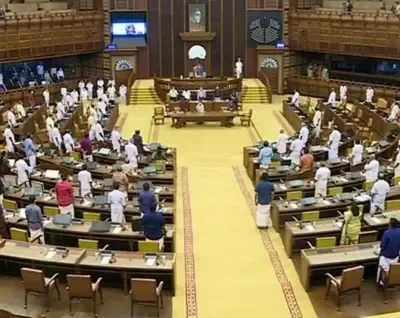
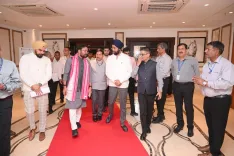
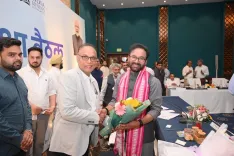
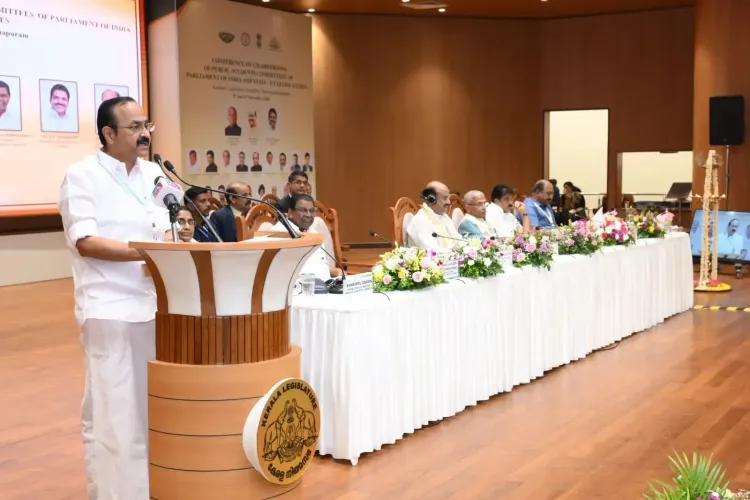
Speaking at the All India Conference of PAC Chairpersons in Thiruvananthapuram — inaugurated by Lok Sabha Speaker Om Birla — Satheesan directly cited the Kerala Legislative Assembly's January 2021 resolution that shielded CAG findings on the Kerala Infrastructure Investment Fund Board (KIIFB) from PAC examination as a cautionary example.
The Constitutional Question
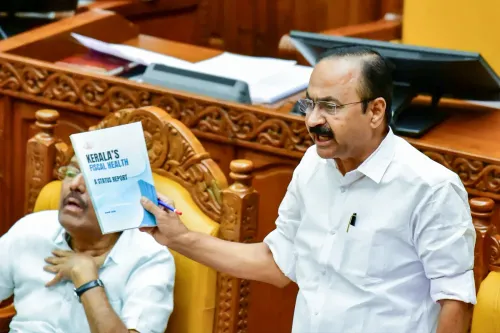
'No legislature is competent to dismiss a report submitted by the CAG. Having a majority in the House does not give a legislature the constitutional competence to reject a CAG report,' Satheesan said. He argued that such practices 'would defeat the very purpose of parliamentary institutions and the principles of accountability.'
The KIIFB episode, he said, had disrupted the normal parliamentary process and raised unresolved questions about the limits of legislative power — an implicit critique of the previous Left Democratic Front (LDF) government's move, even as Satheesan now leads the opposition Indian National Congress (INC)-headed United Democratic Front (UDF).
Questioning CAG Audit Methodology
While defending the CAG's institutional primacy, Satheesan simultaneously called for a serious re-examination of the auditor's methodology in select cases. He pointed to two contentious audit episodes: the 2G spectrum allocation and the Vizhinjam port project.
On the 2G spectrum audit, he questioned the basis of the estimated loss of ₹1.76 lakh crore, arguing it was a hypothetical projection anchored to later auction benchmarks rather than an actual, realised loss to the exchequer. On Vizhinjam, he contended that the CAG had applied the audit standards applicable to a conventional public-sector undertaking to what is, in fact, a public-private partnership — a model with distinct commercial structures, risk-sharing arrangements, and viability gap funding.
Satheesan called on PACs to devise frameworks for addressing audit findings that, in their assessment, fall outside the CAG's constitutional mandate owing to methodological shortcomings.
Clearing the PAC Backlog
The Chief Minister also drew attention to a systemic problem: a massive backlog of unresolved cases before PACs nationwide, with some files reportedly pending for more than 20 years. 'What is the relevance of a committee if files remain pending for two decades? The officials concerned may have retired or may no longer be alive by the time a decision is taken,' he said.
Satheesan, who previously chaired Kerala's PAC, said he had cleared all pending files during his tenure and urged other legislatures to adopt a similar zero-backlog approach.
Lok Sabha Speaker Calls for Outcome-Oriented PACs
Inaugurating the two-day conference, Lok Sabha Speaker Om Birla called for a shift from input-focused scrutiny to outcome-oriented accountability — assessing whether public money is delivering tangible benefits, particularly to disadvantaged communities. He stressed the adoption of data analytics and artificial intelligence to strengthen financial oversight and detect irregularities. Birla also underlined that PACs must function above partisan considerations and reiterated the established convention of placing Opposition members at the helm of such committees.
The conference, bringing together PAC chairpersons from across the country, is expected to produce recommendations on modernising parliamentary financial oversight mechanisms.
Point of View
And majority arithmetic is no substitute for constitutional authority. Yet the simultaneous challenge to the 2G audit methodology complicates his message — defending the CAG's institutional sanctity while questioning its methodology in the same breath risks being read as selective deference. The deeper accountability deficit is the one he named last: files pending for 20 years render committees functionally irrelevant, a problem no conference resolution has yet solved.
NationPress
3 Nov 2026
Frequently Asked Questions
What did Kerala CM Satheesan say about CAG reports and state legislatures?
Satheesan stated that no legislature has the constitutional competence to reject or exclude a CAG report from PAC scrutiny, regardless of its majority in the House. He argued that using legislative numbers to bypass the CAG undermines the foundational principles of parliamentary accountability.
What is the KIIFB episode Satheesan referred to?
In January 2021, the Kerala Legislative Assembly passed a resolution excluding CAG findings on the Kerala Infrastructure Investment Fund Board (KIIFB) from scrutiny by the Public Accounts Committee. Satheesan cited this as a disruption of normal parliamentary process and an overreach of legislative authority.
Why did Satheesan question the CAG's 2G spectrum audit?
He argued that the estimated loss of ₹1.76 lakh crore in the 2G spectrum audit was a hypothetical projection based on later auction benchmarks, not an actual loss the government incurred. He called for PACs to examine whether certain audit findings fall outside the CAG's constitutional mandate due to methodology issues.
What did Satheesan say about the PAC backlog problem?
He flagged that some PAC files across the country have remained unresolved for more than 20 years, making the committees functionally irrelevant. He cited his own tenure as Kerala PAC chairperson, during which he cleared all pending files, as a model for other legislatures.
What did Lok Sabha Speaker Om Birla say at the PAC conference?
Birla called for PACs to move toward an outcome-oriented approach — assessing whether public spending delivers real benefits to people, especially the disadvantaged. He also advocated the use of AI and data analytics for financial scrutiny and stressed that PACs must function above partisan politics, with Opposition members leading them.