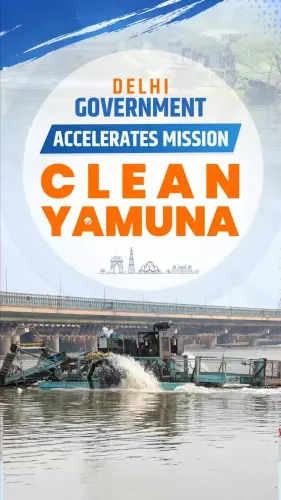
Supreme Court: STPs alone won't clean Yamuna, orders comprehensive action plan
Synopsis
The Supreme Court has delivered a sweeping Yamuna order that goes far beyond bricks-and-mortar: 520 drains discharging 9,666 MLD of wastewater, contradictions in Delhi's own encroachment data, and a directive to protect Zone 'O' all the way from source to Ganga — this is the apex court treating India's most politically neglected river as a constitutional emergency.
Key Takeaways
The Supreme Court ruled on 16 November 2026 that building more STPs alone will not restore the Yamuna river 's ecological health.
The draft Yamuna Action Plan proposes 125 new STPs , 12 CETPs , 10 solid waste plants , and 23 biogas plants across the river basin.
All 520 drains discharging approximately 9,666.81 MLD of wastewater into the Yamuna are to be intercepted, diverted, and treated.
The court flagged a contradiction: Delhi's own annexure shows all 35 water bodies in Zone 'O' are encroached, contradicting the action plan's claim.
All STPs and CETPs must install tamper-proof sensors with live data uploaded to CPCB and State Pollution Control Board websites.
The matter is listed for further hearing on 13 January 2027 .
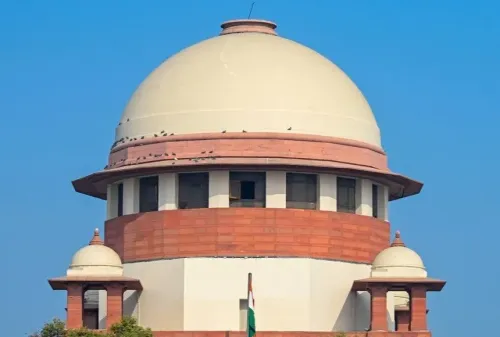
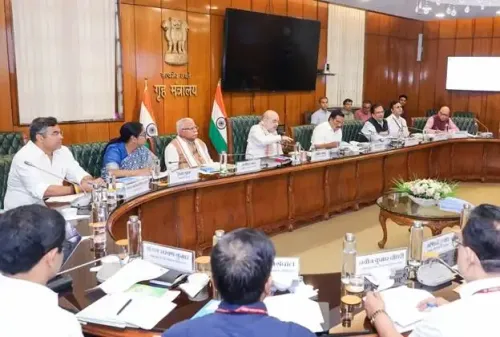
The Supreme Court of India on 16 November 2026 ruled that constructing additional sewage treatment plants (STPs) and waste treatment facilities alone will not restore the ecological health of the Yamuna river, stressing instead the need for a holistic, multi-state strategy that treats the river as a single shared resource. The order came as the apex court examined a draft Yamuna Action Plan prepared by a committee headed by the Union Home Secretary.
What the Court Observed
A Bench of Justices Manoj Misra and Manmohan observed that the absence of a coordinated approach among the states and union territories (UTs) through which the Yamuna flows has contributed to the river's continued deterioration, despite substantial public expenditure on cleaning efforts over the decades. 'A river is greater than the sum of its parts,' the Bench noted, underlining that every state along the river's course must share responsibility for its conservation and rejuvenation.
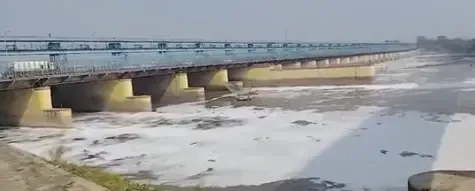
The court said the poor health of the Yamuna reflected 'everything that is wrong with civic administration in the towns, cities and villages situated along the banks of the river' and pointed to 520 drains currently discharging wastewater directly into the river as a core structural failure.
Scale of the Proposed Infrastructure
The draft Yamuna Action Plan envisions the construction of 125 new STPs, 12 common effluent treatment plants (CETPs), 10 municipal solid waste processing plants, and 23 biogas plants, along with upgradation of existing facilities across the river basin. The plan also proposes intercepting, diverting, and treating all 520 drains that collectively discharge approximately 9,666.81 million litres per day (MLD) of wastewater into the Yamuna and its tributaries.
However, the Bench cautioned that the proposed infrastructure would remain insufficient unless industrial pollution and untreated sewage were curtailed at the source. 'This Court is of the view that industrial pollution and untreated sewage must be curtailed, if not stopped altogether, at the source. Where that is not possible, the sewage must first be tapped and then treated,' the order stated.
Encroachments, Illegal Colonies and Zone 'O'
The court flagged that sewage generated from unauthorised colonies, JJ clusters situated on drains, and settlements on the riverbed would continue to pollute the Yamuna unless those settlements were removed after rehabilitating their occupants. It also highlighted a contradiction within the action plan itself: while the plan claimed that water bodies and wetlands in Delhi's Zone 'O' were free from encroachments, an annexure submitted by the Delhi government marked all 35 identified water bodies and wetlands in that zone as encroached.
Invoking the Delhi Master Plan 2047, the Bench directed that Zone 'O' be maintained as a protected green belt and, where feasible, extended upstream and downstream from the Yamuna's source to its confluence with the Ganga. 'No permanent structure, except green parks and essential public infrastructure projects, should be allowed to be constructed in future in the said or extended Zone,' it ordered, permitting only semi-permanent structures such as cycling and walking tracks for recreational and tourism use.
Real-Time Monitoring and Accountability Directives
In a series of technology-driven accountability orders, the court directed all existing STPs and CETPs to install tamper-proof smart energy meters and inlet-outlet sensors with continuous monitoring capability. The readings must be uploaded live to the websites of the Central Pollution Control Board (CPCB) and respective State Pollution Control Boards to enable public scrutiny of plant performance.
Real-time water quality monitoring stations are also to be set up along the river and major drains, with data shared with the CPCB through an integrated network. Municipal authorities have additionally been directed to register all septage tankers and equip them with GPS tracking systems to monitor household sewage collection and disposal.
Institutional Coordination Mechanism
Noting that fragmented governance had long undermined Yamuna conservation efforts, the Bench directed Chief Secretaries of all Yamuna basin states and UTs, along with Secretaries of concerned Central ministries, to nominate senior officers of at least the rank of Special Secretary as nodal officers. These officers will serve as single-point liaisons for the CPCB, coordinate across departments, and ensure timely compliance with the court's directives.
The Supreme Court had earlier constituted the Union Home Secretary-led committee to draft a comprehensive action plan following concerns over the absence of a coordinated conservation strategy. The matter has been listed for further hearing on 13 January 2027.
Point of View
Where the government simultaneously claims Zone 'O' is encroachment-free and lists all 35 water bodies as encroached, captures precisely the institutional bad faith that has stalled Yamuna revival for thirty years. Real-time sensor mandates and GPS-tracked tankers are accountability tools that past orders lacked; whether the nodal officer mechanism produces genuine inter-state coordination, or becomes another compliance formality, will determine whether this order changes anything on the ground.
NationPress
16 Nov 2026
Frequently Asked Questions
What did the Supreme Court order on the Yamuna river on 16 November 2026?
The Supreme Court ruled that constructing more sewage treatment plants alone will not restore the Yamuna's health, and ordered a comprehensive multi-state approach addressing industrial pollution at source, encroachments, and the 520 drains discharging 9,666.81 MLD of wastewater into the river. The Bench of Justices Manoj Misra and Manmohan also mandated real-time pollution monitoring and institutional coordination across all Yamuna basin states and union territories.
What does the draft Yamuna Action Plan propose?
The plan proposes 125 new STPs, 12 common effluent treatment plants, 10 municipal solid waste processing plants, and 23 biogas plants, along with upgradation of existing facilities. It also proposes intercepting, diverting, and treating all 520 drains that discharge approximately 9,666.81 MLD of wastewater into the Yamuna and its tributaries.
What is Zone 'O' and why did the Supreme Court focus on it?
Zone 'O' is a protected green belt defined under the Delhi Master Plan 2047 along the Yamuna floodplain. The court directed that it be maintained, extended upstream and downstream where feasible, and kept free of all permanent structures except green parks and essential public infrastructure — after flagging that Delhi's own annexure contradicted the action plan by marking all 35 water bodies in the zone as encroached.
What monitoring measures has the court mandated?
The court directed all STPs and CETPs to install tamper-proof smart meters and continuous inlet-outlet sensors, with live data uploaded to CPCB and State Pollution Control Board websites. Real-time water quality monitoring stations must also be set up along the river and major drains, and all septage tankers must be registered and fitted with GPS tracking.
When is the next hearing in the Yamuna case?
The Supreme Court has listed the matter for further hearing on 13 January 2027. A committee headed by the Union Home Secretary was earlier tasked with preparing the comprehensive Yamuna Action Plan that the court examined in this order.