How Will Seva Teerth Serve the Nation with New Welfare Schemes?
Synopsis
The inauguration of Seva Teerth by PM Modi is a landmark event aimed at enhancing national service and launching welfare schemes. Union Minister S.P. Singh Baghel highlights its significance, while Congress MP Ujjwal Raman Singh emphasizes the importance of governance over names. Discover how this new initiative could reshape India's administrative landscape.
Key Takeaways
Seva Teerth is a new initiative focused on national service.
It will serve as a platform for various welfare schemes .
The complex integrates multiple administrative functions.
Designed to modern standards, it enhances efficiency and citizen engagement.
Safety and sustainability are key features of the new infrastructure.
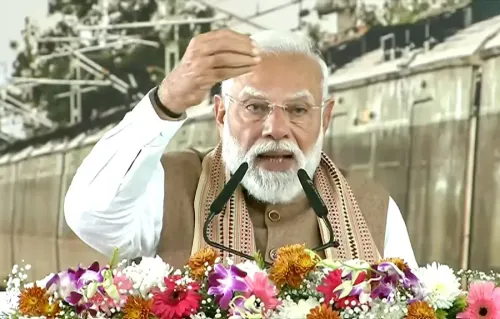
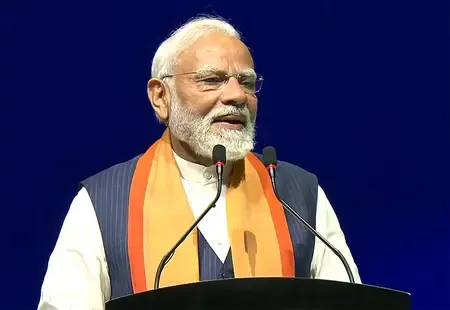
New Delhi, Feb 13 (NationPress) During the inauguration of Seva Teerth by Prime Minister Narendra Modi, Union Minister of State S.P. Singh Baghel emphasized that this initiative embodies the essence of national service and will serve as a foundation for launching various welfare schemes.
In an interview with IANS, Baghel noted, “The term Seva Teerth inherently signifies its mission. The Prime Minister’s office is committed to service, and it is referred to as a Teerth because from this point, multiple welfare initiatives for the entire nation will be initiated, establishing this as a site dedicated to serving the country.”
In response to this announcement, Congress MP Ujjwal Raman Singh remarked that the emphasis should be on governance and public welfare rather than just names.
He stated, “The name is inconsequential; what truly matters are the policies and programs in action. If these initiatives are designed to safeguard foreign interests, renaming them won’t change anything. It is crucial that they serve the populace, benefit the nation, and uphold the country’s sovereignty, which is currently at risk.”
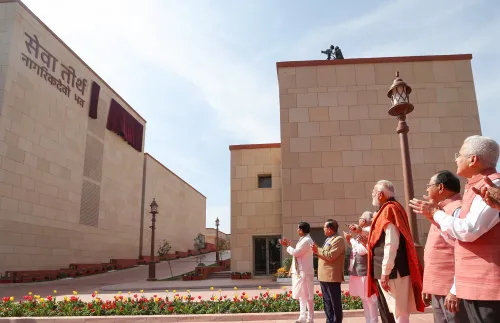
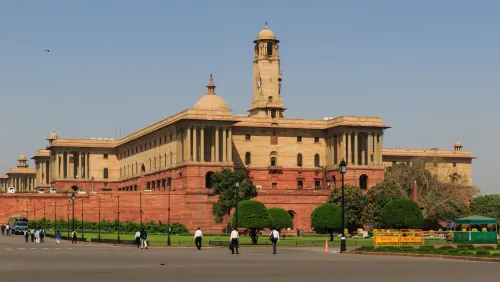
Earlier on the same day, Prime Minister Modi unveiled the new complex named ‘Seva Teerth’, which includes the Prime Minister’s Office (PMO), the National Security Council Secretariat (NSCS), and the Cabinet Secretariat.
This event marks a pivotal transition from the previous PMO office located at South Block to ‘Seva Teerth’, the modern complex situated on Kartavya Path, formerly known as Rajpath.
The new PMO office, located just approximately one kilometer from the iconic South Block building on Raisina Hill, will serve as the new cornerstone of governance, facilitating closer integration of the entire administrative apparatus.
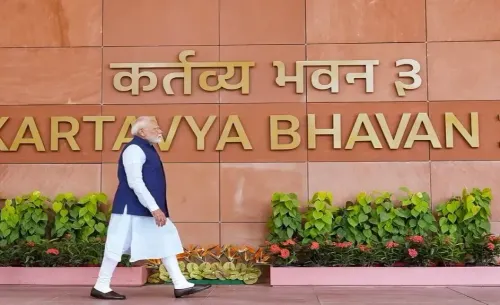
Later in the evening, the Prime Minister will also inaugurate the Kartavya Bhawan complex - 1 & 2, which will be the operational base for several high-profile ministries, including Finance, Defence, Health & Family Welfare, Education, among others.
Historically, various ministries have been functioning from outdated buildings scattered across the Central Vista, resulting in logistical challenges and coordination difficulties.
The introduction of these new complexes aims to resolve long-standing issues by consolidating them into modern and digitally equipped infrastructure.
As per officials, these new complexes include digitally integrated offices, structured public engagement areas, and centralized reception facilities. These enhancements are expected to foster collaboration, boost efficiency, streamline governance, improve citizen engagement, and enhance employee well-being.
Designed according to 4-Star GRIHA standards, the complexes feature renewable energy systems, water conservation initiatives, waste management solutions, and high-performance building envelopes.
“These initiatives significantly mitigate environmental impact while improving operational efficiency. The building complexes also include comprehensive safety and security measures, such as smart access control, surveillance systems, and advanced emergency response infrastructure, ensuring a secure and accessible environment for officials and visitors,” stated an official announcement.
The inauguration signifies a transformative step in India's administrative governance structure and underscores the Prime Minister’s dedication to establishing a modern, efficient, accessible, and citizen-focused governance ecosystem.
Point of View
It is essential to recognize that the launch of Seva Teerth represents a significant evolution in India's commitment to governance and public welfare. While the focus on national service is commendable, the effectiveness of the ensuing welfare schemes will ultimately determine their impact on the populace.
NationPress
19 Sept 2026
Frequently Asked Questions
What is Seva Teerth?
Seva Teerth is a newly inaugurated complex by Prime Minister Narendra Modi aimed at serving as a foundation for launching welfare schemes and enhancing national service.
What is the significance of the name Seva Teerth?
The name Seva Teerth signifies a place of service, reflecting the initiative's purpose of promoting national welfare through various schemes.
Who is S.P. Singh Baghel?
S.P. Singh Baghel is the Union Minister of State who highlighted the importance of Seva Teerth during its inauguration.
What are the features of the new complex?
The new complex features digitally integrated offices, structured public interface zones, and centralized reception facilities to enhance governance and citizen engagement.
How does Seva Teerth impact governance in India?
Seva Teerth aims to centralize administrative functions, thus improving coordination and efficiency across various ministries and enhancing governance.