Shekhawat Hails Cabinet Move on Delhi-NCR Vehicle Pollution Relief
Synopsis
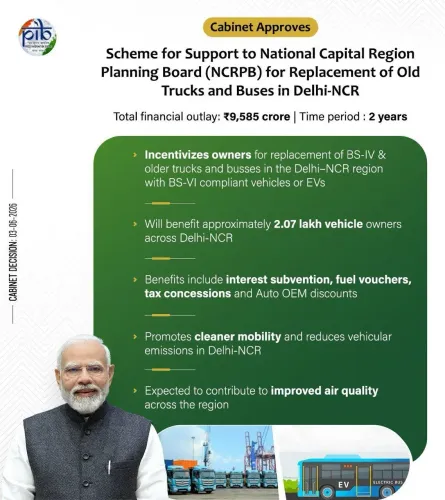
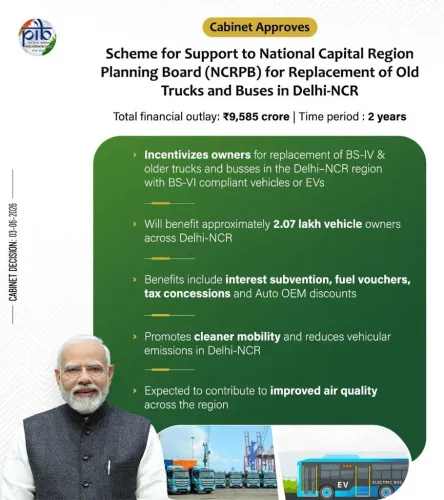
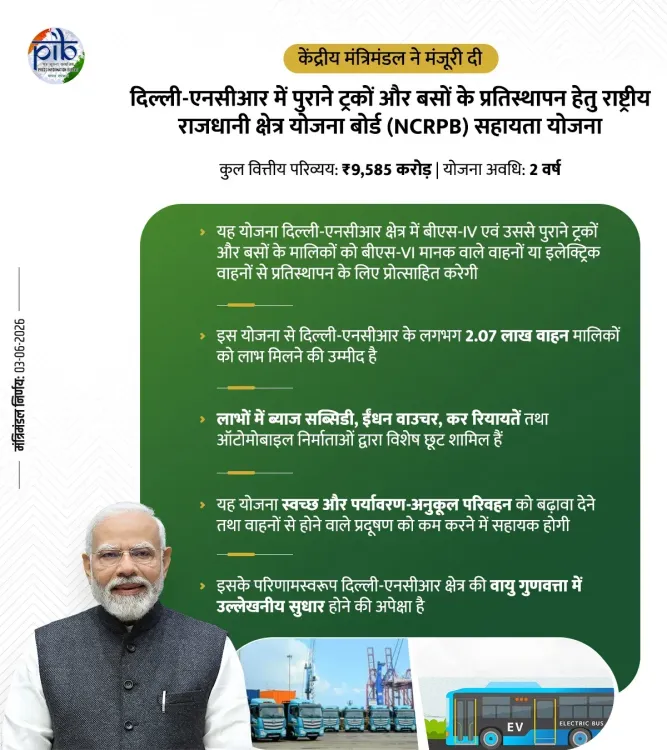
Union Culture and Tourism Minister Gajendra Singh Shekhawat welcomed a Union Cabinet decision targeting Delhi-NCR vehicular pollution while offering financial relief to vehicle owners. The move pairs emissions reduction with owner-side concessions, building on the 2021 Vehicle Scrappage Policy and existing age-based curbs on private vehicles in the capital region.
Key Takeaways
Union Minister Gajendra Singh Shekhawat on 3 June 2026 welcomed a Cabinet decision on Delhi-NCR vehicular pollution.
The decision is positioned as both an anti-pollution measure and a source of financial relief for vehicle owners.
It builds on the 2021 Vehicle Scrappage Policy and existing bans on 15-year-old petrol and 10-year-old diesel vehicles in Delhi.
Stakeholders include NCR vehicle owners, dealers, scrapping facilities and state transport departments.
Operational details await a gazette notification; CPCB monitoring data will gauge real-world impact.
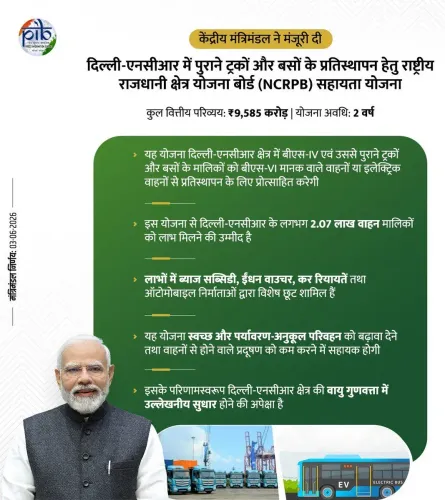
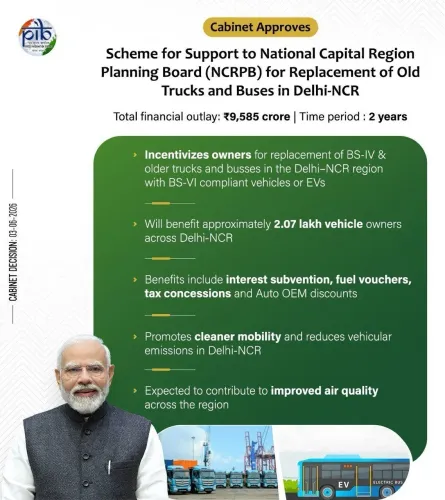
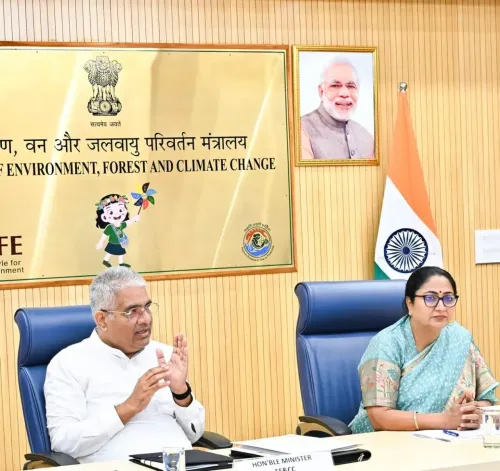
Union Culture and Tourism Minister Gajendra Singh Shekhawat on Wednesday, 3 June 2026, welcomed a Union Cabinet decision aimed at curbing vehicular pollution in Delhi-NCR while offering financial relief to vehicle owners. In a post on X tagged #CabinetDecisions, the senior BJP leader and Lok Sabha MP from Jodhpur framed the move as a twin-track intervention linking environmental clean-up with citizen welfare.
'A major decision from the perspective of reducing pollution in Delhi-NCR and also providing financial relief to vehicle owners,' Shekhawat wrote, translating his original Hindi message 'दिल्ली-एनसीआर में प्रदूषण कम करने और वाहन मालिकों को आर्थिक राहत भी देने के दृष्टिकोण से यह बड़ा फ़ैसला'. The minister did not detail the operative clauses of the decision in his post, but signalled that the Cabinet had cleared a package that combines emissions reduction with owner-side concessions.
Context
The National Capital Region has battled some of the world's worst urban air quality readings for over a decade, with vehicular emissions identified as a dominant year-round contributor alongside seasonal stubble burning. Successive winters have seen the Graded Response Action Plan kick in, triggering construction halts and vehicle restrictions across Delhi, Gurugram, Noida, Ghaziabad and Faridabad.
Against that backdrop, any Union Cabinet decision that touches the older-vehicle question carries direct consequence for lakhs of households in the capital region. Shekhawat's framing — pairing pollution control with 'economic relief' — suggests the package leans on incentives rather than purely punitive deregistration.
Policy backdrop
The Centre's Vehicle Scrappage Policy, launched in 2021, set up Registered Vehicle Scrapping Facilities and offered concessions to owners who voluntarily retire end-of-life vehicles. It works alongside BS-VI emission norms and the statutory Commission for Air Quality Management in NCR and adjoining areas.
Delhi has separately enforced a ban on petrol vehicles older than 15 years and diesel vehicles older than 10 years, a rule that has long drawn pushback from owners arguing that roadworthy private cars are being penalised on age alone. Cabinet-level interventions in this space have historically tried to soften that edge through scrappage incentives, tax rebates on replacement purchases, and registration fee waivers.
Stakeholders and impact
The primary stakeholders are Delhi-NCR vehicle owners — particularly middle-class households holding ageing private cars and two-wheelers — and the broader population of the region exposed to ambient particulate pollution. Automobile dealers, scrapping facility operators and state transport departments in Delhi, Haryana, Uttar Pradesh and Rajasthan are also directly affected by any change in the scrappage or relief architecture.
By foregrounding 'financial relief' in his message, Shekhawat is signalling that the political messaging around the decision will emphasise affordability. That is consistent with a broader governance pattern in which environmental restrictions in NCR have been packaged with welfare sweeteners to retain public support.
What's next
The operational contours of the decision will become clearer once the relevant gazette notification is issued, spelling out the exact rebates, eligibility windows and timelines. Implementation will likely involve coordination between the Ministry of Road Transport and Highways, the Commission for Air Quality Management, and the transport departments of NCR states.
Air quality outcomes will be tracked through monitoring stations of the Central Pollution Control Board, with the winter months of late 2026 serving as the first real stress test of whether the new package shifts the needle on PM2.5 and PM10 readings in the capital region.
Point of View
And any Cabinet package that softens the financial blow while retaining the environmental headline buys the government room on both fronts. The real test, as always in NCR, will be whether the package nudges PM2.5 numbers downward in the winter window, or merely reshuffles ownership patterns. Expect this to be folded into the BJP's urban-governance pitch ahead of forthcoming state cycles.
NationPress
18 Oct 2026
Frequently Asked Questions
What did Gajendra Singh Shekhawat say about the Delhi-NCR pollution decision?
Shekhawat called it a major decision aimed at reducing Delhi-NCR pollution while providing financial relief to vehicle owners. He shared the message on X on 3 June 2026 with the hashtag #CabinetDecisions, without detailing the operative clauses.
What is the Vehicle Scrappage Policy in India?
It is a Central government policy launched in 2021 to phase out old, polluting vehicles through Registered Vehicle Scrapping Facilities and incentives for owners who voluntarily retire end-of-life vehicles. It works alongside BS-VI emission norms and the Commission for Air Quality Management.
What are the current rules on old vehicles in Delhi-NCR?
Delhi bans petrol vehicles older than 15 years and diesel vehicles older than 10 years from plying or being registered in the city. The rule has long drawn complaints from owners of otherwise roadworthy private vehicles.
Which agencies regulate air pollution in Delhi-NCR?
The Commission for Air Quality Management in NCR and Adjoining Areas is the statutory body coordinating pollution control across NCR states. The Central Pollution Control Board tracks ambient air quality through its monitoring network.
How will the Cabinet decision impact vehicle owners?
The exact impact will depend on the gazette notification spelling out eligibility, rebates and timelines. Shekhawat's framing suggests owners can expect financial concessions linked to scrapping or replacing older polluting vehicles.