Shekhawat hails Cabinet nod for Delhi traffic project
Synopsis
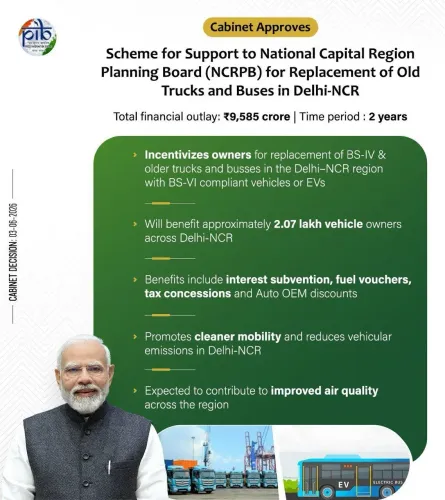
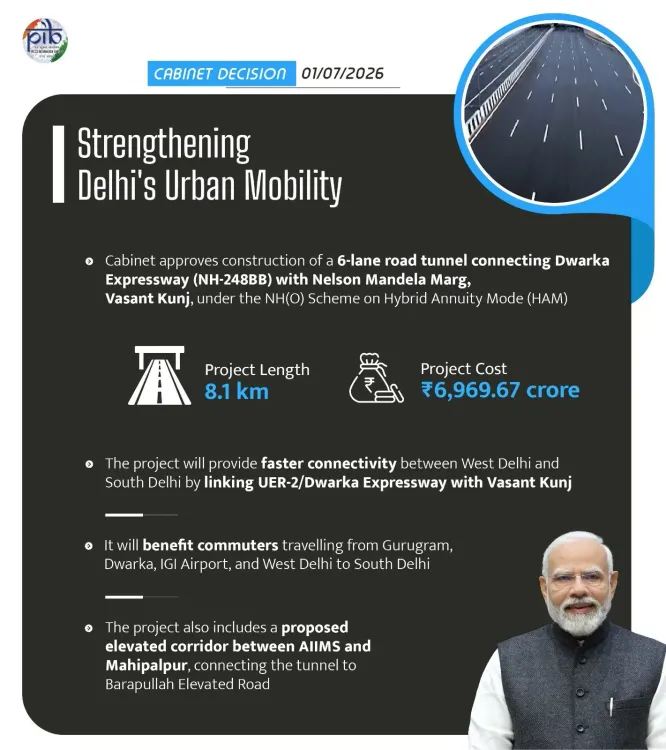
Union Minister Gajendra Singh Shekhawat on 1 July 2026 welcomed a Union Cabinet decision approving a project to make Delhi's traffic more convenient, safer and faster, calling it another key step by the Modi government for the national capital's development.
Key Takeaways
Union Culture and Tourism Minister Gajendra Singh Shekhawat posted on X on 1 July 2026 praising a Union Cabinet infrastructure decision for Delhi .
He stated the project will make traffic in Delhi 'more convenient, safer and faster.' The decision was framed as part of Prime Minister Narendra Modi 's cabinet's ongoing commitment to the national capital's betterment.
The move follows a broader pattern of successive Modi cabinet clearances for Delhi transport projects, including the Delhi Metro Phase-IV approval in 2019 .
Primary beneficiaries are Delhi commuters and NCR residents; detailed project sanction orders from the Ministry of Housing and Urban Affairs are awaited.
Union Culture and Tourism Minister Gajendra Singh Shekhawat on Wednesday, 1 July 2026, lauded a Union Cabinet decision aimed at improving road and transit conditions in Delhi, calling it a significant step toward making the national capital's traffic smoother, safer and faster.
Posting on X, Shekhawat wrote: 'यह परियोजना दिल्ली में यातायात को अधिक सुगम, सुरक्षित और तेज़ बनाएगी' ('This project will make traffic in Delhi more convenient, safer and faster'). He described the decision as 'yet another important decision of Modi ji's cabinet for the betterment of the national capital,' tagging it under #CabinetDecisions.
Context
Delhi has long grappled with chronic traffic congestion driven by a rapidly growing population and an expanding vehicle fleet across the National Capital Region (NCR). Central government infrastructure decisions for the capital have grown in frequency and scale over successive years, spanning metro corridors, expressways and ring-road upgrades.
The Union Cabinet, the apex decision-making body chaired by Prime Minister Narendra Modi, periodically clears transport and urban-mobility projects for Delhi that require central funding or regulatory sanction. Wednesday's decision follows that established pattern.
Policy Backdrop
The Modi government's urban infrastructure push for Delhi has unfolded across multiple phases. In 2019, the cabinet approved the Delhi Metro Phase-IV corridors to extend rapid-transit coverage deeper into the NCR, a project that has since been in progressive stages of construction.
Broader frameworks such as the AMRUT (Atal Mission for Rejuvenation and Urban Transformation) and the Smart Cities Mission have channelled central funding toward state-level mobility works, providing a policy scaffolding on which successive cabinet clearances for Delhi have rested. Wednesday's decision fits within this lineage of prioritising physical connectivity in the capital.
Stakeholders and Impact
Delhi commuters and NCR residents stand to be the primary beneficiaries of any approved traffic-easing infrastructure. Improved road or transit throughput typically reduces commute times, lowers vehicular emissions and eases pressure on arterial corridors that currently see peak-hour gridlock.
For the BJP-led central government, visible infrastructure delivery in the national capital carries political salience, as Delhi remains a closely watched urban constituency. Shekhawat's social-media amplification of the cabinet decision signals the party's intent to communicate governance outcomes directly to citizens.
What's Next
Detailed project sanction orders from the Ministry of Housing and Urban Affairs are expected to spell out the scope, cost and timelines of the approved initiative. Any associated land-acquisition notifications in Delhi and the NCR will be a key indicator of implementation pace.
Observers will watch for a formal government statement that names the specific project and its financial outlay, which will allow a fuller assessment of the decision's scale and impact on the capital's mobility landscape.
Point of View
'yet another important decision,' is deliberate: it positions the Modi government as a consistent deliverer of urban infrastructure rather than a one-off actor. For a minister whose primary portfolio is Culture and Tourism, weighing in on a transport decision for Delhi underscores the party's collective ownership of governance outcomes in the national capital. The pattern suggests the BJP is building a pre-election or mid-term governance narrative around visible, citizen-facing infrastructure in Delhi.
NationPress
1 Jul 2026
Frequently Asked Questions
What did the Union Cabinet decide about Delhi traffic on 1 July 2026?
The Union Cabinet approved a project aimed at making traffic in Delhi more convenient, safer and faster, according to a post by Union Minister Gajendra Singh Shekhawat on 1 July 2026. The specific details of the project are expected to be released in formal sanction orders from the Ministry of Housing and Urban Affairs.
Who is Gajendra Singh Shekhawat?
Gajendra Singh Shekhawat is the Union Minister of Culture and Tourism in the Modi government and a senior BJP leader. He is a Lok Sabha MP from Jodhpur, Rajasthan.
What infrastructure projects has the Modi cabinet approved for Delhi in the past?
The Modi cabinet approved the Delhi Metro Phase-IV corridors in 2019 to expand rapid-transit coverage in the NCR. Broader programmes such as AMRUT and the Smart Cities Mission have also channelled central funds toward urban mobility works in Delhi.
How does the latest Delhi cabinet decision fit into the government's urban policy?
It fits within a consistent pattern of the Modi government prioritising physical connectivity in Delhi, building on earlier metro, expressway and ring-road approvals and frameworks like AMRUT and the Smart Cities Mission.
What happens next after the Union Cabinet approves a Delhi infrastructure project?
After cabinet approval, detailed project sanction orders are issued by the Ministry of Housing and Urban Affairs, followed by land-acquisition notifications and tendering processes that determine the actual pace of implementation.