Shekhawat marks 10 years of Surgical Strikes on Pakistan terror camps
Synopsis
Union Culture and Tourism Minister Gajendra Singh Shekhawat marked the 10th anniversary of India's 2016 Surgical Strikes, praising the Army soldiers who crossed the Line of Control to destroy terrorist infrastructure in Pakistan, a watershed moment in India's counter-terrorism doctrine.
Key Takeaways
The 2016 Surgical Strikes were carried out on the nights of 28–29 September 2016 , targeting terrorist camps across the Line of Control in Pakistan.
The operation was launched in response to the Uri attack of 18 September 2016 , which killed 19 Indian Army soldiers .
Union Minister Gajendra Singh Shekhawat posted a tribute on 27 September 2026 , marking the tenth anniversary of the strikes.
India's public acknowledgment of the strikes in 2016 marked a historic shift from strategic restraint to proactive cross-border counter-terrorism operations.
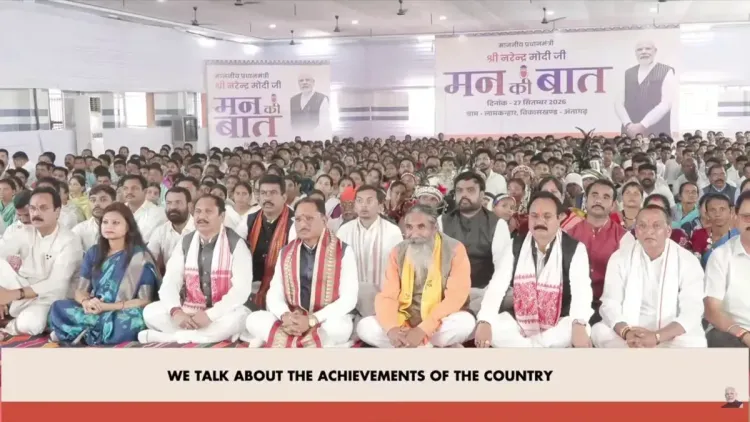
The post was tagged #MannKiBaat , connecting the anniversary to Prime Minister Modi's monthly public-address programme.
The strikes set a precedent cited during subsequent operations, including the 2019 Balakot air strikes .
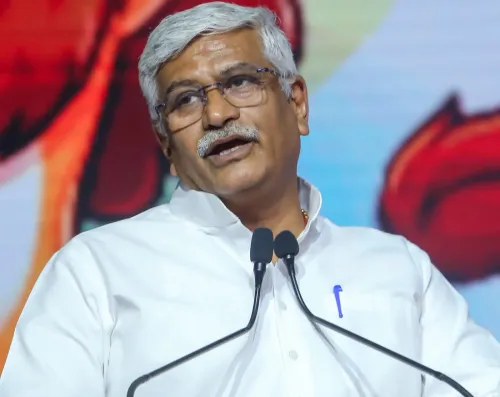
Ten years ago, on the nights of 28–29 September 2016, Indian Army commandos crossed the Line of Control and dismantled terrorist infrastructure deep inside Pakistani territory — a move that stunned the world and rewrote India's counter-terrorism doctrine. Union Culture and Tourism Minister Gajendra Singh Shekhawat marked the decade milestone on Sunday with a tribute to the soldiers who carried out the operation.
Posting in Hindi on X, Shekhawat wrote: 'LOC के उस पार जाकर हमारे वीर जवानों ने जिस तरह आतंकवाद के खिलाफ कार्रवाई की थी, वो देख दुनिया हैरान थी' — 'The way our brave soldiers crossed to the other side of the LOC and struck against terrorism left the entire world astonished.' He tagged the post with #MannKiBaat, linking the anniversary to Prime Minister Narendra Modi's monthly public-address programme.
The night India crossed the LoC
The strikes were the Indian government's direct response to the Uri attack of 18 September 2016, in which a militant assault on an Army brigade headquarters in Jammu and Kashmir killed 19 soldiers. Within ten days, special forces crossed the Line of Control in multiple sectors, targeting terror launch pads and destroying camps used to funnel militants into India. New Delhi publicly acknowledged the operation — a sharp break from decades of official silence around such actions.
The strikes were not merely a military event; they were a strategic signal. For the first time, India explicitly named cross-border counter-terrorism action as a policy instrument, abandoning the older posture of strategic restraint in favour of what officials called 'proactive' measures. The announcement reshuffled threat calculations across South Asia overnight.
A decade of changed calculus
In the ten years since, the 2016 Surgical Strikes have become a fixed reference point in India's national-security conversation — invoked during the 2019 Balakot air strikes, debated in parliament, and commemorated annually by serving officers and political leaders alike. They mark the moment India's security establishment moved from absorbing cross-border terrorism to actively punishing the infrastructure behind it.
Shekhawat's post, timed precisely to the eve of the anniversary and linked to Mann Ki Baat, fits a pattern of coordinated annual remembrance. The programme has previously been used by the Prime Minister to foreground national-security milestones and salute the armed forces — making the hashtag a deliberate bridge between civic communication and defence commemoration.
The soldiers who crossed the LoC that night did so without the world knowing their names. A decade later, the mission they carried out still anchors India's claim that it will not simply wait at its own border.
Point of View
Deliberately linked to Mann Ki Baat's civic-communication frame, and designed to reinforce the party's core national-security credential ahead of any electoral cycle. The 2016 Surgical Strikes remain arguably the BJP's most potent single-event symbol of muscular governance, and annual commemoration keeps that narrative live without requiring new policy action. The hashtag connection to Mann Ki Baat is not incidental; it positions the Prime Minister's communication machinery as the ongoing custodian of defence memory. For the opposition, the strikes remain a contested metric — but ten years of consistent commemoration have largely settled the public narrative in the government's favour.
NationPress
27 Sept 2026
Frequently Asked Questions
What were the 2016 Surgical Strikes by the Indian Army?
The 2016 Surgical Strikes were a military operation conducted by Indian Army special forces on the nights of 28–29 September 2016, in which troops crossed the Line of Control and destroyed terrorist launch pads and camps inside Pakistani territory.
Why did India carry out the 2016 Surgical Strikes?
The strikes were a direct response to the Uri attack of 18 September 2016, in which militants killed 19 Indian Army soldiers at a brigade headquarters in Jammu and Kashmir.
What is the significance of India publicly acknowledging the Surgical Strikes?
India's official acknowledgment of the cross-border operation was historically significant — it marked the first time India openly stated it had conducted such an action, signalling a shift from strategic restraint to a more assertive counter-terrorism posture.
What is Mann Ki Baat and why did Shekhawat reference it?
Mann Ki Baat is Prime Minister Narendra Modi's monthly radio and digital programme for public communication. Shekhawat tagged the post #MannKiBaat, linking the surgical strikes anniversary to the programme's tradition of commemorating national-security milestones.
What did Gajendra Singh Shekhawat post about the Surgical Strikes anniversary?
On 27 September 2026, Union Culture and Tourism Minister Gajendra Singh Shekhawat posted on X to mark ten years since the Surgical Strikes, praising the soldiers who crossed the Line of Control and calling their action against terrorism a moment that 'left the entire world astonished.'