Shivraj flags Pratapgarh Amla boom, 100 processing units
Synopsis
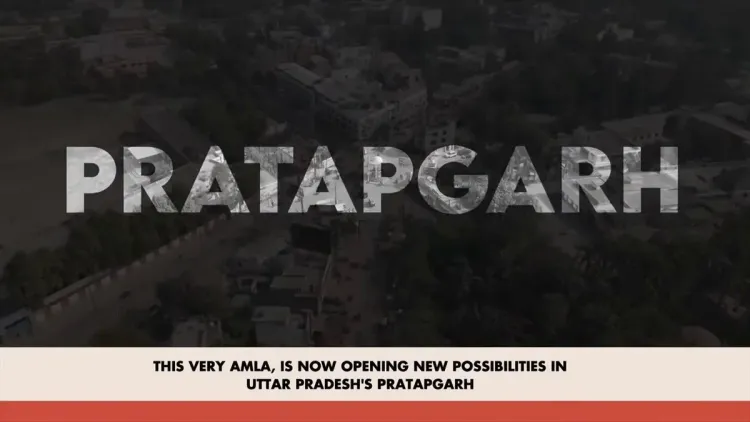
Union Agriculture Minister Shivraj Singh Chouhan spotlighted Pratapgarh's Amla economy on 27 September 2026, citing around 100 processing units and the growing role of SHG women in value-chain entrepreneurship, echoing PM Modi's Mann Ki Baat address.
Key Takeaways
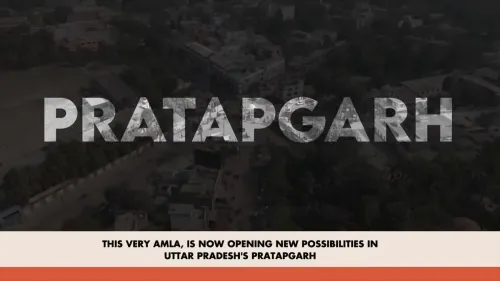
Around 100 Amla-processing units are now active in Pratapgarh, Uttar Pradesh , according to Union Agriculture Minister Shivraj Singh Chouhan .
Women linked to Self-Help Groups (SHGs) are playing a significant role in running these processing units, marking a shift from farm labour to rural entrepreneurship.
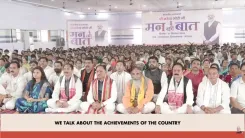
The development was highlighted by Prime Minister Narendra Modi during his Mann Ki Baat radio programme.
Pratapgarh's Amla cluster fits within the policy lineage of the National Horticulture Mission (2005) and National Rural Livelihoods Mission (2011) , which promoted value addition and SHG-linked micro-enterprises.
The PMFME scheme is an ongoing policy lever that could further formalise and expand district-level Amla processing hubs across Uttar Pradesh.
A small district in Uttar Pradesh is quietly rewriting what rural prosperity can look like. Union Agriculture Minister Shivraj Singh Chouhan highlighted on Sunday, 27 September 2026 how Pratapgarh's famous Amla — the Indian gooseberry — is generating fresh livelihoods for farmers and women in Self-Help Groups, referencing remarks made during Prime Minister Narendra Modi's Mann Ki Baat radio programme.
Chouhan noted that roughly 100 Amla-processing units are now operational in Pratapgarh, with women linked to Self-Help Groups (SHGs) playing a significant role in running them. In his post he wrote: 'Pratapgarh's famous Amla is creating new opportunities for farmers and women working in self-help groups. Today, around 100 units involved in Amla processing are working in Pratapgarh, and women associated with Self-Help Groups are also playing a big role in this.'
Pratapgarh's Amla economy — from orchard to enterprise
Pratapgarh has long been associated with Amla cultivation, a high-value horticultural crop promoted under the National Horticulture Mission launched in 2005, which specifically encouraged processing and value addition for such minor fruits. The district's growers have over the years moved beyond raw-fruit sales toward processed products — pickles, candy, juice, murabba — that fetch significantly higher margins than unprocessed Amla sold at the farm gate.
The clustering of ~100 processing units in a single district signals what planners call an agro-processing value chain taking root at scale. It also aligns with the broader national agenda of doubling farmers' incomes through value addition rather than volume alone — a goal successive governments have pursued through schemes targeting district-level processing hubs for horticultural produce.
SHG women at the centre of the value chain
Self-Help Groups in rural India trace their formal scaling to the National Rural Livelihoods Mission (NRLM), launched in 2011, which linked millions of rural women to micro-enterprise and agro-processing activities. Pratapgarh's Amla cluster appears to exemplify that linkage in practice — women's collectives stepping in not just as farm labour but as processing entrepreneurs.
The PM Formalisation of Micro Food Processing Enterprises (PMFME) scheme — a more recent policy lever — has been expanding support for exactly these kinds of district-level food-processing clusters, and Amla-producing belts in Uttar Pradesh are among the natural beneficiaries. Whether Pratapgarh has received formal cluster designation under PMFME is a development worth tracking.
Modi's Mann Ki Baat as a policy amplifier
Prime Minister Modi's Mann Ki Baat programme has consistently spotlighted grassroots success stories — SHG achievements, farm innovation, rural digital adoption — as a way of validating and publicising government schemes beyond official press releases. Chouhan's post, crediting the PM's address, places Pratapgarh's Amla story in that national narrative: a district-level win held up as a replicable model.
For farmers in Pratapgarh and women SHG members now running processing units, the attention from both the Prime Minister's radio platform and the Union Agriculture Minister's social-media reach could mean greater visibility for their produce — and potentially, fresh interest from buyers and investors in the agro-processing corridor.
One district's gooseberry is becoming a case study in inclusive rural industrialisation. Whether the policy scaffolding keeps pace with the momentum will determine how many more such clusters Uttar Pradesh — and India — can grow.
Point of View
When linked to NRLM-backed SHGs, can generate politically resonant narratives of women's empowerment and farmer prosperity simultaneously. Spotlighting a single district also serves a replication pitch: if Pratapgarh can do it with gooseberries, the template is exportable. The deeper policy question is whether schemes like PMFME are providing the structural support to sustain these clusters or whether the spotlight is outrunning the scaffolding.
NationPress
27 Sept 2026
Frequently Asked Questions
Why is Pratapgarh famous for Amla?
Pratapgarh in Uttar Pradesh has long been a major Amla cultivation hub, benefiting from suitable agro-climatic conditions and government push under the National Horticulture Mission since 2005 to develop Amla as a high-value horticultural crop with processing potential.
What did Shivraj Singh Chouhan say about Pratapgarh Amla?
Union Agriculture Minister Shivraj Singh Chouhan posted on 27 September 2026 that around 100 Amla-processing units are operational in Pratapgarh and that women linked to Self-Help Groups are playing a significant role in these units, referencing PM Modi's Mann Ki Baat programme.
How are Self-Help Groups involved in Amla processing in Pratapgarh?
Women's Self-Help Groups, promoted under the National Rural Livelihoods Mission, are participating in Amla-processing micro-enterprises in Pratapgarh — handling products like pickles, juice, and candy — moving from farm labour into value-chain entrepreneurship.
What is the PMFME scheme and how does it relate to Amla clusters?
The PM Formalisation of Micro Food Processing Enterprises scheme supports district-level food-processing clusters by providing credit, technology, and branding assistance. Amla-growing districts in Uttar Pradesh like Pratapgarh are natural candidates for cluster designation under this scheme.
What did Mann Ki Baat say about Pratapgarh Amla?
Prime Minister Narendra Modi's Mann Ki Baat radio programme highlighted Pratapgarh's Amla economy as a rural success story. Agriculture Minister Chouhan's post on 27 September 2026 referenced this mention as context for the district's ~100 processing units.