Shivraj launches 'Pragati' agri-entrepreneur programme in Delhi
Synopsis
Union Agriculture Minister Shivraj Singh Chouhan launched the 'Pragati' agri-entrepreneur programme at Krishi Bhawan, New Delhi on 7 July 2026, with 26,000 farmers' entrepreneurs already trained and 20,000 more to follow, aimed at modernising agriculture and raising farmers' incomes under the Viksit Bharat vision.
Key Takeaways
Union Agriculture Minister Shivraj Singh Chouhan launched the 'Pragati' programme at Krishi Bhawan, New Delhi on 7 July 2026 .
26,000 agri-entrepreneurs have already been trained under the programme to connect farmers with modern technology, seeds, mechanisation, and contemporary farming.
The ministry plans to train 20,000 additional agri-entrepreneurs in the next phase of the campaign.
The programme is framed within Prime Minister Narendra Modi's Viksit Bharat vision and involves partnerships with multiple civil-society organisations.
Key objectives include raising farmers' incomes , making agriculture progressive, and protecting soil health .
The initiative continues the government's strategy of using trained rural intermediaries for last-mile agricultural extension delivery.
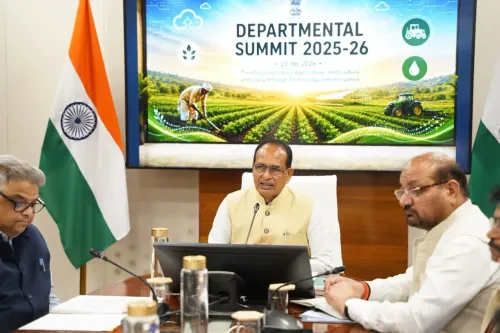
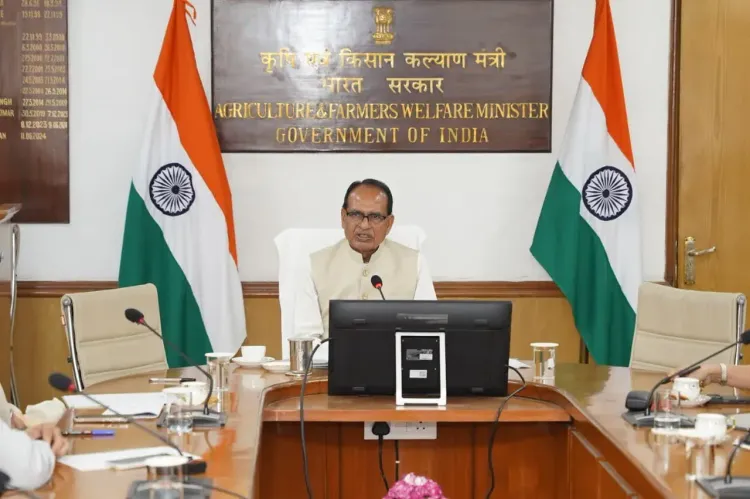
Union Agriculture Minister Shivraj Singh Chouhan on Tuesday, 7 July 2026 launched the 'Pragati' programme at Krishi Bhawan, New Delhi, in the presence of representatives from multiple civil-society organisations, marking a fresh push to scale agri-entrepreneurship across rural India.
Context
Posting on X, Minister Chouhan announced the formal launch of the programme, stating: 'aaj Nayi Dilli sthit Krishi Bhawan mein vibhinn sangathanon ke saath Pragati karyakram ka shubharambh kiya' ('Today I launched the Pragati programme at Krishi Bhawan, New Delhi, in collaboration with various organisations'). He noted that 26,000 agri-entrepreneurs have already been trained under the initiative, and that 20,000 additional entrepreneurs will now be trained to expand the campaign further.
The minister described these trained entrepreneurs as active links between farmers and modern agriculture — connecting villages to new technology, quality seeds, mechanisation, and contemporary farming practices. He expressed confidence that the programme will play a significant role in raising farmers' incomes, making agriculture progressive, and protecting soil health.
Policy Backdrop
The Pragati initiative sits within the broader framework of the Modi government's Viksit Bharat vision — a national development goal targeting a developed India by 2047. Chouhan explicitly linked the programme to Prime Minister Narendra Modi's resolve, noting that civil-society organisations are increasingly stepping forward to help realise this ambition.
The government's emphasis on agri-entrepreneurship as an extension model has roots in earlier policy moves, including the Agri-Clinics and Agri-Business Centres scheme, which promoted trained intermediaries as a cost-effective way to deliver agricultural services to small and marginal farmers. Successive union budgets have reinforced the twin priorities of farmer income growth and soil health, making the Pragati model consistent with that lineage.
The approach of blending government programmes with non-state actors — organisations, cooperatives, and trained rural entrepreneurs — has been a recurring feature of agricultural policy under the current dispensation, aimed at achieving scalable rural transformation without proportionally scaling bureaucratic overheads.
Stakeholders and Impact
The primary beneficiaries are small and marginal farmers across rural India, who often lack direct access to extension services, modern inputs, and mechanisation. Trained agri-entrepreneurs serve as the last-mile link, translating government schemes and modern techniques into on-ground practice at the village level.
Civil-society organisations present at the Krishi Bhawan launch are positioned as implementation partners, suggesting the programme intends to leverage existing organisational networks rather than build parallel infrastructure. The participation of diverse organisations also signals an attempt to give the initiative a non-partisan, broad-based character.
For the 20,000 prospective agri-entrepreneurs to be trained in the next phase, the programme represents a livelihood and professional opportunity, potentially creating a cadre of rural agri-service providers with market-linked roles.
What's Next
The immediate focus will be on the selection and training schedule for the additional 20,000 agri-entrepreneurs, including the identification of partner organisations, training curricula, and geographic prioritisation. Observers will watch for any budgetary allocations or formal scheme notifications linked to this expansion in the next agriculture ministry review or parliamentary session.
If the programme scales as announced, it could emerge as a significant plank in the government's pre-2027 election narrative on farmer welfare, particularly in states with large agrarian populations. The ministry's ability to demonstrate measurable income gains for farmers reached through this network will be the key metric against which the initiative's success is ultimately judged.
Point of View
Chouhan is both broadening the political ownership of the initiative and insulating it from being seen as purely bureaucratic. The announcement of 20,000 new trainees ahead of what is likely to be an electorally sensitive period signals that farmer welfare messaging will remain central to the BJP's agrarian outreach. The real test, however, lies in whether the programme can demonstrate verifiable income gains for the farmers it claims to serve, rather than remaining a headline about training numbers.
NationPress
7 Jul 2026
Frequently Asked Questions
What is the Pragati agri-entrepreneur programme?
The Pragati programme, launched by Union Agriculture Minister Shivraj Singh Chouhan, trains agri-entrepreneurs to connect farmers in villages with modern technology, quality seeds, mechanisation, and contemporary farming practices, with the goal of raising farmers' incomes and protecting soil health.
How many agri-entrepreneurs have been trained under Pragati so far?
According to Minister Chouhan's announcement on 7 July 2026, 26,000 agri-entrepreneurs have been trained under the Pragati programme so far, with plans to train 20,000 more in the next phase.
Where was the Pragati programme launched?
The Pragati programme was formally launched at Krishi Bhawan , the headquarters of the Ministry of Agriculture and Farmers Welfare, in New Delhi on 7 July 2026 .
What is the connection between Pragati and Viksit Bharat?
Minister Chouhan has explicitly framed the Pragati programme as part of Prime Minister Narendra Modi's Viksit Bharat vision — India's national goal of becoming a developed nation by 2047 — with civil-society organisations partnering to help realise that ambition through agricultural modernisation.
What does an agri-entrepreneur do under the Pragati programme?
Agri-entrepreneurs trained under Pragati act as last-mile links between government schemes and farmers, delivering access to new agricultural technology, good-quality seeds, farm mechanisation, and modern cultivation methods directly in villages.