Shivraj reveals personal vision behind CM Rise Schools
Synopsis
Union Minister Shivraj Singh Chouhan recalls the personal conviction behind his CM Rise School initiative — a scheme designed to equip Madhya Pradesh government schools with labs, libraries, smart classrooms and playgrounds that rival private institutions.
Key Takeaways
Shivraj Singh Chouhan says a personal longing to uplift government-school children motivated the CM Rise School concept.
The scheme targets equipping select Madhya Pradesh government schools with labs, libraries, smart classrooms, and playgrounds.
The stated benchmark was explicit: government schools should be better than private schools , not merely comparable.
CM Rise built on earlier Adarsh School efforts under Chouhan's successive state governments.
The initiative addresses a nationwide challenge of middle-class families migrating from public to private schooling.
Chouhan, now Union Agriculture Minister , continues to publicly identify with his Madhya Pradesh education legacy.
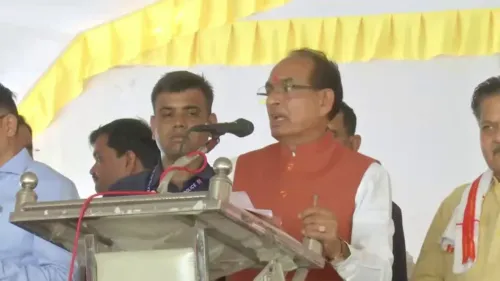
A dream to give every government-school child what private schools take for granted — that, says Union Agriculture Minister Shivraj Singh Chouhan, is what sparked the CM Rise School scheme during his tenure as Chief Minister of Madhya Pradesh. In a post on X on Sunday, 27 September 2026, Chouhan offered a rare, candid look at the emotional impulse behind one of his flagship education initiatives.
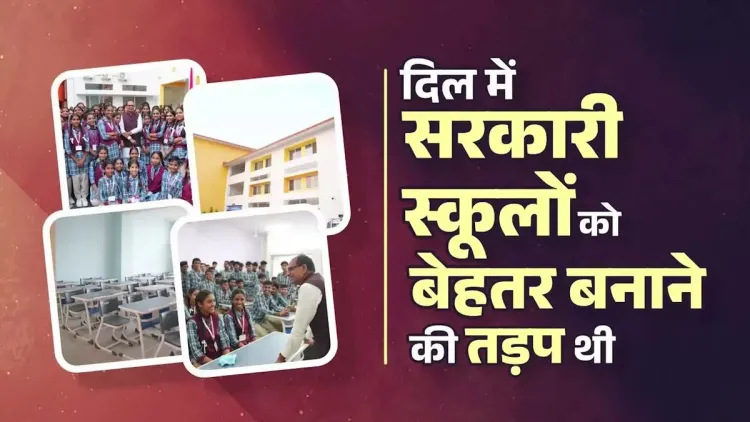
Chouhan wrote, 'Dil mein ek tadap thi' — 'There was a longing in my heart' — to build government schools that would surpass private ones in quality, equipping them with laboratories, libraries, smart classrooms, and playgrounds. 'It was from this thinking,' he said, 'that the idea of the CM Rise School was conceived.' He referred to the students as his bhanje-bhaanjiyaan — nephews and nieces — the familial term he often uses for the children of Madhya Pradesh.
What CM Rise Schools were built to deliver
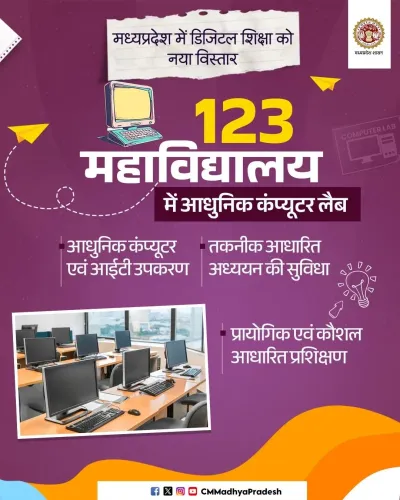
The CM Rise School scheme was conceived as a structural intervention, not a cosmetic upgrade. Select government schools across Madhya Pradesh were to be developed with infrastructure that typically draws families toward fee-charging private institutions: fully equipped science and computer labs, stocked libraries, interactive smart classrooms, and usable playgrounds. The ambition was direct — stop the exodus of aspirational rural and semi-urban families from the public education system.
The scheme built on earlier model-school efforts in the state, including Adarsh Schools, which Chouhan's governments had promoted over successive terms. But CM Rise was positioned as a step-change: fewer, better-resourced schools rather than incremental improvements spread thin across thousands of campuses.
Why the 'private school benchmark' framing matters
Across India, state governments have grappled with the same structural problem: public schools are chronically under-resourced, and middle-class as well as aspirational lower-income families vote with their feet — and their fees — toward private alternatives. The result is a reinforcing cycle where government schools lose enrolled students, lose funding rationale, and lose political attention.
By explicitly benchmarking CM Rise against private schools, Chouhan's framing was politically pointed. It signalled that quality — not just access or enrolment numbers — was the stated metric. That framing also aligns with the central government's Samagra Shiksha framework, which has pushed states to improve learning outcomes and physical infrastructure simultaneously.
Chouhan is now the Union Minister of Agriculture and Rural Development, but his post signals that the education legacy he built in Bhopal remains close to his political identity — and may yet inform how he thinks about rural public services at the national level.
The children of Madhya Pradesh's government schools, he insists, deserve nothing less than the best. That bet, placed during his state tenure, is still being graded.
Point of View
He anchors his identity to a deliverable that resonates with aspirational rural families, a constituency the BJP is perpetually courting. The 'private school benchmark' framing was — and remains — a shrewd way to recast government spending as ambition rather than welfare. As Chouhan occupies a national cabinet role with rural development in its remit, invoking this legacy also signals that his instincts on public infrastructure quality may travel beyond Madhya Pradesh.
NationPress
27 Sept 2026
Frequently Asked Questions
What is the CM Rise School scheme in Madhya Pradesh?
CM Rise Schools is a Madhya Pradesh government initiative to upgrade select government schools with modern infrastructure — including laboratories, libraries, smart classrooms, and playgrounds — to match or exceed the quality of private schools.
Who started CM Rise Schools?
The CM Rise School scheme was conceived during Shivraj Singh Chouhan 's tenure as Chief Minister of Madhya Pradesh, as he himself explains in his recent post on X.
What facilities do CM Rise Schools offer?
According to the scheme's vision, CM Rise Schools are designed to have science and computer labs, libraries, interactive smart classrooms, and playgrounds — facilities typically associated with private schools.
Why did Shivraj Singh Chouhan start CM Rise Schools?
Chouhan has stated he was driven by a personal longing to ensure that children studying in government schools had access to the same quality of education and infrastructure as those in private schools.
How do CM Rise Schools connect to national education schemes?
The CM Rise initiative aligns broadly with the central government's Samagra Shiksha framework, which encourages states to invest simultaneously in school infrastructure and learning outcomes to reduce the gap between government and private schooling.