Sitharaman Backs Stronger States at CD Deshmukh Lecture
Synopsis
At the CD Deshmukh Lecture 2026 in New Delhi, Finance Minister Nirmala Sitharaman called for stronger Centre support to empower lagging states while retaining central resources for defence, exports, and manufacturing — a direct engagement with India's deepest fiscal federalism tensions.
Key Takeaways
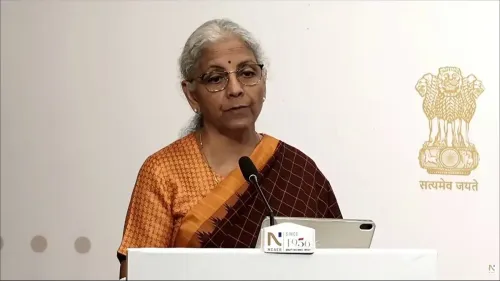
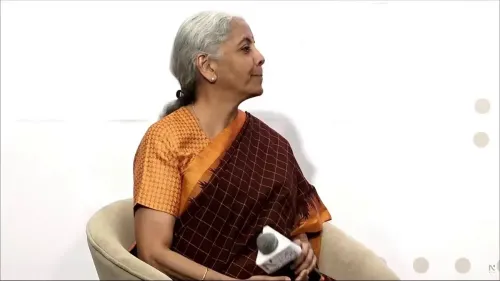
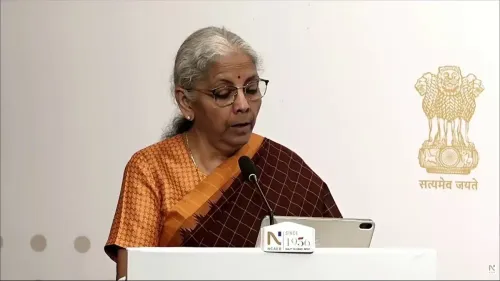
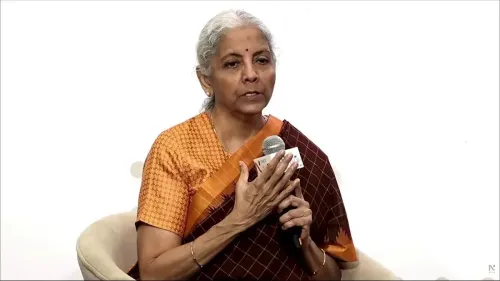
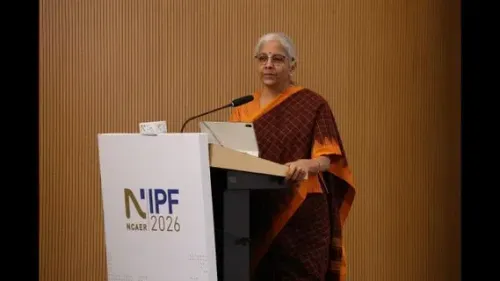
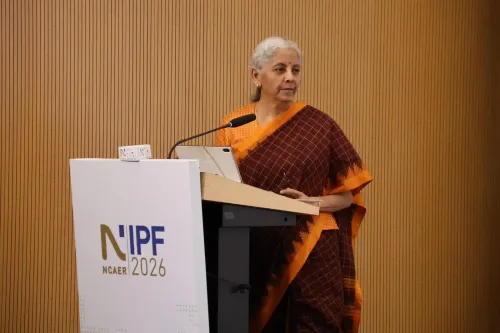
Union Finance Minister Nirmala Sitharaman spoke at the CD Deshmukh Lecture 2026 in New Delhi on 6 August 2026 .
She stated that no state should be left behind and the Centre must provide 'every handholding' to empower lagging states.
She simultaneously argued the Centre must retain resources to fund national defence , exports , and manufacturing policy.
The 14th Finance Commission (2015) had already raised states' share in central taxes to 42 percent — the highest ever.
The remarks come as the 16th Finance Commission deliberates its recommendations on Centre-State revenue sharing.
The lecture series honours C.D.
Deshmukh , India's first Indian-born RBI Governor and a former Finance Minister.
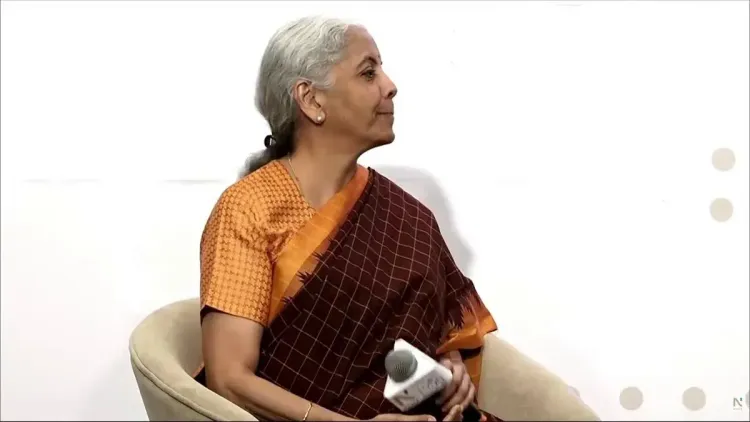
India's fiscal federalism debate landed at the heart of New Delhi on 6 August 2026, when Union Finance Minister Nirmala Sitharaman used the prestigious CD Deshmukh Lecture 2026 to deliver a pointed message: no state can be left behind, and no one should hesitate to say so.
Speaking at the annual lecture series named after C.D. Deshmukh — India's first Indian-born RBI Governor and a former Finance Minister himself — Sitharaman was direct. 'It cannot be that some States do well while some others remain where they are,' she said. 'We have to give them every handholding to empower them.' The framing was deliberate: cooperative federalism not as a slogan, but as an obligation.
The Two-Sided Bargain at the Core of Indian Federalism
But Sitharaman's remarks were not a one-way pledge to states. She set out the other half of the equation with equal clarity: a Centre that retains the fiscal muscle to fund national defence, drive export policy, and anchor manufacturing at scale. Strong states and a capable Centre — not one at the expense of the other. That is the balance she argued India must hold. The tension she named is real and structural. The 14th Finance Commission in 2015 raised states' share in central taxes to 42 percent, the largest devolution in independent India's history. The GST rollout in 2017 then folded dozens of central and state levies into a single indirect tax regime — creating a permanent, live negotiation between New Delhi and state capitals over revenue. Every subsequent Finance Commission has had to referee that negotiation afresh.Why 'Lagging States' Is the Phrase That Matters
The Finance Minister's acknowledgement that some states 'remain where they are' is not a throwaway line. It points directly to the persistent north-south, coastal-hinterland divide in economic output, human development, and fiscal capacity. Richer, faster-growing states have long argued that devolution formulas penalise their performance. Poorer states argue they need more, not less. Sitharaman's position — that the Centre must actively 'handhold' the laggards — signals the government's intent to use capacity-building transfers and targeted programmes rather than simply adjusting the devolution formula. The timing matters too. With the 16th Finance Commission currently deliberating its recommendations, every senior government statement on Centre-State resource sharing is read as a signal. Sitharaman's CD Deshmukh address will be parsed carefully by state finance departments across the country. The lecture series itself carries weight. C.D. Deshmukh steered the RBI through Partition and independence before moving to North Block — a figure who embodied exactly the Centre-State institutional architecture Sitharaman was discussing. Delivering these remarks under his name was not incidental. The 16th Finance Commission's final report will be the real test of whether this handholding promise translates into rupees and formula changes. Watch that document.Point of View
She is drawing a line against demands from richer states for performance-linked devolution that could reduce transfers to poorer ones. The choice of venue — a lecture series honouring a towering Centre-State institution builder — lends the remarks institutional gravity beyond a routine speech. Whether the rhetoric translates into Budget allocations or Commission formula changes will determine its real policy weight.
NationPress
6 Aug 2026
Frequently Asked Questions
What did Nirmala Sitharaman say at the CD Deshmukh Lecture 2026?
She said states must be empowered through active Centre support, that no state should be left behind, and that the Centre must retain resources for defence, export policy, and manufacturing.
What is the CD Deshmukh Lecture?
It is an annual lecture series held in New Delhi, named after C.D. Deshmukh — India's first Indian-born RBI Governor and a former Union Finance Minister — focused on economic and administrative themes.
Why does the 16th Finance Commission matter here?
The Finance Commission sets the formula for how central tax revenues are shared with states. Sitharaman's remarks on empowering lagging states are being read as a signal of the Centre's priorities ahead of the Commission's final recommendations.
What is India's fiscal federalism debate about?
It centres on how to balance revenue devolution to states — especially poorer, lagging ones — with the Centre's need to fund national priorities like defence, infrastructure, and export-led manufacturing.
What share of central taxes do states currently receive?
The 14th Finance Commission in 2015 raised states' share to 42 percent of central taxes, the highest in India's history, though the exact share for the current award period is set by subsequent commissions.