Sitharaman Frames IBC, GST and New Institutions as Reform Arc
Synopsis
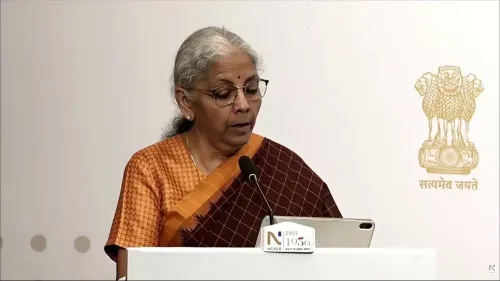
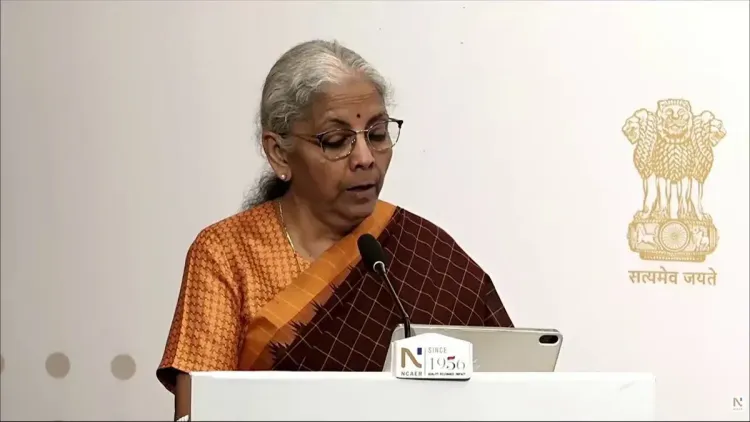
At the CD Deshmukh Lecture 2026 in New Delhi, Finance Minister Nirmala Sitharaman argued that the IBC, GST, digital public infrastructure and new premier institutions form a coherent reform arc that replaced India's centralised planning model with market-enabling institutions.
Key Takeaways
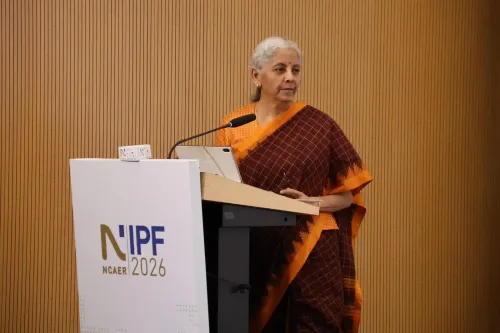
Finance Minister Nirmala Sitharaman spoke at the CD Deshmukh Lecture 2026 in New Delhi on 6 August 2026 .
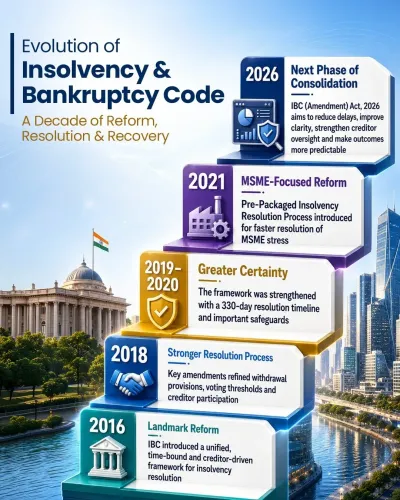
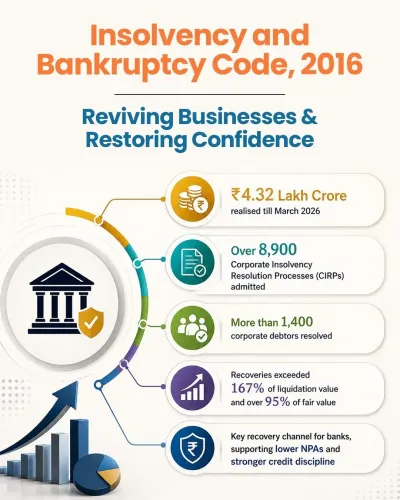
She described the IBC, 2016 as giving India its first time-bound insolvency resolution process and formal creditors' rights.
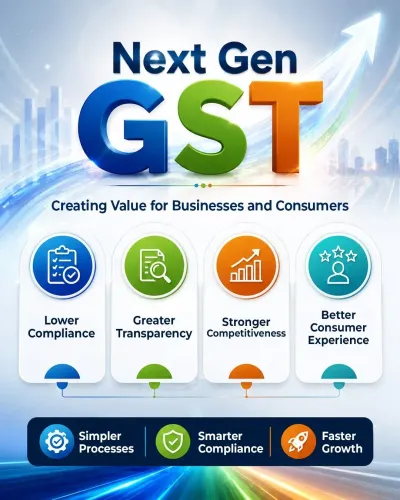
GST , enacted in 2016 and launched on 1 July 2017 , was cited alongside digital public infrastructure as a pillar of the reform sequence.
Expansion of IITs, AIIMS and IIMs between 2014 and 2019 was framed as public investment complementing market-oriented reform.
Sitharaman explicitly contrasted the current direction with 'centralised planning' — the model replaced when NITI Aayog succeeded the Planning Commission in January 2015 .
From insolvency courts to GST to new IITs, AIIMS and IIMs — Union Finance Minister Nirmala Sitharaman laid out a sweeping reform narrative at the CD Deshmukh Lecture 2026 in New Delhi on 6 August 2026, arguing that India's post-2014 policy choices represent a decisive break from centralised planning.
IBC's landmark shift: creditors finally got a clock
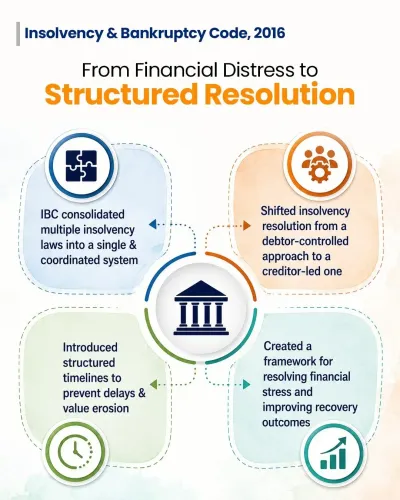
At the heart of Sitharaman's remarks was the Insolvency and Bankruptcy Code (IBC), 2016 — a law she described as giving India 'for the first time, a time-bound process for resolving failures and creditors' right to be paid.' Before the IBC, India's insolvency landscape was a patchwork of overlapping statutes where debt recovery could drag on for decades. The 2016 code replaced that fragmented system with a single, deadline-driven resolution framework — and handed creditors a legal standing they had never formally held.
The IBC was part of a broader legislative sprint. In the same period, GST was enacted through constitutional amendment in 2016 and rolled out on 1 July 2017, collapsing dozens of central and state indirect taxes into a unified national system. Sitharaman grouped both reforms with the country's 'digital public infrastructure' and its 'science and technology agenda' as pillars of a single coherent direction.
New campuses, new institutions — the education build-out
Sitharaman also pointed to the expansion of India's premier institution network — new IITs, AIIMS and IIMs — as part of the same reform arc. Between 2014 and 2019, several new campuses of each were announced and established, extending India's top-tier technical, medical and management education to states and regions previously without them. The minister framed this public investment not as a contradiction of market-oriented reform but as its complement.
Departing from the 'bygone era' of five-year plans
The sharpest line in Sitharaman's remarks was her explicit contrast with 'centralised planning' — a direct reference to the Planning Commission era that ended when NITI Aayog replaced it in January 2015. She described the shift as moving toward 'development and reform rather than looking at many of those prescriptions of the bygone era.' The framing positions the post-2014 policy sequence not as a set of individual decisions but as a philosophical departure — from state-directed allocation toward institutional capacity-building and market-enabling rules.
The CD Deshmukh Lecture, named after India's first RBI Governor and a former Finance Minister, is a fitting stage for that argument: a forum that sits at the intersection of monetary history and economic policy.
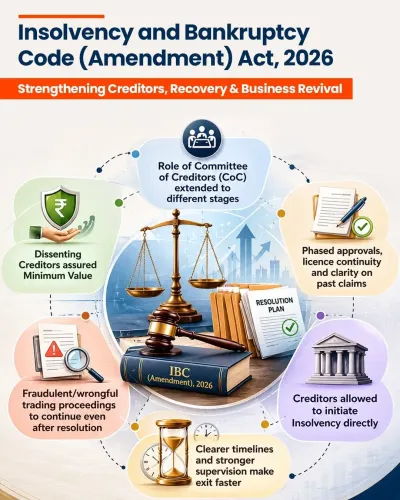
The reform arc Sitharaman described is still live — insolvency law amendments, GST rationalisation, and further institution-building remain on the legislative agenda. Whether the next Budget or Economic Survey adds the next chapter will be the real test of continuity she is claiming.
Point of View
GST, digital infrastructure and institution-building into a single narrative, she is constructing a legacy argument ahead of what may be a consequential electoral and budgetary cycle. The explicit invocation of 'centralised planning' as the foil sharpens the contrast with the pre-2014 Congress-era policy model. What is notable is the inclusion of public education expansion — new IITs, AIIMS and IIMs — as evidence of reform rather than state intervention, suggesting the government is keen to rebut any 'pure privatisation' critique. The CD Deshmukh platform, associated with institutional gravitas, lends the remarks an academic register that distinguishes them from routine political speech.
NationPress
6 Aug 2026
Frequently Asked Questions
What did Nirmala Sitharaman say at the CD Deshmukh Lecture 2026?
She argued that the IBC 2016, GST, digital public infrastructure and the expansion of IITs, AIIMS and IIMs form a unified post-2014 reform arc that moved India away from centralised planning toward market-enabling institutions.
What is the IBC and why does it matter?
The Insolvency and Bankruptcy Code, enacted in 2016, gave India its first time-bound insolvency resolution framework and formally established creditors' rights to be paid — replacing a fragmented system where debt recovery could take decades.
What is the CD Deshmukh Lecture?
The CD Deshmukh Lecture is a distinguished public lecture series named after C D Deshmukh, India's first RBI Governor and a former Finance Minister, held as a forum for high-level discussion on economic and monetary policy.
How does GST fit into India's reform history?
GST was enacted through a constitutional amendment in 2016 and launched on 1 July 2017, replacing dozens of overlapping central and state indirect taxes with a single unified national tax system — one of the largest indirect-tax reforms in Indian history.
When did India move away from centralised planning?
The Planning Commission was dissolved and replaced by NITI Aayog in January 2015, formally ending the era of five-year central plans that had governed Indian economic policy since independence.