Sitharaman Hits Back at Opposition Over GDP 'Failure' Narrative
Synopsis
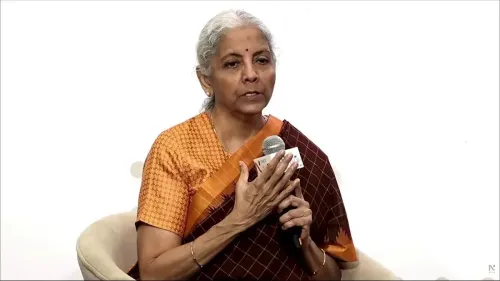
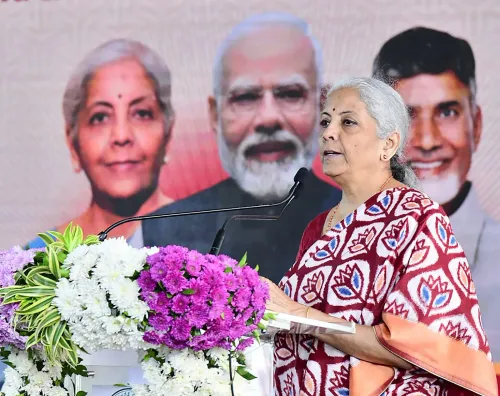
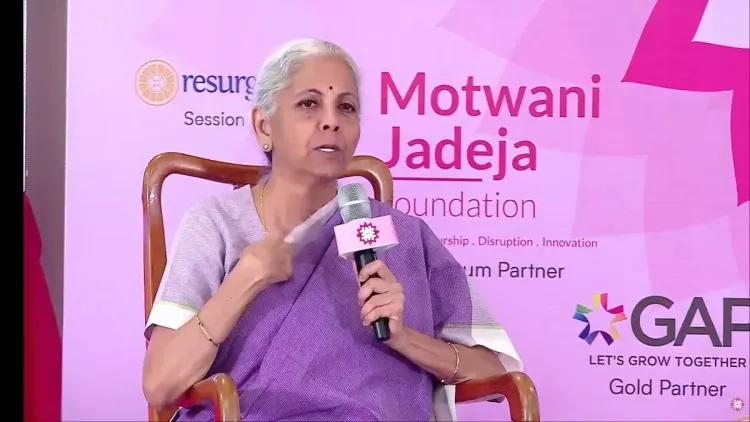
Finance Minister Nirmala Sitharaman, speaking at PLF2026 on September 25, accused the Opposition of 'mala fide intent' on GDP figures and said it 'hurts' her to see them celebrate India's perceived failures, framing India's growth as a people-driven achievement against the odds.
Key Takeaways
Union Finance Minister Nirmala Sitharaman addressed #PLF2026 on September 25, 2026 .
She accused the Opposition of 'mala fide intent' in pushing a negative GDP narrative — a legal phrase implying deliberate bad faith.
She said it 'hurts' her to see opposition leaders 'rejoice' at what they frame as India's economic failure.
Her defence centred on citizen resilience: 'the people of this country against all odds are doing their best bit.' The government has consistently highlighted India's status as the fastest-growing major economy in successive Economic Surveys and Union Budgets since 2019 .
The next quarterly GDP data release by the Ministry of Statistics and Programme Implementation will be a key moment to watch.
At a moment when India's economic trajectory is under political fire, Union Finance Minister Nirmala Sitharaman drew a sharp line — not just around data, but around intent. Speaking at #PLF2026 on Friday, September 25, 2026, she accused the Opposition of acting in bad faith on GDP figures and, more pointedly, of taking pleasure in what they frame as India's setbacks.
Her words were unambiguous: 'The Opposition's GDP number agenda had mala fide intent guiding it. What hurts me more is to see them rejoice at what they perceive as India's failure.'
The 'Mala Fide' Charge and What It Signals
Sitharaman's use of the legal phrase mala fide — meaning 'bad faith' — was deliberate. It elevates the dispute from a statistical disagreement to an allegation of political sabotage. The charge is that opposition leaders are not simply questioning GDP methodology; they are, in her framing, rooting for a bad number because a bad number serves them electorally.
This is a well-worn fault line in Indian politics, but the emotional register Sitharaman chose — saying it 'hurts' her — was notably personal. It shifts the frame from government versus opposition to citizens versus political cynicism.
People-Driven Growth as the Ruling Party's Counter-Narrative
Her defence of India's economic record leaned on resilience rather than raw numbers. 'This country, against all odds, the people of this country against all odds, are doing their best bit and India is growing as a result of that,' she said. The formulation is significant: it grounds growth in popular effort, not government policy alone, broadening the ownership of the achievement beyond the BJP and beyond Prime Minister Narendra Modi's administration.
This framing — citizen resilience as the engine of growth — has been a recurring theme in successive Economic Surveys and Union Budgets since 2019, where India's position as the fastest-growing major economy has been a consistent government talking point. Sitharaman is essentially saying: whatever the opposition claims about the numbers, the lived reality of millions of Indians tells a different story.
Why GDP Data Keeps Sparking Political Battles
Quarterly GDP releases in India have repeatedly become flashpoints, with opposition parties challenging the Ministry of Statistics and Programme Implementation's methodology and the government defending both its data and its record. The exchanges tend to peak around budget sessions and major economic forums — exactly the kind of platform #PLF2026 represents.
What makes this iteration sharper is the emotional charge Sitharaman brought to it. Accusing critics not just of being wrong, but of celebrating India's perceived failure, is a direct appeal to nationalist sentiment — a move designed to make GDP scepticism feel unpatriotic rather than merely analytical.
The next quarterly GDP release from the Ministry of Statistics will be the real test of whether the numbers vindicate the government's confidence — or hand the opposition the ammunition it is accused of waiting for.
Point of View
Emotional register she chose is a tactical evolution. By saying it 'hurts' her, she humanises the exchange and tries to shift the battlefield from spreadsheets to sentiment. The 'mala fide' charge is also legally loaded: it is designed to make the opposition's data scepticism sound not just wrong but malicious. With the next quarterly GDP print approaching, this is as much pre-emptive positioning as genuine rebuke — staking out the moral high ground before the numbers land.
NationPress
25 Sept 2026
Frequently Asked Questions
What did Nirmala Sitharaman say about India's GDP at PLF2026?
Sitharaman said the Opposition's GDP narrative was driven by 'mala fide intent' and that it hurt her to see them rejoice at what they perceive as India's failure, adding that India is growing because of the efforts of its people against all odds.
What does 'mala fide intent' mean in this context?
'Mala fide' is a Latin legal phrase meaning 'in bad faith.' Sitharaman used it to allege that the opposition is not simply questioning GDP figures out of genuine concern, but is deliberately pushing a negative narrative for political gain.
Has the government faced opposition criticism over GDP data before?
Yes. Quarterly GDP releases have repeatedly become political flashpoints in India, with opposition parties challenging official methodology and the government defending its record, particularly since 2019.
What should we watch for next on India's GDP debate?
The next quarterly GDP data release by the Ministry of Statistics and Programme Implementation will be the key data point that either supports the government's growth narrative or gives opposition critics fresh grounds for challenge.