Sitharaman hits back at Rahul Gandhi over Tata Group 'criminally destroyed' remark

Synopsis
Finance Minister Nirmala Sitharaman publicly confronted Rahul Gandhi on X after he claimed the Tata Group was being ‘criminally destroyed’ and accused the government of using businesses as political tools. Sitharaman’s sharp rejoinder — invoking the Licence-Quota Raj and questioning Gandhi’s intent — signals the BJP’s move to make corporate India a battleground issue.
Key Takeaways
Finance Minister Nirmala Sitharaman rebuked Rahul Gandhi on 28 October 2026 via a post on X .
Rahul Gandhi had alleged that the Tata Group was being ‘criminally destroyed’ and that business leaders lacked courage to speak out.
Sitharaman accused Gandhi of ‘casting baseless aspersions’ and attempting to ‘spread distrust and toxicity’ about Indian industry.
The Finance Minister invoked the Licence-Quota Raj era to contrast Congress’s record with the current government’s pro-industry stance.
Sitharaman also defended the judiciary, accusing Gandhi’s party of having historically ‘demeaned’ the courts.
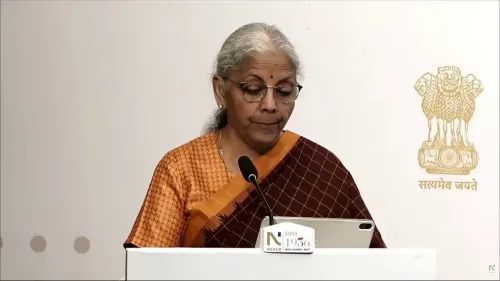
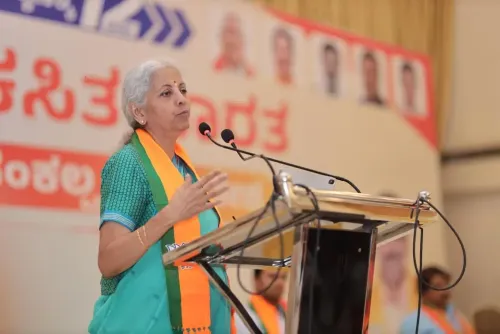
Finance Minister Nirmala Sitharaman on Wednesday, 28 October 2026, sharply rebuked Congress leader Rahul Gandhi after he claimed that the Tata Group was being “criminally destroyed,” accusing him of politicising commercial matters and spreading distrust about Indian industry. Sitharaman's response came via a post on X, escalating a war of words between the ruling Bharatiya Janata Party (BJP) and the opposition Congress over the treatment of India’s corporate sector.
What Rahul Gandhi Said
Gandhi had alleged that Indian businesses were being used as the “plaything” of Prime Minister Narendra Modi and Home Minister Amit Shah. “Tata is being criminally destroyed, and no business leader dares say a word. How long will you stay silent? Until they own you?” the Congress leader had said. He further claimed that India’s business leaders lacked the courage to speak up against the government.
Sitharaman’s Point-by-Point Rebuttal
Responding directly, Sitharaman said: “Being the Leader of the Opposition, I suggest you refrain from politicising every issue. Also, casually labelling commercial and legal matters as criminal is unacceptable.” She went further, accusing Gandhi of attempting to incite business leaders against the government: “You have repeatedly decried the successes of Indian industry and our entrepreneurs. Now, are you trying to incite our business leaders to join you in spreading distrust and toxicity?”
The Finance Minister invoked the Congress-era “Licence-Quota Raj” to contrast it with the current government’s approach. “For decades, your party had smothered the spirit of the Indian entrepreneurs under the stifling ‘Licence-Quota Raj’ and inflicted poverty on crores of Indians,” she stated, adding that the Modi government viewed industry as a driver of jobs and economic growth.
Judiciary and Constitutional Responsibility
Sitharaman also invoked the judiciary, saying all political parties, leaders, and institutions share a responsibility to support Indian industry and strengthen farmers. She added: “The Constitution of India ensures justice to all its citizens and our Honourable Courts are entrusted with upholding it. History is witness to the shoddy manner in which you, your party and the PMs belonging to your party have demeaned the judiciary.” She closed her remarks pointedly: “So Rahul ji, refrain from seeing ghosts everywhere.”
The Broader Political Context
This exchange is the latest in a series of high-profile confrontations between the Congress and the BJP over India’s business environment. Gandhi has previously targeted the government over what he describes as crony capitalism, while the ruling party has consistently countered that the opposition is attempting to undermine investor confidence. Notably, the Tata Group — one of India’s most storied conglomerates — has not issued any public statement in response to Gandhi’s remarks. The back-and-forth is likely to intensify as both sides seek to frame the narrative around corporate India ahead of upcoming political cycles.
Point of View
While energetic, largely sidesteps the specific allegation: what exactly does Gandhi claim is happening to Tata, and is there a verifiable legal or commercial basis for the charge? Until that is addressed, the exchange generates heat without light. The BJP’s reflex to frame every critique of the business environment as anti-industry reflects a real vulnerability — the line between defending legitimate enterprise and shielding it from accountability is one both parties have repeatedly blurred.
NationPress
28 Oct 2026
Frequently Asked Questions
What did Rahul Gandhi say about the Tata Group?
Rahul Gandhi alleged that the Tata Group was being ‘criminally destroyed’ and that Indian businesses were being treated as the ‘plaything’ of Prime Minister Narendra Modi and Home Minister Amit Shah. He also claimed that no business leader dared speak out, questioning their courage.
How did Nirmala Sitharaman respond to Rahul Gandhi’s remarks?
Finance Minister Nirmala Sitharaman posted a rebuttal on X on 28 October 2026, telling Gandhi to ‘refrain from politicising every issue’ and accusing him of ‘casting baseless aspersions’ on Indian industry. She also invoked the Congress-era Licence-Quota Raj to contrast the two governments’ records on enterprise.
Has the Tata Group responded to Rahul Gandhi’s claims?
As of 28 October 2026, the Tata Group had not issued any public statement in response to Gandhi’s remarks that the conglomerate was being ‘criminally destroyed.’
Why is the BJP-Congress clash over corporate India significant?
The dispute reflects a wider political contest over how to frame India’s business environment ahead of future electoral cycles. Congress has built a narrative around crony capitalism, while the BJP has countered that such claims undermine investor confidence and misrepresent the government’s pro-industry record.
What is the Licence-Quota Raj that Sitharaman referenced?
The Licence-Quota Raj refers to the era of heavy state control over Indian industry, roughly from the 1950s to the early 1990s, when businesses required government licences and permits for most economic activity. Sitharaman cited it to argue that the Congress-led governments of that period suppressed entrepreneurship, in contrast to the current administration’s approach.