Sitharaman, Vaishnaw Launch NITI Aayog Semiconductor Roadmap
Synopsis
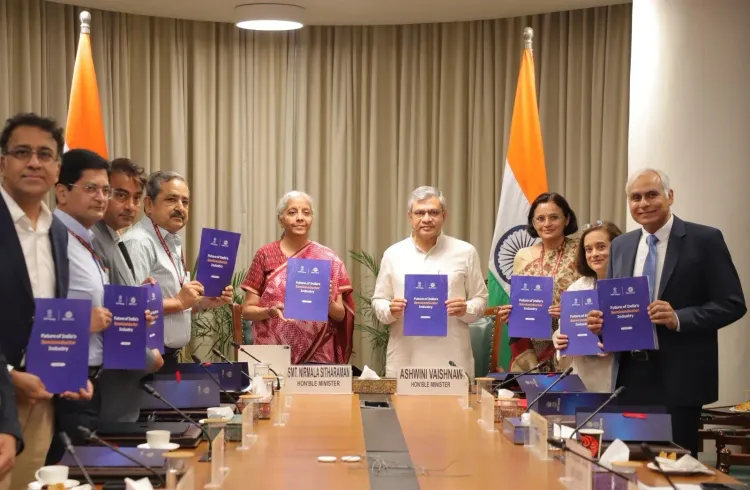
Union Finance Minister Nirmala Sitharaman and Minister Ashwini Vaishnaw launched the NITI Aayog Frontier Tech Hub's 'Future of India's Semiconductor Industry' report on 29 May 2026, presenting a 10-year roadmap to strengthen India's position across the global semiconductor value chain.
Key Takeaways
Union Finance Minister Nirmala Sitharaman and Ashwini Vaishnaw (Railways, I&B, MeitY) jointly launched the report on 29 May 2026 .
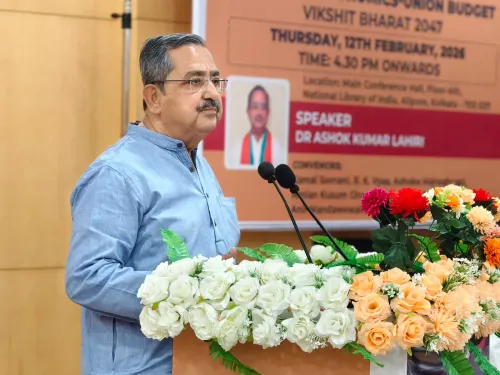
NITI Aayog Vice Chairman Ashok Lahiri was present at the launch, signalling cross-institutional ownership.
The report, titled 'Future of India's Semiconductor Industry' , presents a 10-year roadmap for the sector.
It covers India's positioning across the full global semiconductor value chain , from design to advanced packaging.
The launch builds on the India Semiconductor Mission (approved 2021, outlay ₹76,000 crore ) and the PLI scheme for IT hardware.
The roadmap is expected to guide future budget allocations, investment decisions and strategic technology partnerships.
Union Finance Minister Nirmala Sitharaman, alongside Union Minister Ashwini Vaishnaw and in the presence of NITI Aayog Vice Chairman Ashok Lahiri, launched the NITI Aayog Frontier Tech Hub report titled 'Future of India's Semiconductor Industry' on Friday, 29 May 2026. The report lays out a 10-year roadmap to strengthen India's position across the global semiconductor value chain.
Context
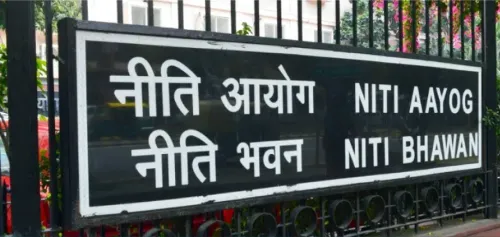
The launch brings together three of the government's most consequential economic and technology portfolios. Sitharaman controls the Union Budget and fiscal policy, Vaishnaw oversees the Ministry of Electronics and Information Technology (MeitY) which is the nodal agency for semiconductor policy, and Lahiri represents NITI Aayog, the government's premier strategic planning body. The joint presence signals that the roadmap carries cross-ministerial ownership rather than being a single-ministry exercise.
The NITI Aayog Frontier Tech Hub is the think tank's dedicated unit for emerging and deep-technology policy. Its report on the semiconductor industry is framed as a long-horizon planning document covering the full value chain — from chip design and wafer fabrication to advanced packaging and end-use electronics.
Policy Backdrop
India's semiconductor push has been building since December 2021, when the Union Cabinet approved the India Semiconductor Mission with a fiscal outlay of ₹76,000 crore to attract fabrication units, display manufacturers and chip-design firms. The Production Linked Incentive (PLI) scheme for IT hardware and semiconductors, notified in 2022, further extended incentives to domestic assembly and component manufacturing.
The broader strategic context is India's Atmanirbhar Bharat framework, which seeks self-reliance in critical technologies to reduce dependence on concentrated supply chains in East Asia. Global chip shortages in 2021–22 exposed vulnerabilities across automotive, consumer electronics and defence sectors, accelerating New Delhi's resolve to build domestic semiconductor capacity. Strategic technology partnerships with the United States, Japan and Taiwan have complemented these domestic measures.
Stakeholders and Impact
The roadmap directly concerns semiconductor design startups, domestic electronics manufacturers, and global chipmakers evaluating India as a production or packaging destination. A credible 10-year policy signal from NITI Aayog — backed by the Finance Ministry and MeitY — is intended to reduce investment uncertainty for firms considering large capital commitments in wafer fabs or advanced packaging facilities.
Skill development institutions and engineering universities are also key stakeholders, as the semiconductor value chain requires a specialised workforce in VLSI design, process engineering and materials science. The roadmap's scope across the 'full value chain' suggests it addresses both the supply side — manufacturing capacity — and the demand side — domestic consumption of chips in electronics, automotive and defence applications.
What's Next
Attention will now turn to whether the roadmap translates into specific policy notifications, budget allocations or investment commitments in the near term. Progress on semiconductor projects already approved under the India Semiconductor Mission will serve as an early indicator of execution capacity. Any follow-on announcements from MeitY or the Finance Ministry on incentive structures or infrastructure support will be closely watched by industry and strategic partners alike. The 10-year horizon also means the roadmap will be a reference document for future Union Budgets and technology partnership negotiations.
Point of View
With NITI Aayog providing the intellectual framework, is a deliberate signal that India's semiconductor ambitions are now a whole-of-government priority rather than a single-ministry project. Anchoring a 10-year roadmap in a NITI Aayog document gives it planning legitimacy that can survive cabinet reshuffles and budget cycles. The move also fits a pattern of India using policy documents to de-risk foreign investment decisions — particularly from US, Japanese and Taiwanese chip firms weighing India against competing destinations. Whether the roadmap accelerates on-ground progress under the India Semiconductor Mission will be the real test of its credibility.
NationPress
28 Aug 2026
Frequently Asked Questions
What is the NITI Aayog semiconductor roadmap about?
The NITI Aayog Frontier Tech Hub's 'Future of India's Semiconductor Industry' is a 10-year policy roadmap aimed at strengthening India's position across the global semiconductor value chain, covering design, fabrication, packaging and end-use electronics.
Who launched the NITI Aayog semiconductor report?
Union Finance Minister Nirmala Sitharaman and Union Minister Ashwini Vaishnaw launched the report on 29 May 2026, with NITI Aayog Vice Chairman Ashok Lahiri present at the event.
What is India's Semiconductor Mission and how much has been allocated?
The India Semiconductor Mission was approved by the Union Cabinet in December 2021 with a fiscal outlay of ₹76,000 crore to develop a domestic semiconductor and display manufacturing ecosystem through incentives for fabrication units and design firms.
Why is India focusing on semiconductor self-reliance?
India is pursuing semiconductor self-reliance under the Atmanirbhar Bharat framework to reduce dependence on concentrated supply chains in East Asia, a vulnerability exposed by global chip shortages in 2021-22 that affected automotive, electronics and defence sectors.
What does the 10-year semiconductor roadmap mean for investors?
A government-backed 10-year roadmap provides long-horizon policy certainty, which is intended to reduce investment risk for semiconductor firms — including global chipmakers and domestic design startups — considering large capital commitments in India.