Sitharaman recalls Sengol ceremony, Modi's bond with Adheenams
Synopsis
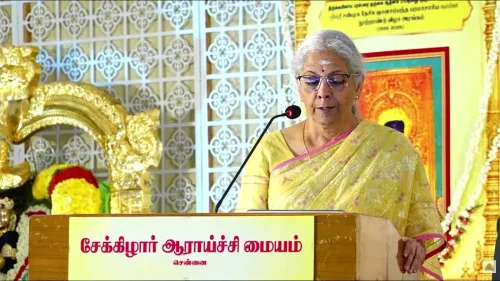
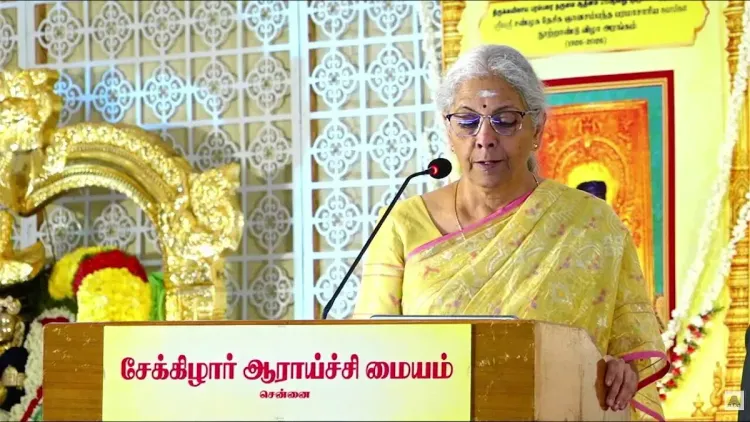
Finance Minister Nirmala Sitharaman, at a Chennai event on 1 August 2026, recalled PM Modi's deference to Tamil Nadu's Shaivite Adheenams during the 2023 Sengol installation in the new Parliament, framing it as cultural recognition rather than politics.
Key Takeaways
Finance Minister Nirmala Sitharaman made the remarks during a speech in Chennai on 1 August 2026 .
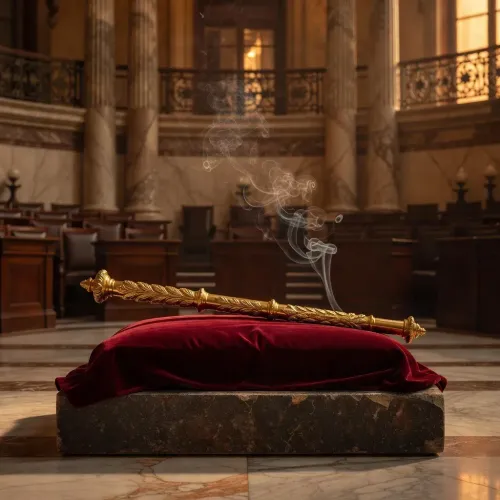
The Sengol was originally presented to PM Jawaharlal Nehru in 1947 as a symbol of power transfer at independence, then fell into obscurity.
In May 2023 , the Sengol was reinstalled in the new Parliament after a puja conducted with Tamil Nadu's Adheenams .
PM Modi walked behind the Adheenams in the procession before placing the scepter, a gesture Sitharaman highlighted as one of genuine deference.
Sitharaman explicitly stated she was not making a political argument, framing the moment as civilisational and cultural recognition.
The episode reflects a broader pattern of the central government incorporating South Indian religious traditions into major national ceremonies.
Speaking in Chennai on Saturday, 1 August 2026, Union Finance Minister Nirmala Sitharaman invoked one of modern India's most charged cultural moments — the installation of the Sengol in the new Parliament — to highlight Prime Minister Narendra Modi's continuing reverence for Tamil Nadu's Shaivite monastic tradition.
The Sengol's long journey from 1947 to Parliament
The Sengol — a sacred scepter first presented to Prime Minister Jawaharlal Nehru in 1947 as a symbol of the transfer of power at independence — had, in Sitharaman's words, 'faded into obscurity over time.' It was tracked down, retrieved, and given a second, far more ceremonial life. In May 2023, when the new Parliament building was inaugurated, the Sengol was not simply placed inside. It arrived with ritual weight behind it.
Sitharaman described the sequence precisely: before the Sengol entered the new Parliament, a puja (consecration ceremony) was conducted jointly with the Adheenams — the traditional Shaivite monastic heads from Tamil Nadu who are regarded as living symbols of the faith. Modi did not lead the procession. He walked behind the Adheenams, deferring to them, before placing the scepter in the chamber himself.
Why the Adheenams' role matters
The Adheenams are not ceremonial figureheads. These ancient maths (monasteries) are the custodians of Tamil Shaivism — a tradition that predates modern political boundaries and carries deep authority across Tamil Nadu and among Tamil communities worldwide. Their participation in a national ceremony at Parliament was, by any measure, historically significant.
Sitharaman was explicit that she was not making a partisan argument. 'I am not speaking politics here,' she said, framing the moment instead as one of cultural and civilisational recognition — a national government acknowledging a living religious tradition that had long been woven into the social fabric of the south.
A pattern of South Indian cultural outreach
The Sengol ceremony was not an isolated gesture. Central government events in recent years have deliberately incorporated traditional South Indian religious and cultural symbols into national occasions, positioning them as expressions of a shared civilisational inheritance rather than regional markers. The choice to involve the Adheenams — and to have the Prime Minister visibly subordinate himself to their guidance during the ritual — amplified that signal considerably.
For Tamil Nadu's Shaivite community, the image of a sitting Prime Minister walking behind their spiritual leaders into the new Parliament carries a resonance that goes well beyond the political cycle. Sitharaman, herself a Tamilian, was reminding her Chennai audience of that image — and of what it represented.
The Sengol now stands in Parliament not merely as a historical artefact recovered from storage, but as a living link between India's civilisational past and its legislative present. That is the argument Sitharaman was making — and the image she chose to leave her audience with.
Point of View
She reframes the Sengol episode as an act of cultural humility rather than Hindu nationalism, a distinction that matters enormously in a state with a strong Dravidian political identity. The framing — 'I am not speaking politics' — is itself a political move, one that seeks to place the gesture above the partisan fray while ensuring the audience absorbs its emotional weight. Whether it shifts sentiment in Tamil Nadu will depend on how the Adheenam community itself chooses to engage with the narrative going forward.
NationPress
1 Aug 2026
Frequently Asked Questions
What is the Sengol and why was it placed in the new Parliament?
The Sengol is a sacred scepter that was presented to Prime Minister Jawaharlal Nehru in 1947 as a symbol of the transfer of power at Indian independence. It was reinstalled in the new Parliament building in May 2023 after being recovered from obscurity, following a puja ceremony conducted with Tamil Nadu's Shaivite Adheenams.
Who are the Adheenams and what was their role in the Parliament ceremony?
The Adheenams are traditional Shaivite monastic heads from Tamil Nadu who are regarded as symbols of Tamil Shaivism. They led the puja before the Sengol was placed in the new Parliament in 2023, with PM Modi walking behind them in the procession as a mark of deference.
What did Nirmala Sitharaman say about PM Modi and the Adheenams?
Speaking in Chennai on 1 August 2026, Sitharaman recalled that PM Modi participated in a puja with the Adheenams before the Sengol installation and walked behind them — not ahead — into the new Parliament, framing it as an act of cultural and religious respect rather than politics.
When was the new Parliament building inaugurated?
The new Parliament building was inaugurated in May 2023, with the Sengol installation ceremony featuring the participation of Tamil Nadu's Adheenams as a central ritual element.
Why is Nirmala Sitharaman speaking about Tamil culture in Chennai?
Sitharaman, herself a Tamilian and a senior BJP leader, has been making outreach speeches in Tamil Nadu highlighting the central government's engagement with Tamil religious and cultural traditions, including the Adheenam-led Sengol ceremony at Parliament.