Slovakia envoy backs Make in India, eyes deeper defence ties ahead of Modi visit
Synopsis
Slovakia's envoy to India has praised the 'Make in India' push and called for deeper defence industry ties — just days before PM Modi makes history as the first Indian Prime Minister to visit Slovakia since its 1993 independence. With MoUs, an EU-India FTA, and a new Indo-Pacific strategy all converging, the visit could reframe a relationship that has long been limited to legacy arms supply.
Key Takeaways
Slovakia's Ambassador Robert Maxian praised India's 'Make in India' initiative, calling New Delhi self-sufficient in several defence sectors.
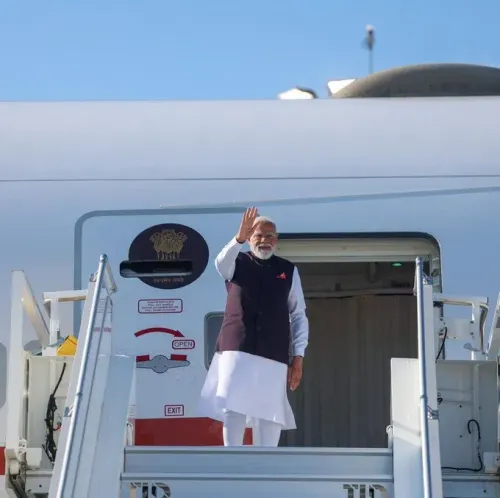
PM Modi will visit Slovakia from 14–16 June — the first-ever visit by an Indian Prime Minister since Slovakia's independence in 1993 .
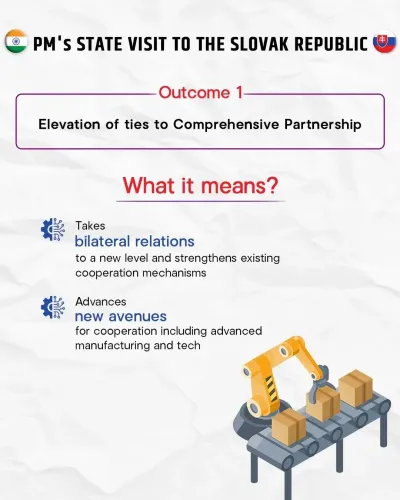
Both sides are expected to sign multiple MoUs covering investment, trade, AI, and student and labour mobility.
The India-EU Free Trade Agreement , adopted in January , is expected to come into force by end- 2024 or early next year, reducing import duties for Indian consumers.
Around 6,000 EU companies have already set up offices in India; Maxian said he wants more Slovak firms to follow.
Slovakia's new Indo-Pacific strategy names India as a key cooperating partner.
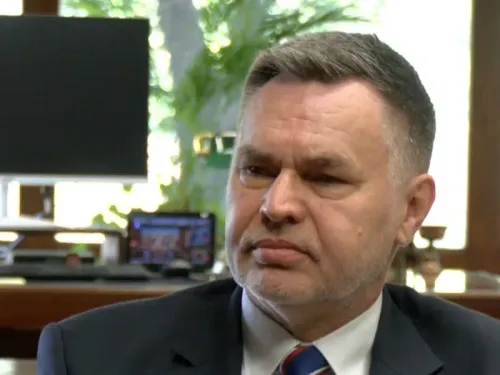
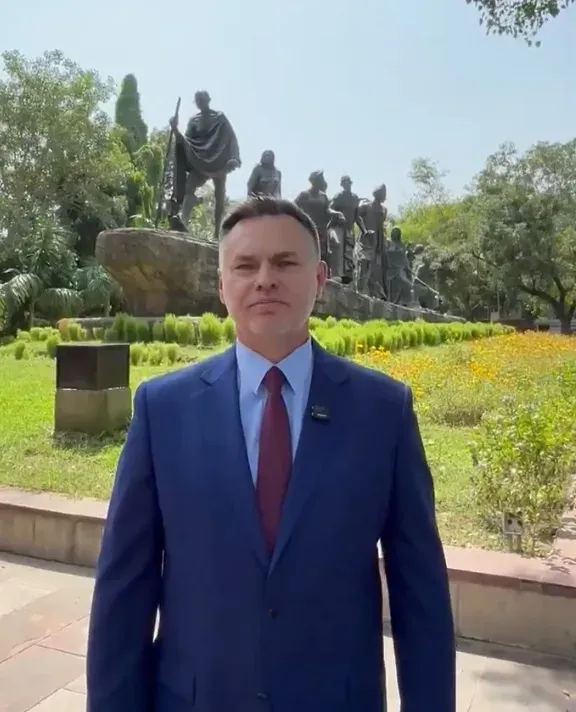
Slovakia's Ambassador to India, Robert Maxian, has praised India's 'Make in India' initiative and called for stronger defence industry collaboration between the two countries, ahead of Prime Minister Narendra Modi's first-ever State Visit to Slovakia scheduled for 14–16 June. In an interview, Maxian described New Delhi as having achieved self-sufficiency across several sectors and urged defence companies from both nations to actively explore new avenues of cooperation.
Defence Cooperation: A Shifting Landscape
Ambassador Maxian acknowledged that the bilateral defence relationship has evolved significantly over three decades. 'Slovakia is a reliable partner in defence technologies. We are supplying defence technologies since the 1993 creation of the Slovak Republic. We have cooperated with the Ministry of Defence and public sector units and Indian Ordinance Factories. We have been one of the important suppliers of military hardware to India,' he said.
He noted that India's indigenisation drive under the 'Make in India' policy has reshaped the dynamic. 'After 30 years, the scenario has changed... India became self-sufficient in many areas,' Maxian added. Active collaboration reportedly continues across flight mission simulators, recovery vehicles, and chemical detectors. The Ambassador specifically invited Indian companies to participate in Slovakia's upcoming IDEB Exhibition, pointing to Aero India in Bengaluru and DefExpo as past platforms where Slovakia has engaged.
Modi's Historic Slovakia Visit
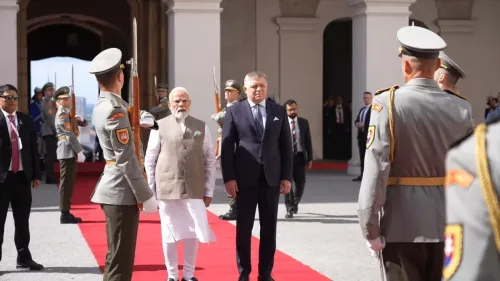
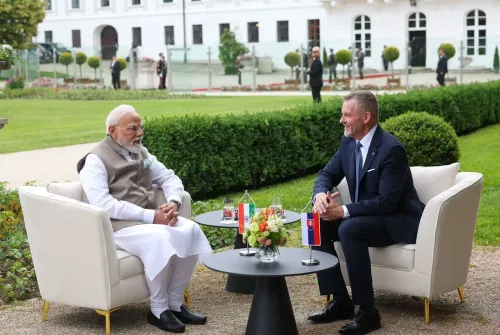
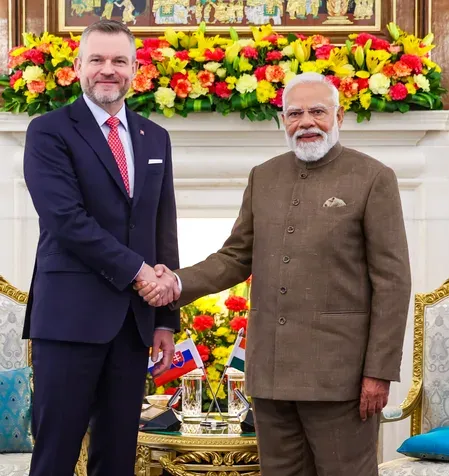
PM Modi is set to become the first Indian Prime Minister to visit Slovakia since the country's independence in 1993. The 14–16 June State Visit will include talks with Slovak Prime Minister Robert Fico and President Pellegrini. According to Maxian, the two sides are expected to sign several agreements and Memoranda of Understanding (MoUs) spanning investment, trade, innovation, artificial intelligence, and student and labour mobility.
'The overall message will be to encourage our companies, organisations, and universities to cooperate more closely together, to have more student exchanges, to have more tourism, to have more trade, investments,' the Ambassador said. He noted that around 6,000 European Union companies have already set up offices in India, and expressed his ambition to see more Slovak firms follow suit.
India-EU FTA and Economic Outlook
Maxian highlighted the recently concluded India-EU Free Trade Agreement (FTA), adopted in January this year, as a transformative framework for bilateral commerce. He said the agreement is expected to be enforced by the end of the year or early next year, and would reduce import duties, making goods more affordable for Indian consumers. 'It is rather the political agreement which will create a free trade zone of two billion people,' he noted.
On India's broader economic trajectory, the Ambassador pointed to a GDP growth rate of around 6% per annum and described India as the world's fourth-largest economy on course to become the third-largest. He cited advances in digitalisation, infrastructure — including metro networks and flyovers in New Delhi — and port development as markers of transformation over the past 12 years.
Slovakia's Indo-Pacific Strategy
Maxian also referenced Slovakia's recently announced Indo-Pacific strategy, in which India features as a key cooperating partner. He attributed this to India's rising middle class, growing consumer spending power, and its expanding influence in the Indo-Pacific region and on the global stage. 'In the last 12 or 15 years, India became a global power,' he said, reflecting on the country's transformation under PM Modi's leadership.
With the State Visit days away, both governments are expected to formalise a new chapter in India-Slovakia ties — one that moves beyond legacy defence supply into co-development, trade, and technology.
Point of View
Arriving precisely as PM Modi prepares for a visit that Slovakia clearly values far more than the optics suggest. The shift from legacy arms supplier to co-development partner is real but still nascent — active projects remain in niche categories like simulators and chemical detectors, not frontline platforms. The EU-India FTA is the bigger structural story here: a two-billion-person free trade zone would redraw India's European trade geometry far more consequentially than any bilateral MoU. Whether Slovak industry can move fast enough to capture that opportunity before larger EU economies do is the question Maxian's enthusiasm does not yet answer.
NationPress
26 Oct 2026
Frequently Asked Questions
Why is PM Modi's visit to Slovakia historically significant?
PM Modi's visit to Slovakia from 14–16 June will be the first-ever State Visit by an Indian Prime Minister to the country since Slovakia gained independence in 1993. The visit is expected to result in multiple MoUs and signal a new phase in bilateral ties.
What areas of defence cooperation exist between India and Slovakia?
India and Slovakia have cooperated on defence since 1993, with Slovakia supplying military hardware and working with India's Ministry of Defence, public sector units, and Ordnance Factories. Current active collaboration reportedly covers flight mission simulators, recovery vehicles, and chemical detectors.
What is the India-EU Free Trade Agreement and when does it take effect?
The India-EU Free Trade Agreement was adopted in January this year and is expected to come into force by end-2024 or early 2025. It will reduce import duties, making European goods more affordable in India, and is described as creating a free trade zone covering two billion people.
What is Slovakia's Indo-Pacific strategy and where does India fit in?
Slovakia announced an Indo-Pacific strategy that names India as one of its key cooperating partners. The strategy is driven by India's rising middle class, growing consumer market, and its expanding geopolitical influence in the Indo-Pacific region.
What is the IDEB Exhibition and why has Slovakia invited Indian companies?
The IDEB Exhibition is a defence industry expo held in Slovakia. Ambassador Maxian has invited Indian defence companies to participate, positioning it as a platform for both sides to explore co-development and supply chain opportunities beyond their existing legacy cooperation.