Smriti Irani backs SPARK to link Indian women to global supply chains
Synopsis
BJP leader Smriti Irani on 14 July 2026 championed the SPARK programme on X, asserting that every Indian woman she has met wants to join the global supply chain. The post links her longstanding women's empowerment advocacy to a new initiative aimed at integrating Indian women into international trade networks.
Key Takeaways
Smriti Irani , former Union Minister of Women & Child Development, publicly endorsed the SPARK programme on 14 July 2026 .
She stated that every Indian woman she has met wants to be part of the global supply chain, framing SPARK as the vehicle to achieve this.
India's female labour force participation has historically been low compared with peer economies, making supply-chain integration a significant policy ambition.
Existing schemes such as Stand-Up India (2016) and Mission Shakti (2021) provide the policy foundation on which SPARK appears to build.
Specifics of the SPARK programme — including its funding, implementing agency, and eligibility criteria — are yet to be publicly confirmed.
The initiative connects to India's broader push to expand manufacturing and diversify global value-chain participation through production-linked incentive programmes.
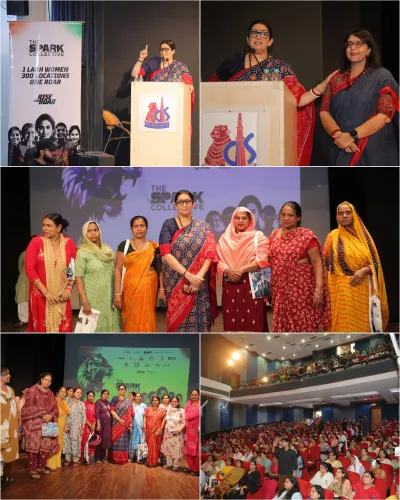
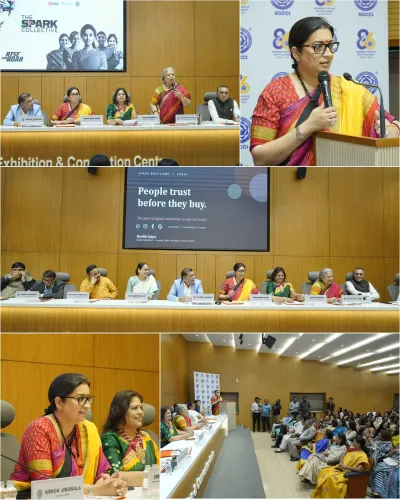
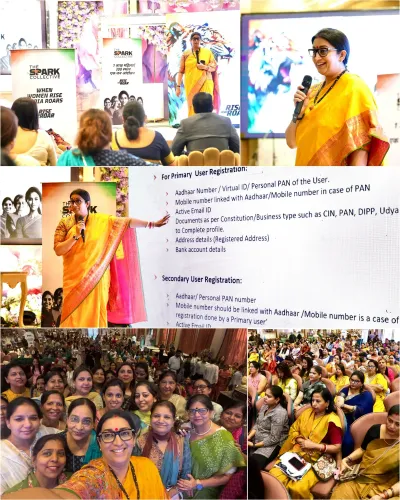
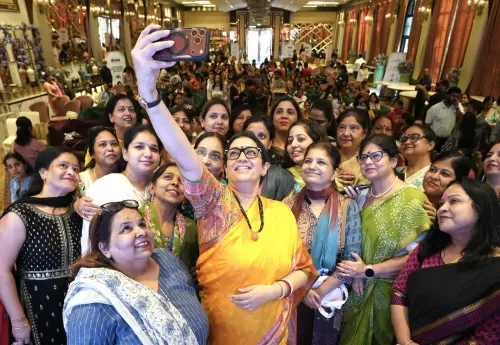
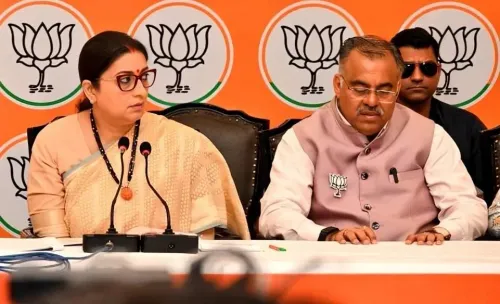
BJP leader Smriti Irani, former Union Minister of Women & Child Development and Minority Affairs, on Tuesday, 14 July 2026, voiced strong support for a programme called SPARK, saying it is designed to integrate Indian women into the global supply chain. Her remarks, shared on X, drew on her direct interactions with women across the country who she says have expressed a clear desire to participate in international trade and commerce.
Irani wrote: 'Every Indian woman I've met wants to be a part of the global supply chain. This is where SPARK comes in!' The statement signals her continued advocacy for women's economic empowerment, a cause she championed during her tenure as a Union Minister.
Context
India's female labour force participation rate has historically lagged behind peer economies, a gap that successive governments have sought to close through targeted policy interventions. Irani's post positions SPARK as a vehicle to move women from domestic economic activity into global value chains — a qualitatively higher level of integration than most existing schemes have aimed for.
While the specific contours of the SPARK programme are yet to be publicly detailed, the framing of the initiative around global supply chains suggests an ambition that goes beyond conventional skill-development or micro-credit models.
Policy Backdrop
India has built a layered architecture of women-focused economic schemes over the past decade. The Stand-Up India scheme, launched in 2016, opened bank credit channels for women and SC/ST entrepreneurs. The Mission Shakti scheme, introduced in 2021, consolidated support for women's safety, security and economic empowerment under a single umbrella.
More recently, production-linked incentive programmes have sought to expand India's manufacturing footprint, and policymakers have identified female workforce participation as a critical lever for meeting those targets. SPARK, as described by Irani, appears to sit at the intersection of these two policy streams — connecting women's empowerment with global trade integration.
Stakeholders and Impact
The primary beneficiaries of any such initiative would be women entrepreneurs and female workers seeking access to export markets, international procurement networks, and global brands' sourcing programmes. For India's broader trade agenda, raising the share of women in export-oriented sectors could meaningfully improve both the volume and diversity of its supply-chain participation.
Civil society groups working on women's livelihoods and industry bodies representing export-oriented sectors — particularly textiles, handicrafts, and electronics assembly — are likely to watch the rollout of SPARK closely for details on credit support, skill linkages, and market-access mechanisms.
What's Next
The key questions now are whether SPARK is a new government programme, a public-private initiative, or an advocacy framework, and what budgetary or institutional support underpins it. The next Periodic Labour Force Survey data release will also be a critical benchmark for assessing whether female workforce participation trends are moving in the direction that schemes like SPARK intend to accelerate.
Irani's public endorsement is likely to sharpen attention on the programme's rollout timeline and the specific mechanisms through which Indian women will be connected to global supply chains.
Point of View
Lending the programme grassroots credibility ahead of what may be a formal policy rollout. By invoking global supply chains rather than domestic self-employment, she is raising the ambition bar for women's economic integration beyond the micro-enterprise frame that has dominated this space. The move fits a broader BJP pattern of using senior leaders' social media presence to build narrative momentum for schemes before institutional details are finalised. Whether SPARK delivers on this framing will depend entirely on the structural support — credit, skilling, market linkages — that backs the rhetoric.
NationPress
14 Jul 2026
Frequently Asked Questions
What is the SPARK programme for Indian women?
SPARK is a programme that Smriti Irani has described as a vehicle to connect Indian women to the global supply chain. Full details of its structure, funding, and implementing agency have not yet been publicly confirmed.
What did Smriti Irani say about SPARK on X?
On 14 July 2026 , Irani posted on X that 'Every Indian woman I've met wants to be a part of the global supply chain,' and said SPARK is the initiative that addresses this aspiration.
How does SPARK relate to existing women's empowerment schemes in India?
SPARK appears to build on a policy architecture that includes Stand-Up India (2016) , which provided credit to women entrepreneurs, and Mission Shakti (2021) , which consolidated women's safety and economic empowerment support. SPARK's stated focus on global supply chains represents a more internationally oriented ambition.
Why is female labour force participation important for India's economy?
India's female labour force participation rate has historically been low compared with peer economies. Raising it is seen as critical to meeting manufacturing expansion targets under production-linked incentive programmes and to diversifying India's participation in global value chains.
Who will benefit from the SPARK programme?
The primary intended beneficiaries are women entrepreneurs and female workers in India who seek access to export markets, international procurement networks, and global sourcing programmes, particularly in sectors such as textiles, handicrafts, and electronics assembly.