Smriti Irani hails Cabinet nod for 33% women quota
Synopsis
Smriti Irani hailed Cabinet approval of a constitutional amendment she said would deliver 33 percent women's reservation in the Lok Sabha and assemblies. She thanked PM Modi and invoked the Nari Shakti Vandan Adhiniyam. The 2023 Act already sets that quota; delimitation still stands between the law and elections.
Key Takeaways
BJP leader Smriti Irani on 28 November 2026 welcomed what she described as Union Cabinet approval of the 132nd Constitutional Amendment Bill.
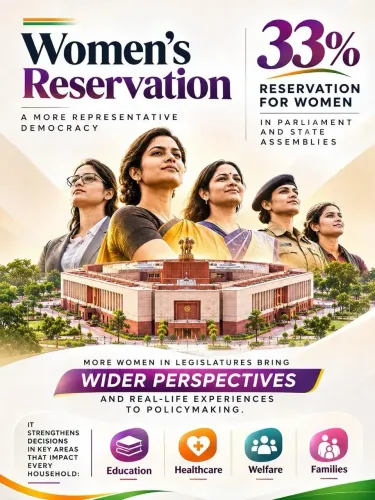
She said the Nari Shakti Vandan Adhiniyam would realise 33 percent reservation for women in the Lok Sabha and state assemblies.
Parliament enacted women's reservation in September 2023 as the Constitution (106th Amendment) Act.
The Women's Reservation Bill was first introduced in the Lok Sabha in 1996; a later version passed the Rajya Sabha in 2010 before lapsing.
Implementation of the 2023 Act is tied to census-based delimitation of constituencies.
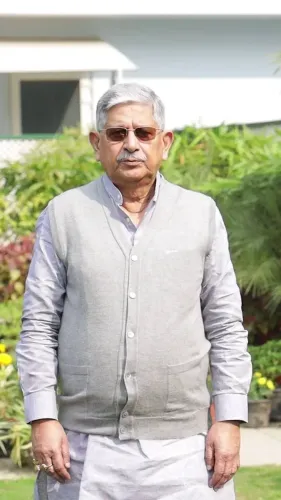
BJP leader Smriti Irani on Saturday, 28 November 2026 said the Union Cabinet in New Delhi, led by Prime Minister Narendra Modi, had approved the 132nd Constitutional Amendment Bill — a step she called happy news for India's women. The former Union Minister of Women and Child Development said the Nari Shakti Vandan Adhiniyam would now give shape to 33 percent reservation in the Lok Sabha and state assemblies.
Irani's message on 33 percent seats
Writing on X, Irani said Cabinet approval of the Bill under Modi's leadership was सुखद समाचार (happy news) for the country's नारीशक्ति (women's power). Through the Nari Shakti Vandan Adhiniyam, she wrote, the pledge of 33 percent seats in the Lok Sabha and Vidhan Sabhas will take shape and be realised.
She argued the step would give a new dimension to women's participation in policy-making, and that women would now play a decisive role in governance and in the decisions that run the country. She offered heartfelt gratitude and congratulations to the Prime Minister and the Union Cabinet for what she called a historic decision.
A bill that spent decades in Parliament
India first saw a Women's Reservation Bill in the Lok Sabha in 1996, introduced as the 81st Constitutional Amendment Bill. The Rajya Sabha passed a later version in 2010, but that draft lapsed when the 15th Lok Sabha was dissolved.
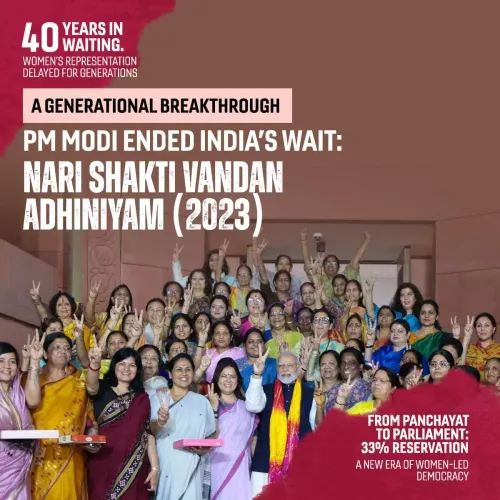
Parliament enacted the measure in September 2023 as the Constitution (One Hundred and Sixth Amendment) Act, known as the Nari Shakti Vandan Adhiniyam. It reserves one-third of seats for women in the Lok Sabha and state legislative assemblies, including within seats already reserved for Scheduled Castes and Scheduled Tribes.
Governments of several hues backed the idea in principle from the mid-1990s. Disputes over an OBC sub-quota and the timing of delimitation kept it from becoming law until 2023, when it finally cleared both Houses.
Delimitation still sits between law and ballots
The 2023 Act does not fill seats on its own. Reservation is to apply after a delimitation exercise based on the census — which is why the census-to-map calendar still matters more than any single Cabinet paper.
Women aspirants and party organisations are the stakeholders who will feel it first: tickets, local units and campaign machinery will decide whether a one-third floor becomes a one-third presence in the House.
Until constituencies are redrawn and notified, the numbers on paper stay a ceiling, not a roll of elected names.
Point of View
And reserved seats appear only after census-linked delimitation. Parties will keep competing for credit even as candidate lists, not Cabinet notes, decide how many women actually enter the House.
NationPress
28 Nov 2026
Frequently Asked Questions
What did Smriti Irani say about the 132nd Constitutional Amendment Bill?
BJP leader Smriti Irani said the Union Cabinet under Prime Minister Narendra Modi had approved the 132nd Constitutional Amendment Bill, calling it happy news for the country's women. She linked that step to 33 percent reservation in the Lok Sabha and state assemblies through the Nari Shakti Vandan Adhiniyam.
What is the Nari Shakti Vandan Adhiniyam?
It is the popular name for the Constitution (One Hundred and Sixth Amendment) Act, 2023, which provides for 33 percent reservation for women in the Lok Sabha and state legislative assemblies. Parliament passed it in September 2023 after earlier attempts since 1996 had failed.
When will 33 percent women's reservation come into force?
The 2023 Act is designed to take effect after a delimitation of constituencies based on a census. Implementation therefore depends on that census-and-delimitation sequence rather than on a single Cabinet decision.
Why did earlier women's reservation bills fail?
Earlier drafts, including a 1996 Lok Sabha introduction and a 2010 Rajya Sabha passage, stalled over disagreements on an OBC sub-quota and on when delimitation should occur. One version lapsed with the dissolution of the 15th Lok Sabha.
Who is Smriti Irani?
Smriti Irani is a senior BJP leader and former Union Minister of Women and Child Development and Minority Affairs. She posted the remarks on X on 28 November 2026.