Sonowal: Govt repealed 1,500+ colonial laws for Viksit Bharat
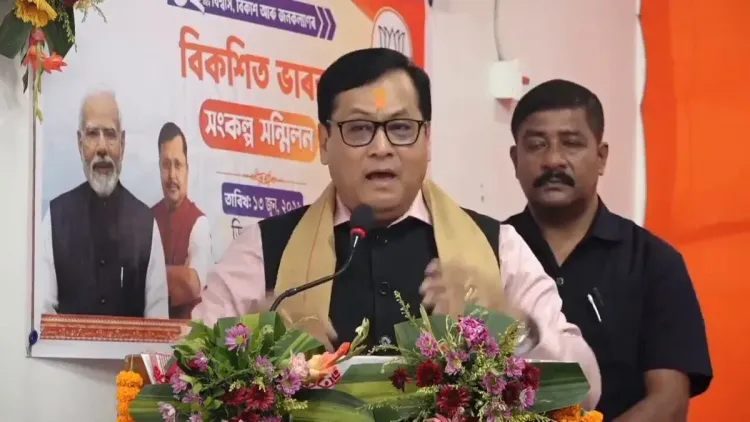
Synopsis
Union Minister Sarbananda Sonowal has said the BJP-led government repealed over 1,500 obsolete colonial laws since 2014 under the 'Swatantra Kanoon for Swatantra Bharat' vision, aiming to ease business compliance and advance the Viksit Bharat goal of a developed India by 2047.
Key Takeaways
Union Minister Sarbananda Sonowal posted on 13 June 2026 highlighting the government's legislative reform record.
The BJP-led government claims to have repealed over 1,500 obsolete laws since coming to power in 2014 .
The reform drive operates under the slogan 'Swatantra Kanoon for Swatantra Bharat' — Free Laws for a Free India.
Repeals span multiple sectors including labour, environmental, and commercial law, targeting pre-independence and redundant statutes.
The exercise is framed as supporting the Viksit Bharat vision of making India a developed economy by 2047 .
Further repeal notifications and parliamentary follow-up are expected in the upcoming monsoon session .
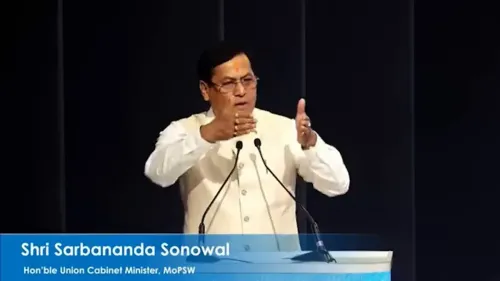
Union Minister of Ports, Shipping and Waterways Sarbananda Sonowal on Saturday, 13 June 2026, highlighted the BJP-led government's legislative reform drive, stating that over 1,500 obsolete laws have been repealed since 2014 under the vision of 'Swatantra Kanoon for Swatantra Bharat' ('Free Laws for a Free India') to accelerate India's march toward a developed economy.
Context
In his post on X, Sonowal wrote that 'for decades, archaic colonial legislations acted as barriers to India's growth and enterprise.' He credited the current government with embracing the vision of 'Swatantra Kanoon for Swatantra Bharat' and repealing laws that 'no longer served the aspirations of modern India.' The post was tagged under #12YearsofSeva, a hashtag marking twelve years of the BJP-led government at the Centre since its first electoral victory in 2014.
The minister argued that these reforms have 'strengthened ease of doing business, enhanced governance and accelerated our journey towards #ViksitBharat.' Viksit Bharat is the government's national vision to make India a developed economy by 2047, the centenary of independence.
Policy Backdrop
Starting in 2014, the central government undertook a systematic review of pre-independence and redundant central statutes as part of a broader regulatory reform agenda. The exercise has spanned multiple ministries, covering labour, environmental, and commercial law, and has been presented as a shift away from the licence-permit raj toward a lighter compliance framework.
The repeal drive has also been linked to improving India's position in global ease-of-doing-business assessments. Successive legislative sessions have seen batches of identified obsolete laws formally struck off the books through dedicated repeal bills introduced in Parliament.
Stakeholders and Impact
Indian businesses and entrepreneurs are the primary intended beneficiaries of the reform. Fewer redundant statutes reduce the compliance burden on enterprises, particularly small and medium businesses that often lack dedicated legal teams to navigate overlapping or contradictory legacy regulations.
Governance experts have noted that colonial-era laws, many dating to the nineteenth century, frequently imposed procedural requirements and licensing conditions that were designed for a different economic and political context. Their removal is expected to streamline regulatory interactions between businesses and the state.
What's Next
Further repeal notifications are anticipated across remaining central ministries, and any legislative follow-up could feature in the upcoming monsoon session of Parliament. The government's stated goal under the Viksit Bharat framework implies continued pressure to modernise the regulatory architecture ahead of 2047.
As the #12YearsofSeva campaign builds momentum, ministers across portfolios are expected to highlight similar reform milestones, making legislative housekeeping a recurring political talking point in the months ahead.
Point of View
Framing regulatory housekeeping as a political achievement ahead of what are likely to be election-season narratives. The repeal of colonial-era laws is a low-controversy reform that draws cross-ideological approval, making it an effective vehicle for the ruling party to project governance credibility. By linking the exercise to Viksit Bharat, the government embeds routine legislative maintenance within a grand developmental arc that runs to 2047. The messaging signals that regulatory modernisation will remain a consistent BJP theme, distinct from more contested economic policy debates.
NationPress
13 Sept 2026
Frequently Asked Questions
How many laws has the Indian government repealed since 2014?
The BJP-led government claims to have repealed over 1,500 obsolete laws since 2014 as part of its regulatory reform agenda, according to Union Minister Sarbananda Sonowal's post on 13 June 2026 .
What is 'Swatantra Kanoon for Swatantra Bharat'?
'Swatantra Kanoon for Swatantra Bharat' translates to 'Free Laws for a Free India' and is the stated vision under which the central government has been identifying and repealing pre-independence and redundant statutes to reduce the compliance burden on businesses.
What is Viksit Bharat and how does law repeal connect to it?
Viksit Bharat is the government's national vision to make India a developed economy by 2047 , the centenary of independence. Repealing obsolete laws is presented as part of modernising India's regulatory framework to support that goal.
Which sectors have been affected by India's colonial law repeal drive?
The repeal drive has covered multiple sectors including labour, environmental, and commercial law, targeting statutes that were either pre-independence in origin or had become redundant and were seen as adding unnecessary compliance burden.
What is the #12YearsofSeva hashtag about?
#12YearsofSeva marks twelve years of the BJP -led government at the Centre since its first electoral victory in 2014 , and is being used by ministers to highlight governance and reform milestones across portfolios.