Sonowal Pitches Vadhvan Port, Shipbuilding to Korea in Busan
Synopsis
Union Minister Sarbananda Sonowal met Korea Ocean Business Corporation CEO and Hyundai Merchant Marine's senior VP in Busan on 27 October, pitching Korean investment in Vadhvan Port, greenfield shipbuilding clusters, container manufacturing and Indian vessel flagging under Maritime India Vision 2030.
Key Takeaways
Union Minister Sarbananda Sonowal held bilateral maritime meetings in Busan, South Korea on 27 October 2026 .
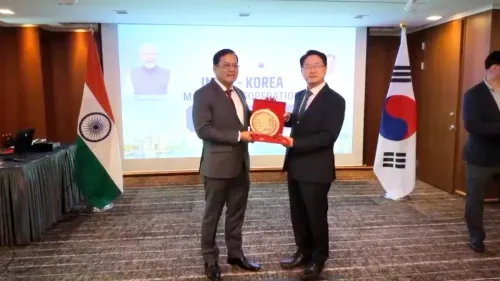
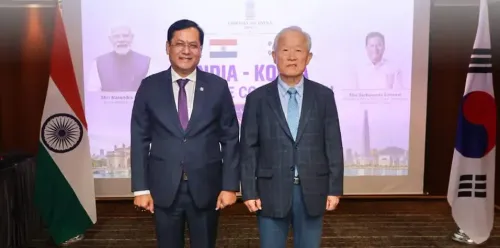
Meetings were held with Ahn Byung-gil , CEO of the Korea Ocean Business Corporation (KOBC) , and Jay Y Lee , Senior Executive VP of Hyundai Merchant Marine (HMM) .
Sonowal pitched Korean participation in Vadhvan Port , greenfield shipbuilding clusters and container manufacturing under the Sagarmala programme .
HMM expressed interest in expanding India operations, including exploring Indian vessel flagging and sourcing containers from Indian manufacturers.
The engagement aligns with Maritime India Vision 2030 , which targets port capacity expansion, domestic shipbuilding and container production.
KOBC's involvement signals potential cooperation on maritime financing , a key gap in India's port-development ecosystem.
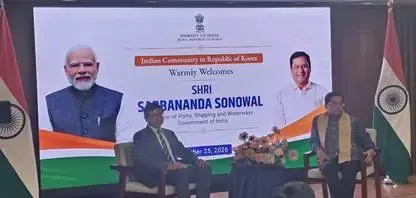
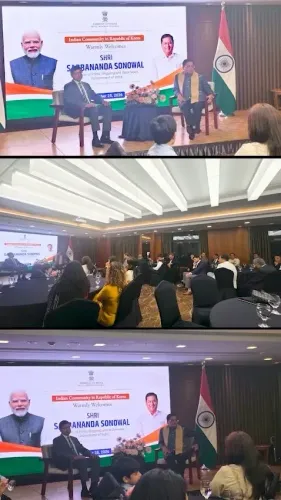
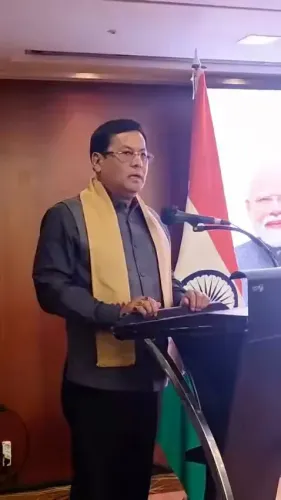
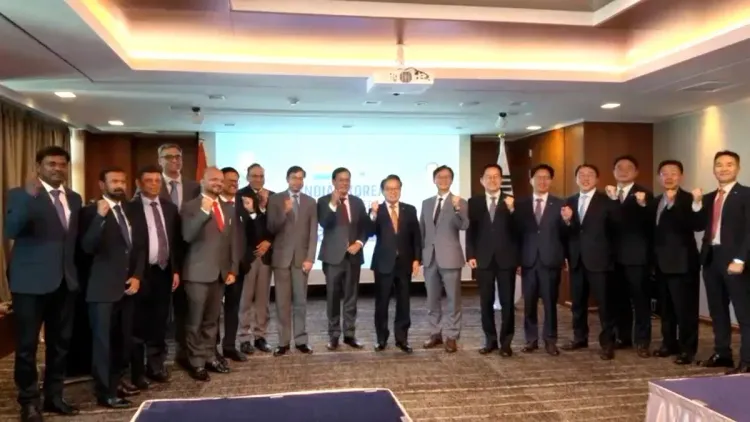
India's maritime ambitions landed in South Korea on Tuesday, 27 October 2026, as Union Minister of Ports, Shipping and Waterways Sarbananda Sonowal held high-level meetings in Busan — the nerve centre of Korean shipping — with the chiefs of two of Seoul's most powerful maritime institutions, pushing hard for Korean capital and expertise in India's fast-expanding maritime ecosystem.
Sonowal met Mr. Ahn Byung-gil, CEO of the Korea Ocean Business Corporation (KOBC), and Mr. Jay Y Lee, Senior Executive Vice President of Hyundai Merchant Marine (HMM). The talks covered maritime financing, shipbuilding, port infrastructure, shipping and logistics — a sweeping agenda that signals just how seriously New Delhi is courting East Asian players to bankroll its coastal transformation.
Vadhvan Port and greenfield shipyards take centre stage
At the heart of Sonowal's pitch was Vadhvan Port, the ambitious greenfield deep-water container port planned on Maharashtra's coastline under the Sagarmala programme. Launched in 2015, Sagarmala has identified Vadhvan as a flagship future port capable of handling ultra-large container vessels — precisely the class that South Korean shippers and financiers understand best. Sonowal flagged 'high potential opportunities' there for Korean investors, alongside greenfield shipbuilding clusters and container manufacturing.
The reference to container manufacturing is pointed. India currently imports a vast majority of its containers, and Maritime India Vision 2030 — released in 2021 — explicitly targets building domestic container production capacity. Getting a global shipping heavyweight like HMM to source containers from Indian manufacturers would be a tangible first step toward closing that gap.
HMM's India interest: flagging, containers and expanded operations
The more immediately newsworthy signal came from HMM itself. Sonowal said he 'welcomed HMM's interest in expanding its operations in India,' including exploring Indian vessel flagging — a move that would directly boost India's commercial shipping registry, a persistent weak spot. Indian flagging of foreign-operated vessels has long been a policy priority; HMM's stated interest, if it translates into action, would mark a concrete win.
KOBC, a government-linked Korean body that promotes ship finance and ocean business internationally, is precisely the kind of partner India needs to develop maritime financing architecture — an area where domestic institutional depth remains limited. The India-Korea Comprehensive Economic Partnership Agreement (CEPA) already provides a services and investment framework that could accelerate formal cooperation.
Why Busan, and why now
Busan is not a casual venue. Home to one of the world's busiest container ports and the hub of South Korea's shipbuilding industrial complex, it is where deals get done — not announced. Sonowal's choice to engage there, rather than in Seoul or New Delhi, signals that India is pursuing commercial relationships at the operational level, not just diplomatic pleasantries. It fits a broader pattern of Indian ministers making targeted sectoral visits to maritime powerhouses as the 2030 Vision deadline approaches and project timelines tighten.
The India-Korea maritime corridor has real momentum now. The next test is whether these conversations produce follow-up commitments — on HMM vessel flagging, container sourcing contracts, or bids in Vadhvan Port tenders. Busan opened the door. Whether India walks through it depends on how fast the project pipelines mature.
Point of View
Deal-oriented engagement with sector specialists. By meeting KOBC and HMM in Korea's commercial shipping capital rather than at a diplomatic venue, the ministry signals it is chasing investment and operational partnerships, not just MoUs. The focus on vessel flagging and container sourcing addresses two chronic weaknesses in India's maritime economy, and folding them into a single conversation with a global shipping line is tactically efficient. If even one of these threads — HMM flagging, KOBC financing, or Vadhvan bids — produces a concrete agreement, it would validate the government's 'sectoral safari' approach to infrastructure diplomacy ahead of the 2030 Vision deadline.
NationPress
27 Oct 2026
Frequently Asked Questions
What did Sarbananda Sonowal discuss in Busan with South Korean officials?
Sonowal met the heads of Korea Ocean Business Corporation and Hyundai Merchant Marine in Busan on 27 October 2026 to discuss maritime financing, shipbuilding, port infrastructure and logistics cooperation, with a specific pitch for Korean investment in Vadhvan Port and Indian vessel flagging.
What is Vadhvan Port and why is it significant?
Vadhvan Port is a planned greenfield deep-water container port on Maharashtra's coast, identified under the Sagarmala programme as a future hub for ultra-large container vessels. It is one of India's most strategically important port projects under Maritime India Vision 2030.
What is India's Maritime India Vision 2030?
Released in 2021, Maritime India Vision 2030 is a government blueprint targeting major expansion of port capacity, creation of greenfield shipyards, growth of domestic container manufacturing, and development of a stronger commercial shipping registry.
What is Indian vessel flagging and why does HMM's interest matter?
Vessel flagging means registering a ship under India's flag, contributing to India's commercial shipping registry. HMM's interest in exploring Indian flagging is significant because India's registry has historically been small relative to its trade volumes, and a large foreign carrier adopting Indian flagging would mark a concrete policy win.
What is the Korea Ocean Business Corporation (KOBC)?
KOBC is a South Korean government-linked body that promotes ocean business, ship financing and international maritime cooperation, making it a key institutional partner for India's maritime financing ambitions.