Madras HC gives Stalin time to reply to Aadhav Arjuna's ₹1 crore defamation case
Synopsis
Tamil Nadu Minister Aadhav Arjuna has dragged DMK President M.K. Stalin to the Madras High Court, alleging a party IT Wing post falsely tied him to a ₹258 crore narcotics case. With Stalin yet to file his counter-affidavit, the case raises a pointed question: how far does a party president's legal responsibility extend over content posted by the party's own digital machinery?
Key Takeaways
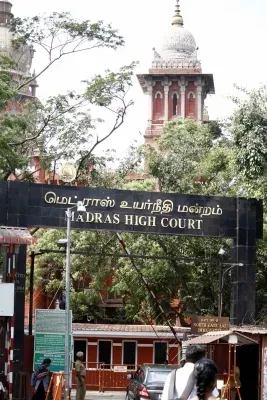
The Madras High Court on 15 September 2026 gave DMK President M.K.
Stalin more time to file a counter-affidavit in a defamation case.
Petitioner Tamil Nadu Minister Aadhav Arjuna alleges a DMK IT Wing social media post falsely linked him to a ₹258 crore narcotics seizure in Chennai and Ramanathapuram .
Arjuna is seeking ₹1 crore in compensation, removal of posts, an unconditional public apology in Tamil and English, and a permanent injunction against future similar content.
Wilson represented Stalin before Justice Govindarajan Thilakavadi , who accepted the adjournment request.
The next hearing is set for 22 September 2026 ; merits will be examined only after Stalin's counter-affidavit is on record.
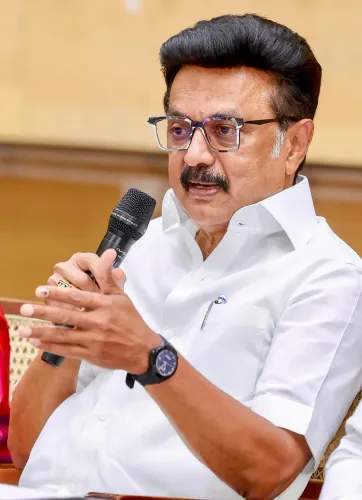
The Madras High Court on Tuesday, 15 September 2026, granted Dravida Munnetra Kazhagam (DMK) President and Tamil Nadu Chief Minister M.K. Stalin additional time to file a counter-affidavit in a criminal defamation petition brought by Tamil Nadu Minister Aadhav Arjuna. The next hearing in the matter is scheduled for 22 September.
What the Case Is About
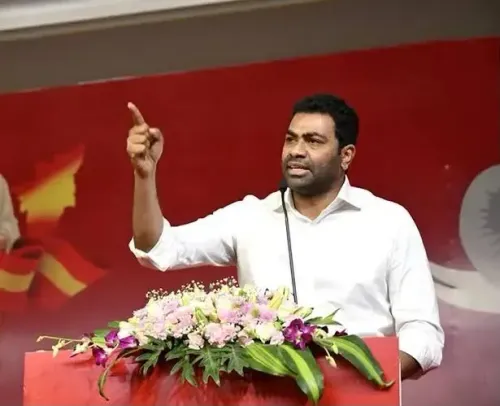
The dispute centres on a social media post allegedly shared by the DMK IT Wing in the wake of a major narcotics seizure — drugs valued at ₹258 crore were recovered from Chennai and Ramanathapuram. Minister Arjuna contends that the post falsely identified an alleged operator of the narcotics network as his close relative, thereby linking him to the trafficking investigation without any factual basis.
Arjuna has described the circulated content as fabricated and malicious, arguing it was part of a deliberate campaign to damage his reputation and public standing. He said the post caused him 'considerable personal distress' and subjected him to 'unwarranted suspicion and criticism.'
Arjuna's Legal Arguments
In his petition, Arjuna argued that Stalin, as DMK President, exercises overall control and supervision over the party's organisational activities — including the functioning of its IT Wing — and should therefore be held vicariously responsible for allegedly defamatory content published through the party's social media platforms.
The minister has sought a court direction to remove the disputed posts from all digital and social media platforms, along with an order compelling respondents to publish an unconditional apology in both Tamil and English. He has also requested a permanent injunction against future publication of similar allegations, and has asked that the electronic devices allegedly used to create and upload the posts be surrendered.
The petition additionally claims ₹1 crore in compensation for reputational damage, personal injury, and mental distress.
Tuesday's Proceedings
Senior counsel P. Wilson, representing Stalin, appeared before Justice Govindarajan Thilakavadi and informed the court that a counter-affidavit was yet to be filed. He sought an adjournment, which the judge accepted. As Stalin's defence remains on record, the court did not examine the merits of either party's claims on Tuesday.
What Happens Next
Substantive arguments are expected to begin only after Stalin's counter-affidavit is placed on record at the 22 September hearing. The case puts a spotlight on the growing intersection of party-controlled social media wings and legal accountability — a pattern that has emerged with increasing frequency in Tamil Nadu politics. Notably, this is not the first time a DMK IT Wing post has attracted legal scrutiny, reflecting wider concerns about the use of digital platforms in intra-state political battles.
Point of View
As DMK chief, bears supervisory accountability for what the wing puts out. If that argument holds, it could set a significant precedent for how political parties manage their digital operations. The backdrop — a ₹258 crore drug seizure and an alleged attempt to link a sitting minister to it — gives the case an explosive political dimension that goes well beyond a routine defamation dispute. Tamil Nadu's political battles have increasingly migrated to social media, and this case may be the moment the courts are asked to draw a line.
NationPress
15 Sept 2026
Frequently Asked Questions
What is the Aadhav Arjuna vs M.K. Stalin defamation case about?
Tamil Nadu Minister Aadhav Arjuna has filed a defamation petition in the Madras High Court against DMK President M.K. Stalin, alleging that a post shared by the DMK IT Wing falsely identified his close relative as an operator in a ₹258 crore narcotics network, thereby linking him to the drug trafficking investigation. Arjuna calls the content fabricated and malicious.
What relief has Aadhav Arjuna sought from the Madras High Court?
Arjuna has sought removal of the disputed posts from all digital and social media platforms, an unconditional public apology in both Tamil and English, a permanent injunction against future similar publications, surrender of electronic devices used to create the posts, and ₹1 crore in compensation for reputational damage and mental distress.
Why is M.K. Stalin named as a respondent?
Arjuna's petition argues that Stalin, as DMK President, holds overall supervisory control over the party's organisational activities — including the DMK IT Wing — and is therefore responsible for defamatory content published through party social media platforms. Stalin has not yet filed his counter-affidavit.
When will the Madras High Court next hear this case?
The court has scheduled the next hearing for 22 September 2026. Substantive arguments on the merits of the case will begin only after Stalin's counter-affidavit is placed on record.
What was the narcotics seizure that triggered this dispute?
Narcotics valued at ₹258 crore were seized in Chennai and Ramanathapuram. The DMK IT Wing allegedly shared a post in the aftermath of the seizure that Arjuna claims wrongly identified an alleged operator of the drug network as his close relative, which he denies entirely.