Jaishankar at Munich Leaders Meet: Emerging powers must unite on trade, defence, climate
Synopsis
At the Munich Leaders Meeting 2026 in New Delhi, External Affairs Minister Jaishankar made the most systematic case yet for an organised coalition of emerging and middle powers — spanning trade, chips, APIs, talent, climate, and defence. With the 25-year India-EU deal as his proof point, he argued the moment for such cooperation has arrived, not as aspiration but as strategic necessity.
Key Takeaways
Jaishankar addressed the opening session of the Munich Leaders Meeting 2026 in New Delhi on 4 October 2026 .
He called for emerging and middle powers to cooperate on international security, trade, supply chains, healthcare, talent mobility, connectivity, climate, and defence .
Jaishankar cited the India-EU trade agreement — reached after nearly 25 years of negotiations — as a model for what shared strategic interest can unlock.
He argued that dominance in critical sectors like semiconductor chips and pharmaceutical APIs is no longer confined to the world's largest economies.
On defence , he said traditional producer-consumer orthodoxies are dissolving, opening space for new manufacturing powers.
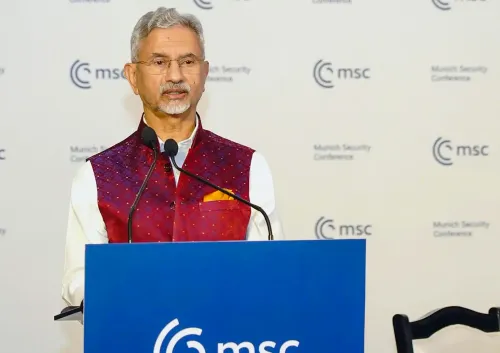
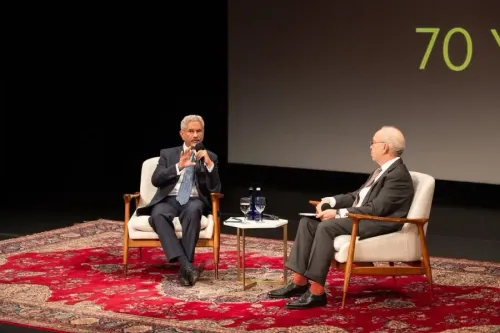
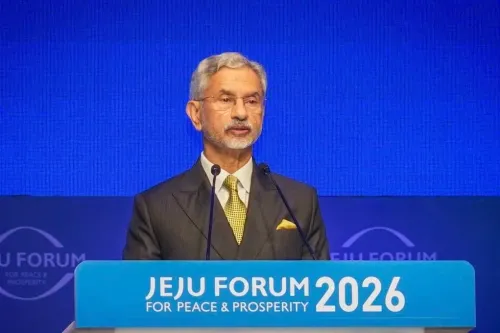
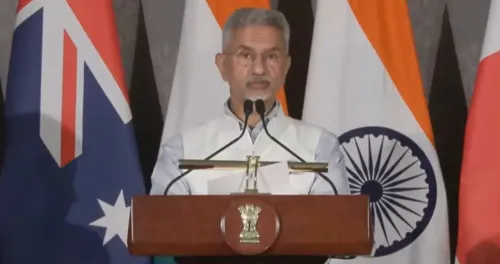
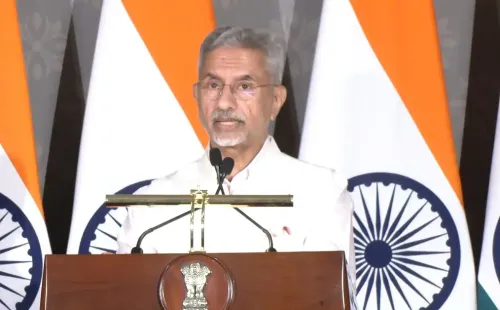
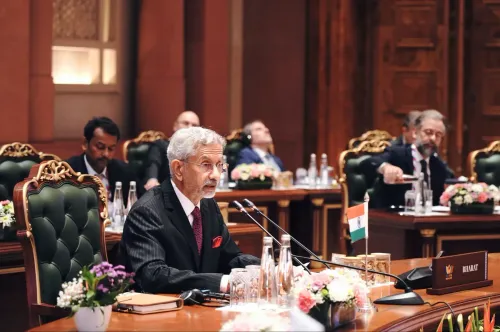
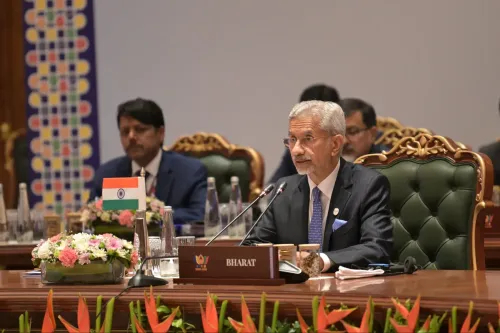
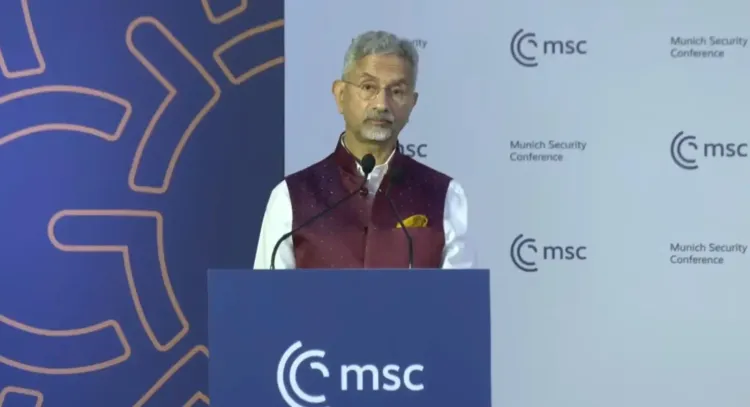
External Affairs Minister S. Jaishankar on Sunday, 4 October 2026 called for deeper cooperation among emerging and middle powers across a wide spectrum of domains — from international security and trade to healthcare, defence, and climate action. Addressing the opening session of the Munich Leaders Meeting 2026 in New Delhi, Jaishankar laid out what he described as a 'substantial agenda' that such nations can collectively pursue as the global order continues to shift.
The Case for Middle-Power Coalitions
Jaishankar argued that in an era defined by geopolitical friction and structural economic change, the world cannot afford to leave diplomacy entirely to its largest players. 'If there are conflicts going on, if there are frictions, if there are tensions, other than the biggest countries, can other nations pool their resources, back each other's diplomacy up, try to do something out there,' he said, making the case for collective engagement on international peace and security.
He contended that the global landscape — its agenda, architecture, and power distribution — is undergoing simultaneous transformation, creating both the need and the opportunity for emerging economies to act in concert rather than in isolation.
India-EU Trade Deal as a Model
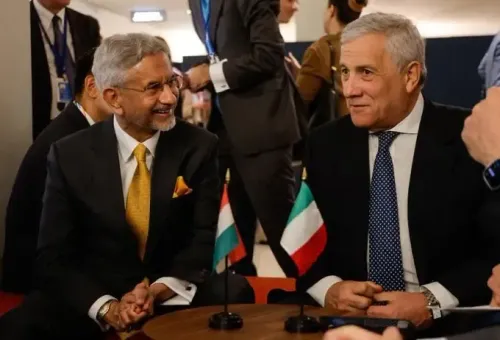
A centrepiece of Jaishankar's remarks was the recently concluded India-European Union trade agreement, which he cited as evidence that long-stalled negotiations can be unblocked when economic necessity becomes undeniable. 'We had almost 25 years of negotiation and that negotiation came to a head because I think there was a realisation on both sides that in the transforming world it was essential that our economic engagement was intensified and the barriers to it removed,' he noted. He presented the deal as a template for how middle and emerging powers can deepen investment and trade ties by anchoring talks in shared strategic interest rather than legacy positions.
Supply Chains, Talent, Health Security
Jaishankar stressed that supply chain resilience offers a particularly fertile ground for cooperation. He observed that dominance in critical technology — including semiconductor chips and the machines required to produce them — is no longer the exclusive preserve of the world's largest economies. 'You don't have to be the biggest country in the world to dominate the world of chips,' he said, adding that health security similarly demands a more diversified production base for active pharmaceutical ingredients (APIs) and medicines.
On talent mobility, he highlighted a structural mismatch in the global economy: demographic demand is not where productive capacity sits. 'The best way to level that out is through the flow of talent and skills,' he argued, noting that advanced manufacturing requires a degree of cross-border mobility to remain sustainable over time.
Defence and Climate: Two Shifting Frontiers
The minister pointed to defence production as a domain undergoing 'dramatic transformations', with new producers emerging outside the traditional supplier countries and companies. He argued that the old orthodoxies around who manufactures and who consumes defence equipment are dissolving, creating openings for a new set of players. On climate, Jaishankar noted that a large share of the world's population already bears the consequences of climate change, making cooperation on climate action both a moral imperative and a strategic convergence point for emerging and middle powers.
What Comes Next
Jaishankar expressed optimism that the Munich Leaders Meeting's choice of middle-power cooperation as its opening theme would give participants 'a stronger purpose and a clearer direction' as deliberations proceed. The remarks signal that India intends to position itself as an active architect — not merely a participant — in any emerging coalition of middle powers, consistent with New Delhi's broader foreign policy posture of strategic autonomy. How such cooperation translates from framework to institution will be the defining question in the sessions ahead.
Point of View
India sees a vacuum that a middle-power coalition could fill, and clearly wants to lead that coalition. The India-EU deal is being deployed not just as a trade win but as diplomatic evidence: 25 years of stalemate broken when stakes were high enough. The harder question is whether 'substantial agenda' translates into durable institution. Past articulations of South-South or multi-alignment cooperation have stalled at the framework stage; without a secretariat, binding commitments, or enforcement, the agenda Jaishankar outlined risks remaining a conference theme rather than a geopolitical force.
NationPress
4 Oct 2026
Frequently Asked Questions
What did EAM Jaishankar say at the Munich Leaders Meeting 2026?
Jaishankar called for structured cooperation among emerging and middle powers across domains including international security, trade, supply chain resilience, healthcare, talent mobility, connectivity, climate action, and defence. He argued that the shifting global order creates both the need and the opportunity for such nations to act collectively rather than in isolation.
Why did Jaishankar cite the India-EU trade deal at Munich?
He used the recently concluded India-EU trade agreement — finalised after nearly 25 years of negotiations — as a concrete example of how shared strategic necessity can break longstanding diplomatic deadlocks. He presented it as a model for how middle and emerging powers can deepen economic ties by anchoring talks in mutual interest.
What is India's position on supply chain resilience and semiconductors?
Jaishankar argued that dominance in critical supply chains, including semiconductor production, is no longer exclusive to the world's largest economies. He said different countries have different strengths and that health security also requires a diversified production base for APIs and pharmaceuticals — both areas where middle powers can cooperate.
What did Jaishankar say about defence cooperation among middle powers?
He described defence production as a domain undergoing dramatic transformation, with new producers emerging outside traditional supplier countries. He argued that the old orthodoxies around who manufactures and who consumes defence equipment are dissolving, creating openings for emerging economies.
What is the Munich Leaders Meeting 2026?
The Munich Leaders Meeting is a high-level international policy forum. The 2026 edition was held in New Delhi, with its opening session focused on the emerging agenda for cooperation among middle and emerging powers — a theme introduced by India's External Affairs Minister Jaishankar.