Should the Government Reassess Sonam Wangchuk's Detention under NSA?
Synopsis
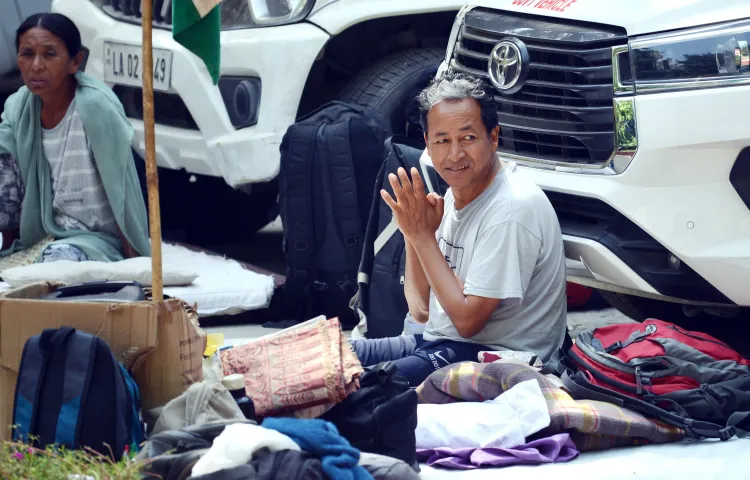
In a significant development, the Supreme Court has urged the Union government to reconsider the preventive detention of Sonam Wangchuk under the National Security Act. This plea raises fundamental questions about individual rights and state security, as Wangchuk's health concerns come to light during the ongoing legal scrutiny.
Key Takeaways
The Supreme Court is questioning the legality of Sonam Wangchuk's detention under the NSA.
Wangchuk's health issues have raised concerns during the court proceedings.
Additional Solicitor General defended the detention, citing public order.
Legal scrutiny over preventive detention is a crucial issue for individual rights.
The outcome of this case may influence future applications of the NSA.
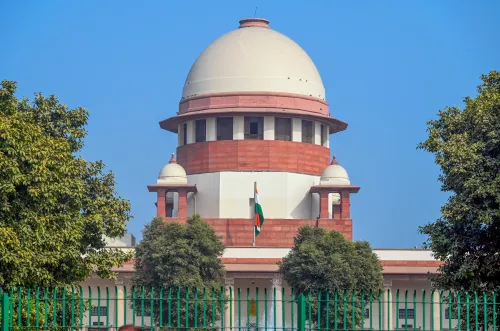
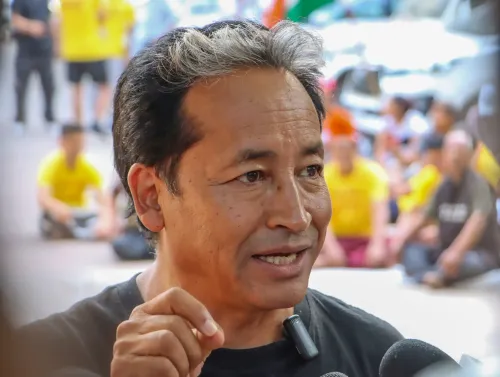
New Delhi, Feb 4 (NationPress) The Supreme Court has recently urged the Union government to reevaluate the ongoing preventive detention of Sonam Wangchuk, a social activist from Ladakh, under the National Security Act (NSA).
A bench comprising Justices Aravind Kumar and P.B. Varale was reviewing a habeas corpus petition submitted by Wangchuk’s spouse, Dr. Gitanjali Angmo, who described his detention as "illegal" and an "arbitrary exercise infringing on his fundamental rights".
During the proceedings, the bench highlighted that Wangchuk had been incarcerated since September 26, 2025, and noted that medical reports presented to the Supreme Court reflected his health was "certainly not very good".
The bench suggested to Additional Solicitor General K.M. Nataraj that the government should "reconsider" the rationale behind Wangchuk’s continued detention.
In his defense of the detention, ASG Nataraj argued that the NSA serves as a special law intended for preventive measures. He explained, "The NSA is designed to prevent actions that could harm public order or state security. Preventive detention is not punitive; it relies on the discretion of the detaining authority," asserting that the District Magistrate had made the detention decision after objectively evaluating the evidence.
ASG Nataraj contended that Wangchuk’s provocative speech on September 24, 2025 sparked violent protests in Leh, leading to four fatalities and injuries to 161 individuals. He noted that although Wangchuk had challenged the initial detention order, he had not contested subsequent orders.
However, the bench led by Justice Aravind Kumar signaled that if the foundation of the detention order is found to be legally inadequate, including issues of non-application of mind, subsequent approvals would not independently uphold it.
The Supreme Court remarked that should the detention order be annulled, all subsequent actions would be deemed invalid. In a prior session, the bench had acknowledged Wangchuk’s health issues and mandated a government hospital specialist examine him, with the medical report to be submitted in a sealed envelope.
Point of View
I believe in upholding the principles of justice and human rights. The Supreme Court's intervention in Sonam Wangchuk's case underscores the need for a careful examination of preventive detention laws. This situation is not just about one individual; it reflects broader societal values regarding freedom and security in our nation.
NationPress
20 Sept 2026
Frequently Asked Questions
What is the National Security Act (NSA)?
The National Security Act (NSA) is a law that allows the government to detain individuals without trial if they are deemed a threat to national security or public order.
Why was Sonam Wangchuk detained?
Sonam Wangchuk was detained under the NSA following his provocative speech that allegedly incited violent protests in Leh, leading to fatalities and injuries.
What did the Supreme Court say about Wangchuk's detention?
The Supreme Court suggested that the government reconsider Wangchuk's detention, especially in light of his health concerns and the legality of the detention order.
What are the implications of preventive detention?
Preventive detention can curtail individual freedoms and raises important questions about human rights, especially when not applied judiciously.
How does preventive detention work in India?
Preventive detention in India allows authorities to hold individuals without trial for a specified period, based on the perceived threat they pose to national security or public order.