Telangana CM Revanth Reddy Advocates for Hybrid Delimitation Model
Synopsis
In an urgent call for equitable representation, Telangana CM A. Revanth Reddy proposes a Hybrid Model for parliamentary constituency delimitation, warning against potential North-South disparities. He emphasizes the need for stakeholder consultation and a fair approach that prioritizes Southern states’ contributions to the national economy.
Key Takeaways
Hybrid Model proposed for delimitation focusing on equitable representation.
Warning against deepening the North-South divide .
Emphasis on stakeholder consultation before finalizing delimitation.
Calls for an all-party meeting to discuss relevant issues.
Concerns raised over political motivations behind delimitation linked to women’s reservations.
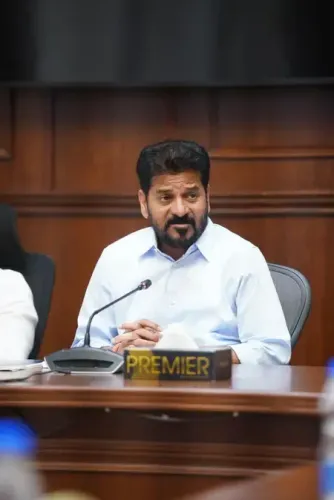
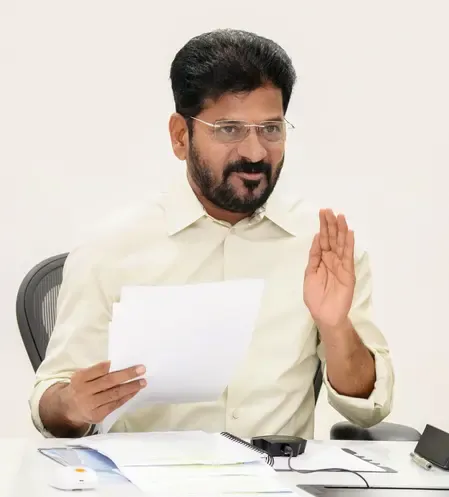
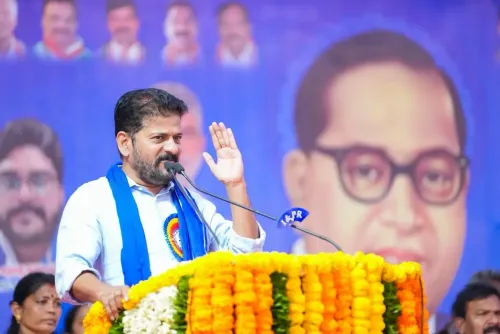
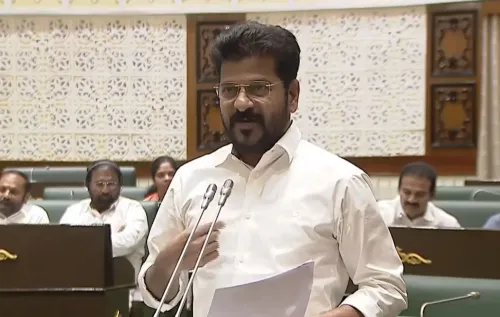
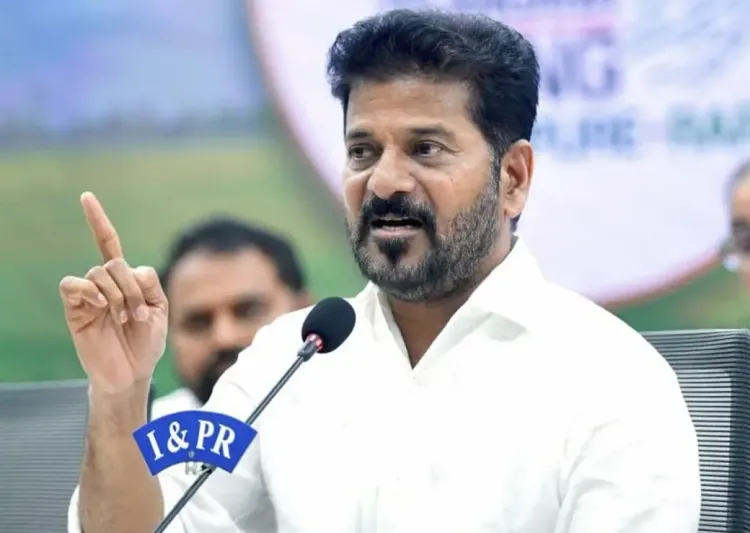
Hyderabad, April 13 (NationPress) The Chief Minister of Telangana, A. Revanth Reddy, put forth a proposal on Monday advocating for a “Hybrid Model” regarding the delimitation of parliamentary constituencies.
He recommended that from the 272 Lok Sabha seats anticipated to be added, 136 should be distributed on a pro rata basis, while the other 136 should be distributed according to the Gross State Domestic Product.
During a press briefing, he expressed concerns that the Centre’s delimitation strategy might deepen the North-South divide.
He argued that using population as a basis for delimitation would adversely affect the Southern states, emphasizing that those regions contributing significantly to the nation’s gross output should be prioritized.
He posed the question, “How can you penalize the states of Southern India, which are pivotal in generating revenue and creating employment opportunities for the country?”
Revanth Reddy insisted that the Central government must engage with all stakeholders, including political factions, before finalizing the delimitation process.
He called for an all-party assembly to deliberate on delimitation, stating that the matter should be examined in Parliament and a committee of experts should be formed.
He noted that a decision should be reached after discussions in all State Legislative Assemblies, which should subsequently be ratified in Parliament.
Indicating that this process could conclude by March 2028, he cautioned against rushing, as it could exacerbate tensions between Southern and Northern regions.
He mentioned his intention to cultivate agreement among the Southern states and smaller states on this matter.
“I will communicate with all the Southern states, as well as smaller states like Delhi and Punjab,” he stated.
He asserted that there exists a political conspiracy tying women’s reservations to the delimitation of constituencies. He expressed that if a bill for women’s reservations is proposed based on the 2026 census, the Congress party would fully support it.
The Chief Minister accused PM Modi of using the delimitation process as a political weapon. He stated that the population in Southern states has decreased due to effective family planning initiatives, while it has surged in Northern states due to poor execution.
He highlighted that Southern states have protested against the suggestion to reallocate seats based on population and have written to the Prime Minister on the issue.
He illustrated the disparity in representation, noting that Kerala has 20 seats compared to Uttar Pradesh’s 80, creating a 60-seat difference. If a 50% increase is executed, this disparity would expand to 90 seats. The gap between Telangana and Uttar Pradesh would grow to 94 seats.
The Southern states collectively hold 130 seats; if increased by 50%, this total would rise to 195 seats. The Northern states, currently holding 413 seats, would increase to 621 seats, resulting in an overall disparity between Southern and Northern regions growing from 412 to 620 seats.
He claimed that there are ongoing efforts to politically diminish certain states to secondary status, warning that smaller states like Delhi and Punjab could lose their political significance.
Revanth Reddy stated that increasing the seats by 50% would inflict irreversible damage on the Southern states and smaller states. He questioned, “Which deity advised Mr. Modi that the seats should be increased by fifty percent?” alleging that this move serves purely political motives.
He cautioned that this would jeopardize the very survival of the nation, asserting, “This issue transcends political parties; it affects the people themselves. The demand for Telangana state and issues like the Naxalite movement emerged due to discrimination. The BJP is now trying to exacerbate this discrimination and is creating obstacles under the guise of the Women’s Reservation Bill.”
He contended that the Centre is conflating women’s reservations with constituency delimitation, thereby perpetuating the idea that opposition parties are uncooperative in implementing women’s reservations.
He added, “These two issues are completely unrelated. I propose that they be separated, discussed independently, and that detailed plans for their implementation be developed.”
Stating the Congress party's commitment to women’s reservation, he remarked that the Congress does not need lessons from the BJP, which has failed to appoint a single woman as party president or general secretary in the past 46 years.
He recalled that legislation was enacted mandating that women’s reservations would only come into effect after the census scheduled for post-2026.
He concluded, “Had a 33% reservation been granted for the 2024 Lok Sabha elections, it could have enabled 181 women to be elected from the 543 seats. Delaying the implementation of this law and attaching conditions has deprived women of their reservations. Instead of conducting the 2026 census promptly, they are advancing legislation based on 2011 census data.”
If provisions are modified according to the 2026 census, women’s reservations could be applied in the 2029 Lok Sabha elections and in various state assembly elections, the Chief Minister noted.
Point of View
The discourse surrounding delimitation and its impact on regional representation intensifies. The emphasis on a Hybrid Model raises pertinent questions about equity in political representation and the voices of contributing states. A call for stakeholder engagement reflects a growing concern for inclusivity in governance.
NationPress
28 Jul 2026
Frequently Asked Questions
What is the proposed Hybrid Model for delimitation?
The Hybrid Model suggests allocating 136 of the 272 additional Lok Sabha seats on a pro rata basis and the remaining 136 based on Gross State Domestic Product.
Why is there concern over the North-South divide?
Concerns arise that the Centre’s delimitation plan could disproportionately affect Southern states, potentially widening the existing representation gap with Northern states.
What role does the Chief Minister want for stakeholders?
Revanth Reddy insists that all stakeholders, including political parties, should be consulted before finalizing the delimitation process.
How does the Chief Minister view women’s reservations in relation to delimitation?
He alleges a political conspiracy tying women's reservations to delimitation and advocates for separate discussions on both issues.
What timeline does the Chief Minister propose for completing the delimitation process?
He indicated that the delimitation process could be completed by March 2028 if conducted with proper deliberation.