Telangana CM A. Revanth Reddy Appeals to PM Modi for a Hybrid Delimitation Consensus
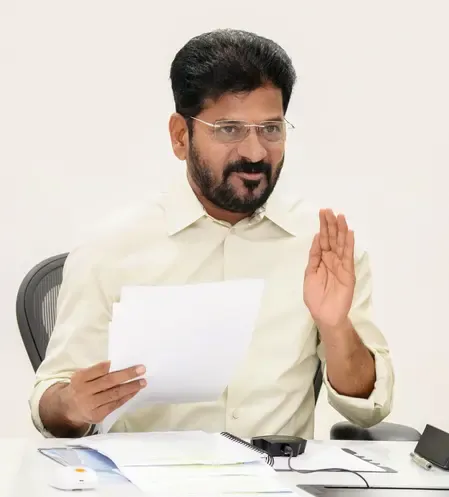
Synopsis
In an open letter, Telangana's CM A. Revanth Reddy urges PM Modi for a consensus on a hybrid model to increase Lok Sabha seats while advocating for immediate women's reservation implementation. This letter highlights significant political concerns regarding representation and fairness in federal structures.
Key Takeaways
Telangana CM advocates for a hybrid model for Lok Sabha seat increase.
He calls for immediate implementation of women’s reservation.
Stresses the separation of issues regarding delimitation and reservations.
Highlights potential political disadvantages for southern states.
Urges an all-party meeting for transparent discussions.
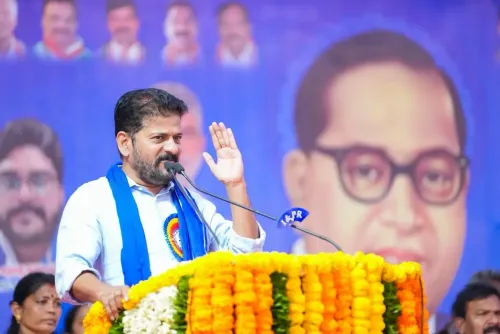
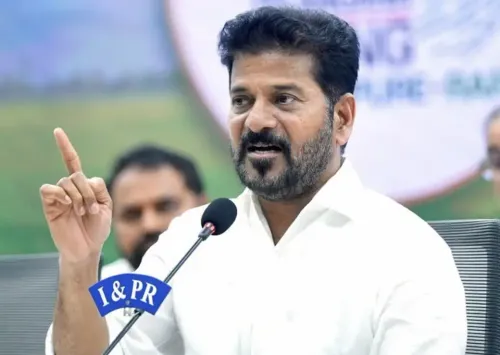
Hyderabad, April 14 (NationPress) The Chief Minister of Telangana, A. Revanth Reddy, addressed an open letter to Prime Minister Narendra Modi on Tuesday, urging the need for a political consensus on augmenting Lok Sabha seats through a hybrid model. He emphasized the immediate need to implement women’s reservation without tying it to the expansion of legislative seats.
In his correspondence, the Chief Minister clarified that women’s reservations, national delimitation, and the increase in Lok Sabha seats are distinct issues. However, there appears to be confusion among the public, as these matters are often perceived as interlinked.
Reddy reiterated Congress's full support for the Women’s Reservation Bill, advocating for its prompt implementation for the Lok Sabha at the current strength of 543 seats and for all State Assemblies.
On the topic of national delimitation, he pointed out that previous exercises have occurred without altering the number of seats, focusing instead on reshaping constituency boundaries within states—a practice that can be revisited.
“The contentious issue at hand is the recommendation to elevate Lok Sabha seats to 850 based on a pro rata model. I want to emphasize that these three matters are separate and not interconnected. We fully endorse the reservation of 33 percent of seats for women and support delimitation without augmenting the total number of seats,” his letter stated.
“The proposal to increase Lok Sabha seats based on population or a pro rata model is met with resistance from various states, particularly those in the south. I wish to convey our serious concerns about increasing Lok Sabha seats on such a basis, as it poses risks for the nation,” wrote Reddy.
The Congress leader warned that an increase based on pro rata, neglecting economic contributions and developmental outcomes, could severely disrupt the federal balance of India. He highlighted the importance of fair regional representation to foster a robust and developed Bharat, asserting that the Centre has not fully evaluated the implications of this proposal, particularly concerning southern states.
Reddy noted that states like Telangana, Tamil Nadu, Karnataka, Andhra Pradesh, Puducherry, and Kerala have pursued policies for population stabilization, enhanced public health, and superior human development outcomes. These initiatives align with national goals and have played a significant role in India's overall advancement.
“Under the current proposal, these states risk being politically marginalized and structurally disadvantaged. The implications of a pro rata model extend beyond statistical adjustments; they could signify a fundamental shift in political authority. As you are aware, in terms of financial allocations, we face substantial injustices and biases, where some states receive disproportionately more for every rupee they contribute, while Telangana receives far less. This illustrates the long-standing South-North divide we have endured. With the proposed change in Lok Sabha seats, we would face additional political injustice on top of ongoing financial and policy discrimination. Southern states, despite their significant contributions to the national economy, would see a decreased voice in Parliament, while states with higher population growth in the northern-central regions would benefit disproportionately,” the Chief Minister expressed.
He firmly stated that the pro rata model would not be acceptable to the people and governments of southern India. Any efforts to proceed without addressing these issues are likely to encounter widespread opposition, as they touch upon the crucial principle of fair representation.
He urged for a solution that is both equitable and sustainable. One potential alternative currently being discussed is a hybrid model, which aims to balance representation with contributions, potentially serving as an ideal resolution.
“Given your proposal to increase the current 543 Lok Sabha seats to 850, I suggest that half of the new seats should be allocated on a pro rata basis, while the other half should be based on economic contribution (GSDP) and other performance metrics. This is merely one suggestion for consideration,” he added.
Reddy called upon the Prime Minister to convene a meeting involving all political parties and state representatives as soon as possible to discuss this matter in a transparent and inclusive manner.
Frequently Asked Questions
What are the main issues addressed in the letter?
The letter discusses the need for a consensus on increasing Lok Sabha seats through a hybrid model, the immediate implementation of women's reservation, and the distinction between national delimitation and these issues.
What is a hybrid model?
A hybrid model seeks to balance representation in Lok Sabha seats based on both population and economic contributions, offering a potential solution to the concerns raised by southern states.
Why is the issue of Lok Sabha seats contentious?
The proposal to increase Lok Sabha seats to 850 raises concerns about fair representation, particularly for southern states, which could be politically marginalized under a pro rata model.
What is the Women’s Reservation Bill?
The Women’s Reservation Bill aims to reserve 33 percent of seats in Parliament and State Assemblies for women, promoting gender equality in political representation.
What are the implications of changing Lok Sabha seats?
Changing the number of Lok Sabha seats based on population or pro rata could disrupt the federal balance and lead to political injustice for certain regions, particularly southern states.