Anurag Thakur: 9.5% of Modi Govt Budget for Women's Welfare
Synopsis
BJP MP Anurag Thakur has stated that approximately 9.5 per cent of the Union Budget under the Modi government is directed towards welfare schemes for women, or Matrishakti. The claim, made from Hamirpur, draws on India's gender budgeting framework in place since 2005.
Key Takeaways
BJP MP Anurag Thakur stated on June 7, 2026 that 9.5 per cent of the Union Budget is spent on women's welfare schemes under the Modi government.
The post was made from Hamirpur , Thakur's Lok Sabha constituency in Himachal Pradesh .
India's Gender Budget Statement has been presented annually since 2005-06 , tracking allocations for women across multiple ministries.
Key schemes under this framework include Pradhan Mantri Matru Vandana Yojana , launched in 2017 , providing cash transfers to pregnant and lactating women.
The 9.5 per cent figure is drawn from the cumulative Gender Budget Statement and has been a subject of debate over methodology among policy analysts.
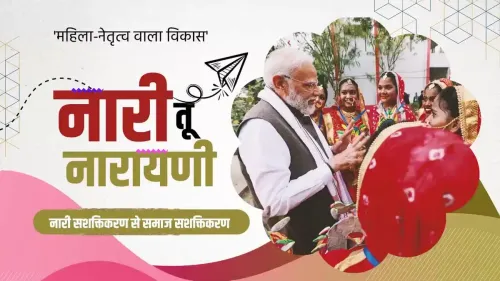
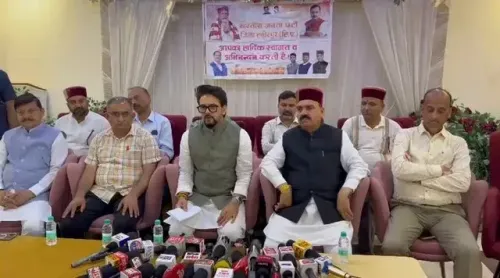
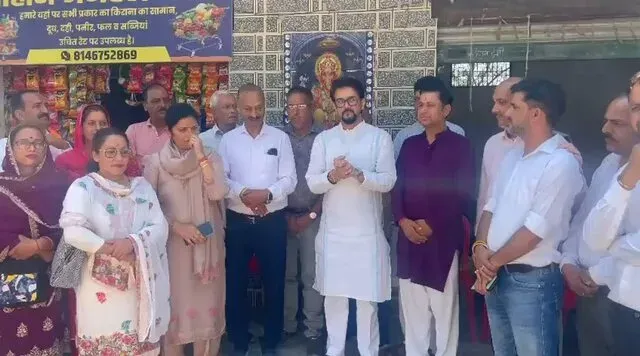
BJP MP Anurag Thakur, representing Hamirpur in Himachal Pradesh, on Sunday, June 7, 2026, stated that nearly 9.5 per cent of the Union Budget under the Modi government is spent on schemes for the welfare of women — referred to as Matrishakti (mothers and women).
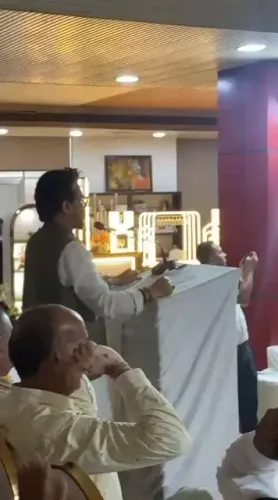
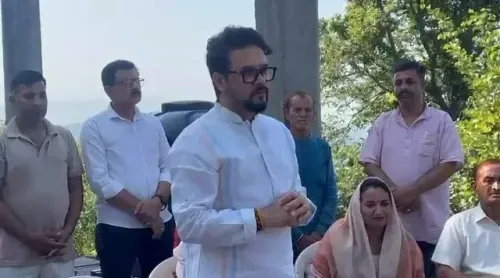
Posting from Hamirpur, Thakur wrote: 'Modi sarkar mein budget ka lagbhag 9.5 feesad Matrishakti ke kalyan ki yojanaon par kharch hota hai' — roughly translated as, 'In the Modi government, approximately 9.5 per cent of the budget is spent on welfare schemes for Matrishakti.' The post was accompanied by a video.
Context
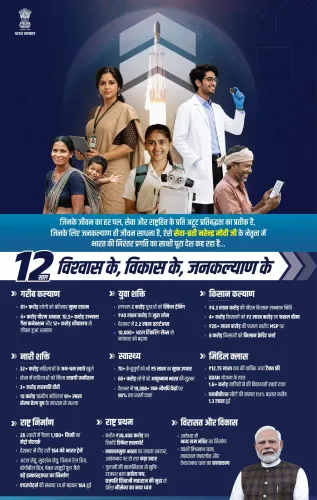
The claim centres on gender budgeting, a fiscal tool India formally adopted in 2005 when the first Gender Budget Statement was presented alongside the Union Budget. Since then, successive governments have tracked allocations across ministries that directly or indirectly benefit women. Under the Modi government, which took office in 2014, this practice has been consistently maintained and publicly highlighted as a measure of commitment to women's empowerment.
Thakur, a five-term MP from Hamirpur and former Union Minister who held the portfolios of Information and Broadcasting and Youth Affairs and Sports, has been a vocal advocate for the ruling party's social welfare record. His statement appears to be part of outreach in his constituency.
Policy Backdrop
The Gender Budget Statement, presented annually with the Union Budget, aggregates expenditure from multiple ministries — including Women and Child Development, Health, Rural Development, and Education — into two parts: schemes with 100 per cent allocation for women, and schemes where at least 30 per cent of the outlay benefits women. Key programmes counted within this framework include the Pradhan Mantri Matru Vandana Yojana, launched in 2017, which provides direct cash transfers to pregnant and lactating women.
The National Policy for Women 2016 further expanded the focus on maternal health, nutrition, and economic empowerment, providing a policy architecture that subsequent budgets have drawn upon. The combined headline figure across these schemes is what Thakur appears to be citing as approximately 9.5 per cent of the total Union Budget.
Stakeholders and Impact
The primary beneficiaries of this budgetary allocation are women and mothers across India, particularly those in rural and semi-urban areas who access government programmes for maternal health, nutrition support, self-help groups, and skill development. For a constituency like Hamirpur in Himachal Pradesh, where a significant share of the population depends on government welfare infrastructure, such allocations carry direct significance.
Opposition parties have, in the past, questioned whether the Gender Budget Statement reflects actual spending on women or merely aggregates broader social-sector expenditure, making the 9.5 per cent figure a point of political contestation. Independent analysts note that the methodology of aggregation — particularly the 'at least 30 per cent benefit' criterion — can lead to varying interpretations of what truly constitutes women-centric spending.
What's Next
The next Union Budget and its accompanying Gender Budget Statement will be closely watched for updated allocation figures and any revision in the methodology of reporting women-centric expenditure. Parliamentary discussions on the Demands for Grants for the Ministry of Women and Child Development are expected to revisit these numbers in detail. Thakur's public assertion of the 9.5 per cent figure is likely to feature in the ruling party's broader communication strategy ahead of electoral cycles in Himachal Pradesh and nationally.
Point of View
Anchoring abstract budget figures to the lived concerns of women voters. The invocation of 'Matrishakti' — a term Prime Minister Modi has used repeatedly — signals deliberate alignment with the Centre's communication framework rather than a standalone local claim. The 9.5 per cent figure, while rooted in the Gender Budget Statement, remains contested in policy circles over how broadly 'women-centric' spending is defined, which means the claim is simultaneously defensible and open to challenge. As Himachal Pradesh remains politically competitive, such outreach from a senior MP in his home constituency carries electoral subtext beyond its face value.
NationPress
22 Sept 2026
Frequently Asked Questions
What is the 9.5 per cent budget figure Anurag Thakur mentioned for women's welfare?
Anurag Thakur stated that approximately 9.5 per cent of the Union Budget under the Modi government is spent on welfare schemes for women, drawing on the Gender Budget Statement presented annually with the Union Budget.
What is gender budgeting in India?
Gender budgeting is a fiscal practice formally adopted in India in 2005, where the Union Budget includes a Gender Budget Statement that aggregates allocations from multiple ministries for schemes that directly or indirectly benefit women.
What is Pradhan Mantri Matru Vandana Yojana?
Pradhan Mantri Matru Vandana Yojana is a maternity benefit programme launched in 2017 that provides direct cash transfers to pregnant and lactating women, and is one of the key schemes counted under India's gender budgeting framework.
Who is Anurag Thakur and which constituency does he represent?
Anurag Thakur is a BJP Lok Sabha MP from Hamirpur in Himachal Pradesh and a former Union Minister who held the portfolios of Information and Broadcasting and Youth Affairs and Sports.
Is the 9.5 per cent women's welfare budget figure verified?
The 9.5 per cent figure cited by Anurag Thakur is based on the Gender Budget Statement, but the exact figure for the current budget cycle could not be independently verified; the methodology of aggregating women-centric spending has also been debated by policy analysts.