Anurag Thakur Marks 12 Years of Modi Govt Women Schemes
Synopsis
BJP MP Anurag Thakur marked 12 years of the Modi government's women-centric welfare agenda on June 12, 2026, citing schemes from Beti Bachao Beti Padhao to the Nari Shakti Vandan Adhiniyam as pillars of the Viksit Bharat vision.
Key Takeaways
BJP MP Anurag Thakur posted on June 12, 2026 under #12YearsOfNariShakti , marking a decade-plus of Modi government women's welfare programmes.
The Beti Bachao Beti Padhao scheme was launched in January 2015 to address the declining child sex ratio and promote girl-child education.
The Pradhan Mantri Ujjwala Yojana (May 2016) provided free LPG connections to women in below-poverty-line households across India.
The Maternity Benefit Amendment Act, 2017 extended paid maternity leave to 26 weeks for organised-sector women workers.
The Nari Shakti Vandan Adhiniyam (September 2023) reserved 33 percent of Lok Sabha and state assembly seats for women.
Upcoming Periodic Labour Force Survey data on female workforce participation will be a key test of the government's empowerment claims.
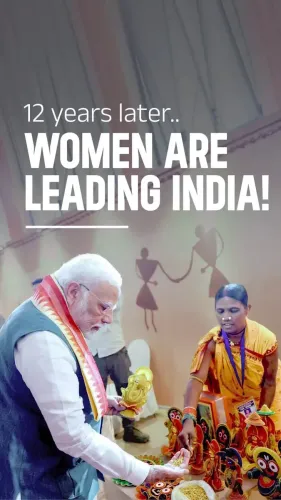
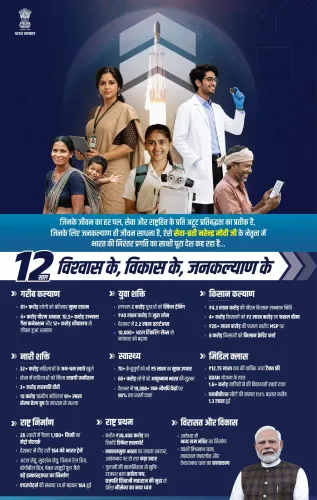
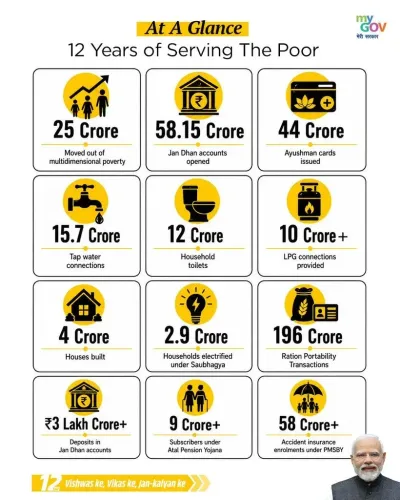
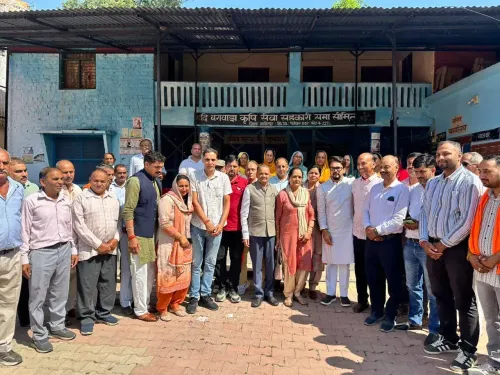
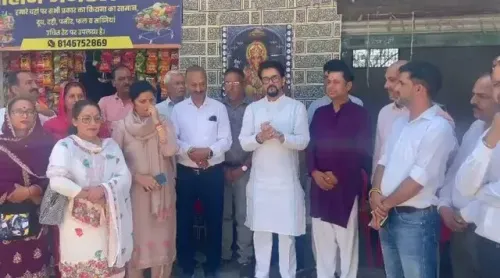
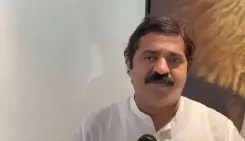
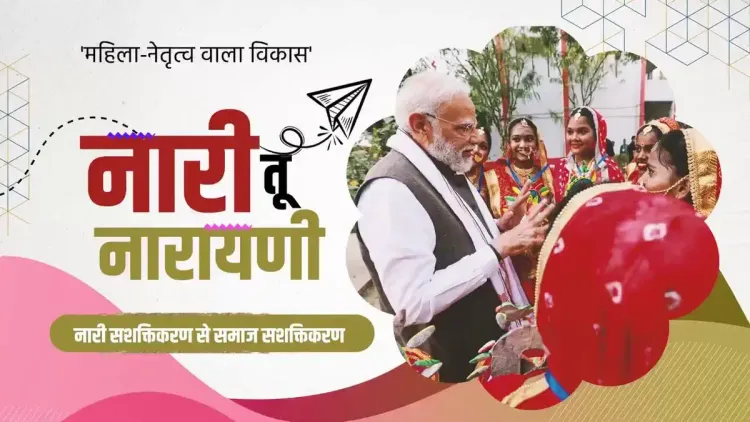
BJP MP Anurag Thakur on Friday, June 12, 2026 highlighted 12 years of the Modi government's women-centric welfare programmes, asserting that women's participation and empowerment have grown steadily since 2014 and are central to building a developed India.
Context
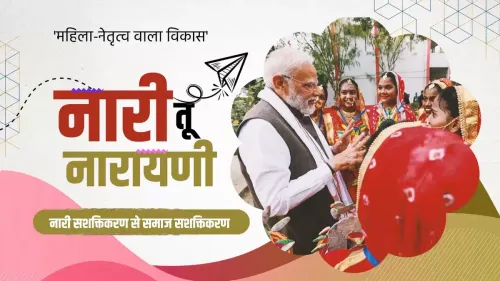
Posting under the hashtag #12YearsOfNariShakti, Thakur wrote: 'सशक्त नारी, समृद्ध व विकसित भारत का आधार' — 'An empowered woman is the foundation of a prosperous and developed India.' He added that over the past 12 years, respect, prosperity, and well-being of matrishakti (motherly strength) have seen continuous growth compared to earlier periods, and that rising women's participation is integral to the Viksit Bharat (Developed India) mission.
The post accompanied a video and was shared in Hindi, reflecting the ruling party's consistent messaging around women's welfare as a political and developmental benchmark ahead of multiple state election cycles.
Policy Backdrop
The Beti Bachao Beti Padhao scheme, launched in January 2015, was the first major plank of this agenda — aimed at reversing a declining child sex ratio and improving girl-child education and survival rates. It was followed in May 2016 by the Pradhan Mantri Ujjwala Yojana, which provided free LPG connections to women from below-poverty-line households, directly targeting energy access and health outcomes in rural India.
The Maternity Benefit Amendment Act, 2017 extended paid maternity leave from 12 to 26 weeks for organised-sector women workers — one of the longest such entitlements in Asia at the time. Most recently, the Nari Shakti Vandan Adhiniyam, enacted in September 2023, constitutionally reserved 33 percent of seats for women in the Lok Sabha and state legislative assemblies, marking a structural shift in political representation.
Stakeholders and Impact
The primary beneficiaries of these schemes span rural and semi-urban households, with programmes ranging from clean cooking fuel to institutional deliveries and girl-child scholarships. The government has consistently cited indicators such as LPG access rates, female school enrolment figures, and institutional delivery percentages as evidence of rising female agency across successive Union budgets.
Women's groups and policy researchers have broadly welcomed the legislative steps, particularly the women's reservation amendment, while also pointing to the gap between legislative intent and on-ground implementation — including the pending delimitation exercise required before the reservation law takes full effect in Parliament.
What's Next
Attention will now turn to the forthcoming Periodic Labour Force Survey data on female workforce participation, which will serve as a key empirical test of the government's claims of sustained progress. Any subordinate legislation or rules notified under the Nari Shakti Vandan Adhiniyam — particularly around delimitation timelines — will also be closely watched by women's rights advocates and opposition parties alike. For the BJP, the #12YearsOfNariShakti campaign signals that women's empowerment will remain a central narrative in its electoral communication through the next election cycle.
Point of View
Not a standalone statement. By anchoring women's empowerment to the Viksit Bharat 2047 vision, the party is attempting to link social policy outcomes to a long-horizon national project, making any critique appear anti-development. The legislative record — from Ujjwala to the women's reservation amendment — provides substantive policy substance to the messaging, though the gap between the reservation law's enactment and its actual operationalisation remains a vulnerability. How the opposition responds to this narrative, particularly on labour force participation data, will shape the terms of the women's welfare debate heading into the next electoral cycle.
NationPress
19 Sept 2026
Frequently Asked Questions
What is the Nari Shakti Vandan Adhiniyam?
The Nari Shakti Vandan Adhiniyam is a constitutional amendment passed in September 2023 that reserves 33 percent of seats for women in the Lok Sabha and state legislative assemblies. It will come into effect after the next delimitation exercise.
What schemes has the Modi government launched for women's empowerment?
Key schemes include Beti Bachao Beti Padhao (2015) for girl-child education and survival, Pradhan Mantri Ujjwala Yojana (2016) for free LPG connections to poor households, the Maternity Benefit Amendment Act (2017) extending paid leave to 26 weeks, and the Nari Shakti Vandan Adhiniyam (2023) for women's political reservation.
What is #12YearsOfNariShakti?
#12YearsOfNariShakti is a BJP campaign hashtag used in June 2026 to mark 12 years of the Modi government's women-centric welfare and empowerment agenda since 2014.
What is Pradhan Mantri Ujjwala Yojana?
Pradhan Mantri Ujjwala Yojana is a central government scheme launched in May 2016 that provides free LPG connections to women from below-poverty-line households, aimed at reducing indoor air pollution and improving health outcomes in rural India.
Who is Anurag Thakur?
Anurag Thakur is a BJP Lok Sabha MP from Hamirpur, Himachal Pradesh, and a former Union Minister who held the portfolios of Information and Broadcasting and Youth Affairs and Sports. He is a frequent spokesperson on government welfare achievements.