Tharoor hails Pichavaram mangroves as a 2004 tsunami lifesaver
Synopsis
Congress MP Dr. Shashi Tharoor has spotlighted Pichavaram's mangrove forest in Tamil Nadu, which shielded villages during the 2004 tsunami and is now protected by community mangrove councils earning sustainable livelihoods through beekeeping and eco-tourism — a model of reciprocal conservation.
Key Takeaways
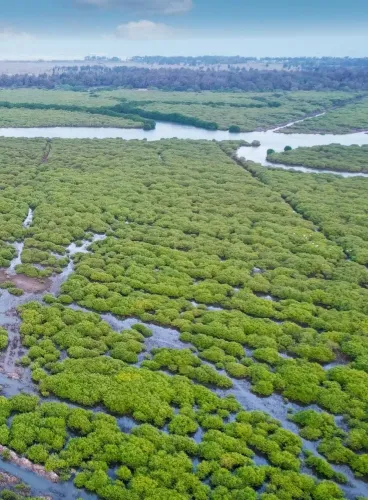
Pichavaram's mangrove forest, spanning roughly 1,100 hectares in Cuddalore district, Tamil Nadu , acted as a natural barrier during the December 2004 Indian Ocean tsunami .
Villages behind the forest recorded significantly fewer casualties than exposed coastal stretches, making Pichavaram a landmark case in ecosystem-based disaster risk reduction.
Local communities now govern the forest through village mangrove councils , treating it as a 'living god' and actively preventing encroachment.
Sustainable livelihoods — including beekeeping and eco-tourism — create direct economic incentives for conservation, tying community income to a healthy forest.
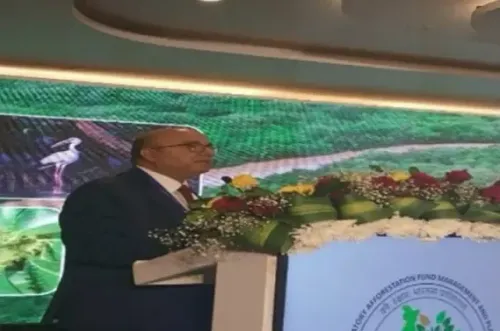
Shashi Tharoor shared the story on 5 October 2026 , framing conservation as 'an investment in our own survival' rather than charity towards nature.
When the 2004 Indian Ocean tsunami came crashing into the coast of Tamil Nadu, it met something it could not easily break: a dense, ancient mangrove forest at Pichavaram. That wall of roots and salt-hardy trees absorbed the surge and shielded the villages nestled behind it — and now, more than two decades later, Congress MP Dr. Shashi Tharoor is amplifying that story as proof that protecting nature is protecting ourselves.
Tharoor shared the story on Monday, 5 October 2026, pointing to a documentary by filmmaker K. Arun Kumar that captures how the communities once saved by Pichavaram's mangroves have turned into the forest's most passionate guardians. The villages now revere the ecosystem as a 'living god' — a living god — and have formed village mangrove councils to actively protect it.
From survival to stewardship: how Pichavaram's communities flipped the script
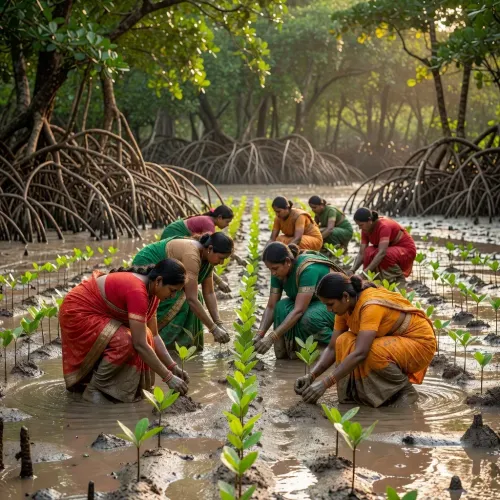
The dynamic at Pichavaram is rare in conservation circles: the beneficiaries became the custodians. Rather than treating the mangrove belt as a government asset managed from a distant forest department office, local communities took ownership. The mangrove councils act as grassroots enforcement bodies, monitoring the health of the forest, preventing illegal felling, and policing encroachment.
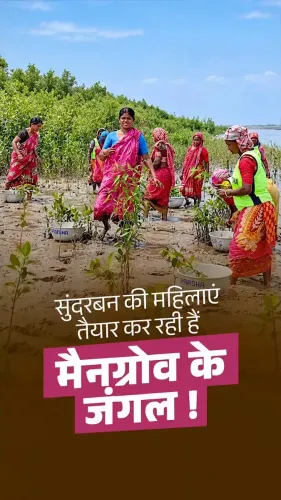
Critically, stewardship here is not purely altruistic. Villagers have developed beekeeping operations and eco-tourism ventures inside the mangrove zone, converting the forest's continued existence into a direct livelihood. That economic link is the conservation movement's holy grail: when communities earn from a healthy ecosystem, they have every incentive to keep it healthy.
Pichavaram's record as a natural sea wall
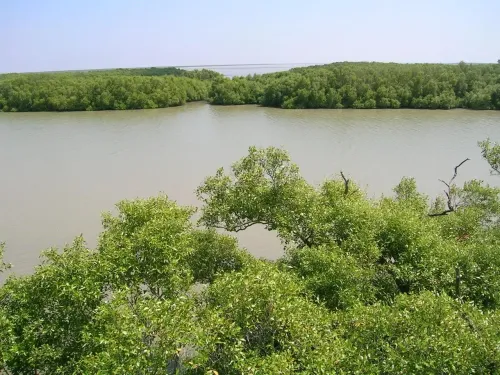
Pichavaram, located near Chidambaram in the Cuddalore district of Tamil Nadu, is one of the largest mangrove forests in India, spanning roughly 1,100 hectares. Studies conducted after the December 2004 tsunami — which killed over 10,000 people in Tamil Nadu alone — documented measurably lower casualties and structural damage in villages shielded by mangroves compared to exposed stretches of coastline. The Pichavaram data became a landmark case in the global literature on ecosystem-based disaster risk reduction.
Yet mangroves worldwide continue to shrink, lost to shrimp aquaculture, coastal construction, and pollution. India has made formal commitments to expanding mangrove cover under its coastal management frameworks, but ground-level success stories like Pichavaram — driven by community agency rather than top-down mandate — remain the exception rather than the rule.
Tharoor's frame: conservation as self-interest, not charity
The MP's articulation is pointed: 'Conservation is not charity towards nature but an investment in our own survival.' It is a deliberate reframe aimed at an audience that often experiences conservation as a constraint on development rather than an enabler of it. By grounding the argument in a tsunami body count and a community's tangible income streams, the post sidesteps ideology entirely and speaks in the language of evidence and economics.
As climate-driven coastal hazards intensify across the Bay of Bengal, the Pichavaram model carries an urgency that extends well beyond Tamil Nadu. The mangrove councils of one district may be the template the entire coastline eventually needs.
Point of View
Quantified disaster-risk story rather than a philosophical argument, he sidesteps the usual political deadlock and makes a case that conservative, growth-oriented audiences can accept. The Pichavaram model — community ownership plus livelihood integration — is precisely the framework that national coastal management blueprints have endorsed on paper but struggled to replicate at scale. If the documentary gains political traction, it could reinforce pressure on state governments along the Bay of Bengal and Arabian Sea coasts to accelerate community-led mangrove restoration as a formal climate adaptation strategy.
NationPress
5 Oct 2026
Frequently Asked Questions
How did the Pichavaram mangroves protect villages during the 2004 tsunami?
The dense mangrove belt at Pichavaram absorbed and dissipated the wave energy of the December 2004 Indian Ocean tsunami, creating a natural buffer between the sea and the inland villages. Studies afterwards confirmed that settlements shielded by the mangroves suffered significantly fewer casualties and less structural damage than exposed coastal areas.
Where is Pichavaram located and how large is it?
Pichavaram is located near Chidambaram in the Cuddalore district of Tamil Nadu, and it is one of India's largest mangrove forests, covering approximately 1,100 hectares.
What are village mangrove councils and how do they work?
Village mangrove councils are grassroots community bodies formed by residents of villages near Pichavaram to protect and monitor the mangrove forest. They patrol the area to prevent illegal felling and encroachment, and they manage eco-tourism and beekeeping activities that provide sustainable income tied directly to the health of the forest.
Why did Shashi Tharoor share the Pichavaram documentary?
Tharoor shared a documentary by filmmaker K. Arun Kumar to highlight the Pichavaram community's relationship with the mangrove forest as an example of reciprocal conservation — arguing that protecting ecosystems is an investment in human survival rather than charity towards nature.
What livelihoods do Pichavaram communities earn from the mangroves?
Communities around Pichavaram have developed beekeeping operations and eco-tourism ventures within the mangrove zone, generating sustainable income that is directly linked to keeping the forest intact and healthy.