Tharoor Questions Vande Mataram Amendment's 12-Minute Burden

Synopsis
President assents to the Vande Mataram Amendment requiring the full National Song at all official functions. Congress MP Dr. Shashi Tharoor warns the law — passed without parliamentary debate — creates a 12-minute mandatory standing burden per event, risking the opposite of the respect it intends to foster.
Key Takeaways
The President of India has assented to the Vande Mataram Amendment , mandating the full National Song at the start and end of every official function.
The amendment was passed in Parliament without discussion , a procedural lapse flagged by Dr.
Singing the National Song in full takes 3 minutes and 10 seconds ; combined with the 52-second National Anthem and Tamil Nadu 's 2-minute State Song, the total standing time reaches 6 minutes per ceremony , or 12 minutes for start and end combined.
Tamil Nadu has independently mandated its State Song in Tamil precede both national symbols at official functions, adding a federal complexity to implementation.
Tharoor argues the law risks producing fatigue and resentment rather than the greater respect for the National Song it intends to promote.
Legal challenges citing the Supreme Court's 2016 National Anthem cinema-hall precedent are a foreseeable next step.
A law requiring the full Vande Mataram to be sung at the start and end of every official function has cleared its final hurdle — and Congress MP Dr. Shashi Tharoor is raising a pointed, practical alarm about what happens next. The President of India has assented to the Vande Mataram Amendment, passed without discussion in Parliament, mandating the National Song in full alongside the National Anthem at all official functions.
The 12-Minute Arithmetic Nobody Ran
Tharoor's objection is not ideological — it is mathematical. 'Jana Gana Mana' demands 52 seconds of standing attention. The National Song in full runs 3 minutes and 10 seconds. Now factor in Tamil Nadu's fresh decision: the state has mandated that its own State Song in Tamil — another 2 minutes — precede both symbols at official functions. Sung at the start and end of every event, that is a combined 12 extra minutes of mandatory standing per function.
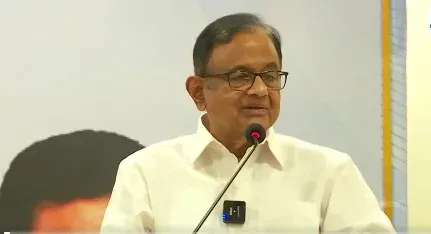
Tharoor puts the central question bluntly: 'Do we really expect audiences to stand still and respectfully for six minutes before and after every function?' He adds that he can sing the first two stanzas of Vande Mataram — the stanzas that were required until now — as well as the entire National Anthem, but notes that the remaining four stanzas were 'never required till now.'
Compulsion and the Limits of Legislated Respect
The tension between mandated reverence and organic sentiment is not new to India. The Supreme Court in 2016 directed audiences to stand for the full National Anthem in cinema halls, a directive that generated its own wave of debate, modifications, and legal challenges before subsequent clarifications. That episode illustrated a pattern: when the state legislates patriotic behaviour, the public conversation quickly shifts from the symbol itself to the coercion around it.
Tharoor invokes precisely that irony. 'I fear that the intent of the Bill, to promote greater respect for the National Song, will not be achieved, but its opposite may well be,' he writes — arguing that fatigue and resentment, not reverence, are the more likely harvest of a 12-minute standing requirement. The amendment was passed without parliamentary discussion, a procedural point he flags implicitly by noting its absence.
Tamil Nadu's State Song and the Federal Wrinkle
Tamil Nadu's decision to insert its State Song into the sequence adds a federalism dimension the amendment's drafters may not have anticipated. If other states follow suit with their own regional symbols, the pre-function ritual could grow further — and the variation in practice across states could itself become a source of political friction. The question of which governments can add to the mandatory sequence, and on what authority, is likely to surface in any legal challenge to the amendment.
Judicial review petitions testing the amendment's feasibility and its implications for individual freedoms are a foreseeable next step — a path well-worn from the 2016 anthem episode.
Whether Parliament revisits the amendment or courts are asked to, Tharoor's arithmetic has already landed: legislating respect is one thing; engineering the conditions for it is another.
Point of View
And the federal complexity of layering national and state symbols. Tharoor's intervention is strategically framed as practical rather than political — a harder argument to dismiss than ideological opposition. The Tamil Nadu state-song addition signals that states may respond to central mandates on national symbols with their own additions, potentially turning a unity gesture into a patchwork of competing obligations. If legal challenges follow, the courts will likely revisit the 2016 National Anthem precedent and decide how far the state's authority to mandate reverence actually extends.
NationPress
25 Sept 2026
Frequently Asked Questions
What is the Vande Mataram Amendment?
The Vande Mataram Amendment is a law that has received presidential assent requiring the full National Song, Vande Mataram, to be sung at the beginning and end of every official function in India, in addition to the existing National Anthem requirement.
Why is Shashi Tharoor criticising the Vande Mataram Amendment?
Dr. Shashi Tharoor argues that requiring the full National Song (3 minutes 10 seconds) alongside the National Anthem (52 seconds) and Tamil Nadu's State Song (2 minutes) creates a 12-minute mandatory standing burden per function, which could breed fatigue rather than genuine respect.
Was the Vande Mataram Amendment debated in Parliament?
According to Dr. Tharoor's post, the amendment was passed without discussion in Parliament before receiving presidential assent.
What has Tamil Nadu decided about national symbols at official functions?
Tamil Nadu has decided that both the National Anthem and the National Song will be preceded by the State Song in Tamil, adding approximately 2 minutes to the mandatory ceremony time at official functions.
Can the Vande Mataram Amendment be legally challenged?
Legal challenges are possible. India's Supreme Court previously issued directives on mandatory National Anthem observance in cinema halls in 2016 — a precedent that any petition against this amendment would likely reference when testing the limits of legislating patriotic conduct.